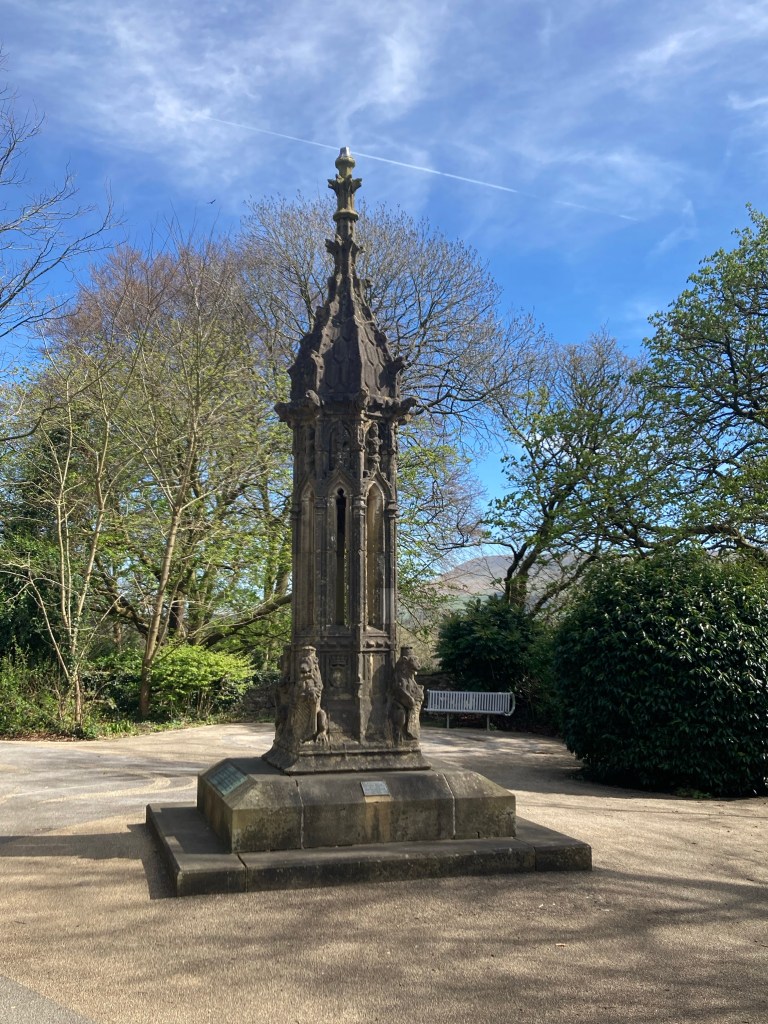
In the shadow of Clitheroe Castle, standing alone on its Limestone mount watching over the Ribble Valley, stands a rather unlikely monument: a tall, ornate gothic spire that once graced a very different skyline.
This unusual monolith, though small in stature compared to its Norman neighbour and somewhat alien in its architecture, possesses a unique and rather intriguing history which I delved into in Part One of this series.
There we traced its journey from the soot-blackened air of London, where it crumbled under the weight of Victorian pollution, then to its unexpected relocation to this quiet Lancashire market town.
Now we turn to how it was presented to the people of Clitheroe, the legacy it has left behind, and the careful work undertaken to ensure this important piece of parliamentary history endures for future generations.
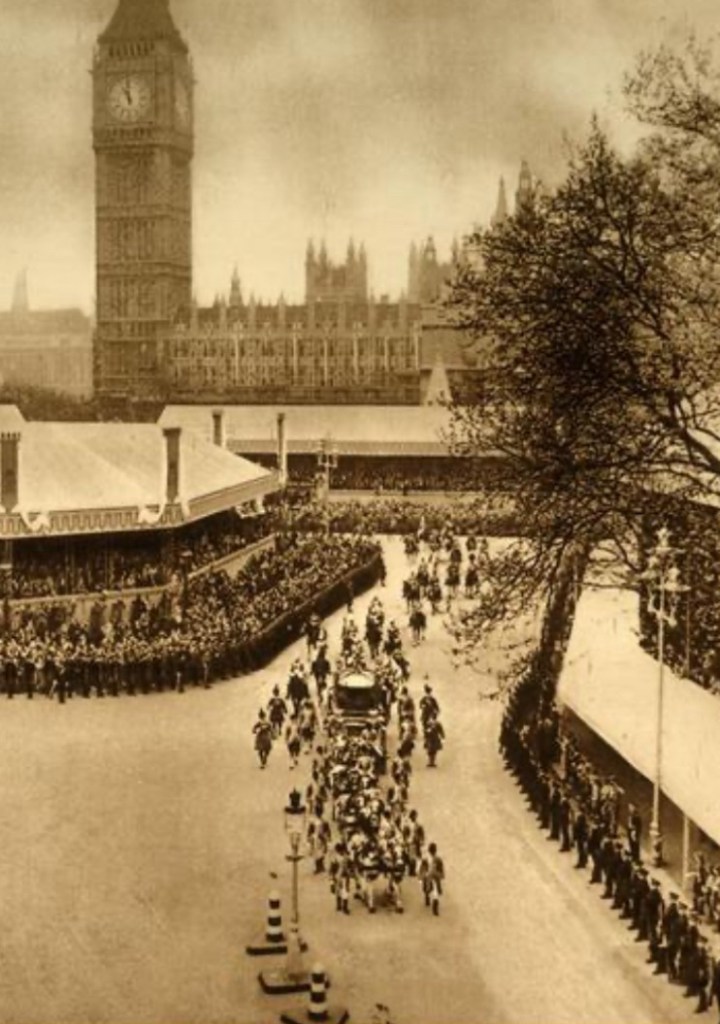
The Presentation to Clitheroe
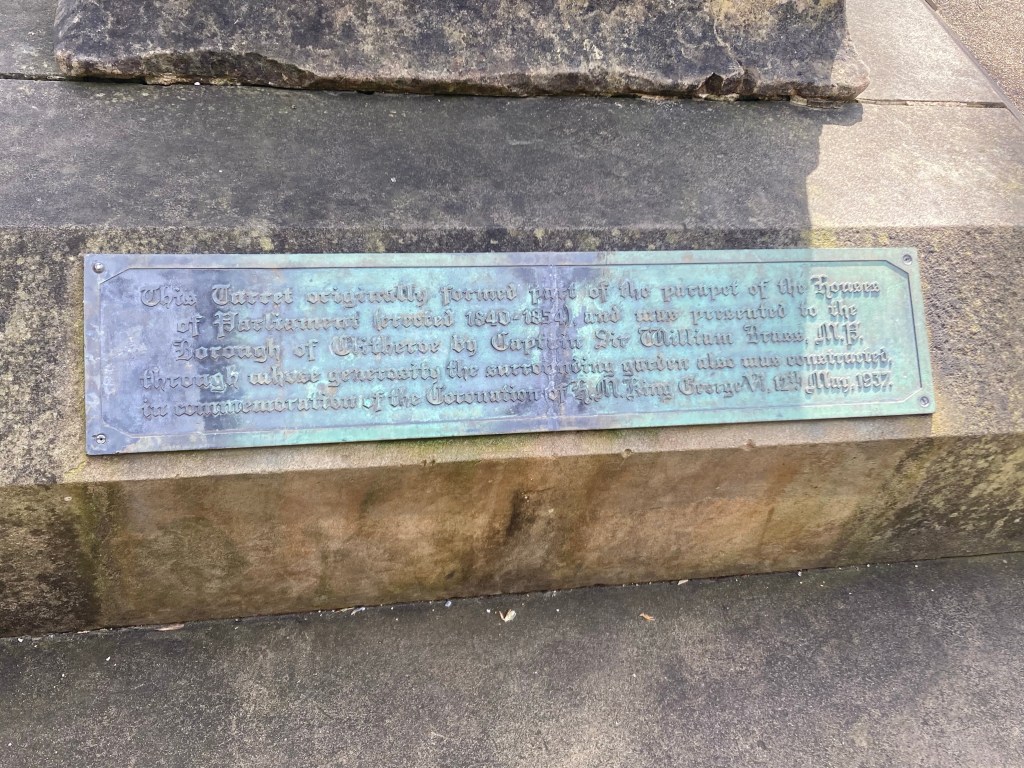
As I recounted in part one this spire once adorned the Palace of Westminster and arrived in Clitheroe thanks to the generosity, or perhaps the political gratitude, of Sir William Brass, the town’s Member of Parliament and a decorated veteran of the Royal Flying Corps during the First World War.
In 1937, as the nation prepared to celebrate the coronation of King George VI, Brass arranged for the pinnacle to be transported north and erected in the castle grounds as a permanent memorial to the occasion.
Local newspapers of the time recorded the event with a mixture of civic pride and mild bemusement. Here was a fragment of London’s grandest building, complete with its intricate crockets, finials, and the four rampant lions seated at its base, now standing in municipal park of a small northern town. The presentation ceremony drew a respectable crowd: local dignitaries, schoolchildren, and veterans mingled as the spire was formally handed over “to the people of Clitheroe” in a short but dignified gathering.
Sir William spoke of the “shared threads of history that bound the industrial North to the heart of empire”. Clitheroe, like many Lancashire towns, had sent its sons to fight in the trenches and skies; the pinnacle, he suggested, symbolised both sacrifice and continuity.
In the cleaner air of the Ribble Valley, far from the sulphurous fogs of the Thames, the Magnesian Limestone could finally breathe, its pale surface catching the soft northern light rather than dissolving into sooty dust.
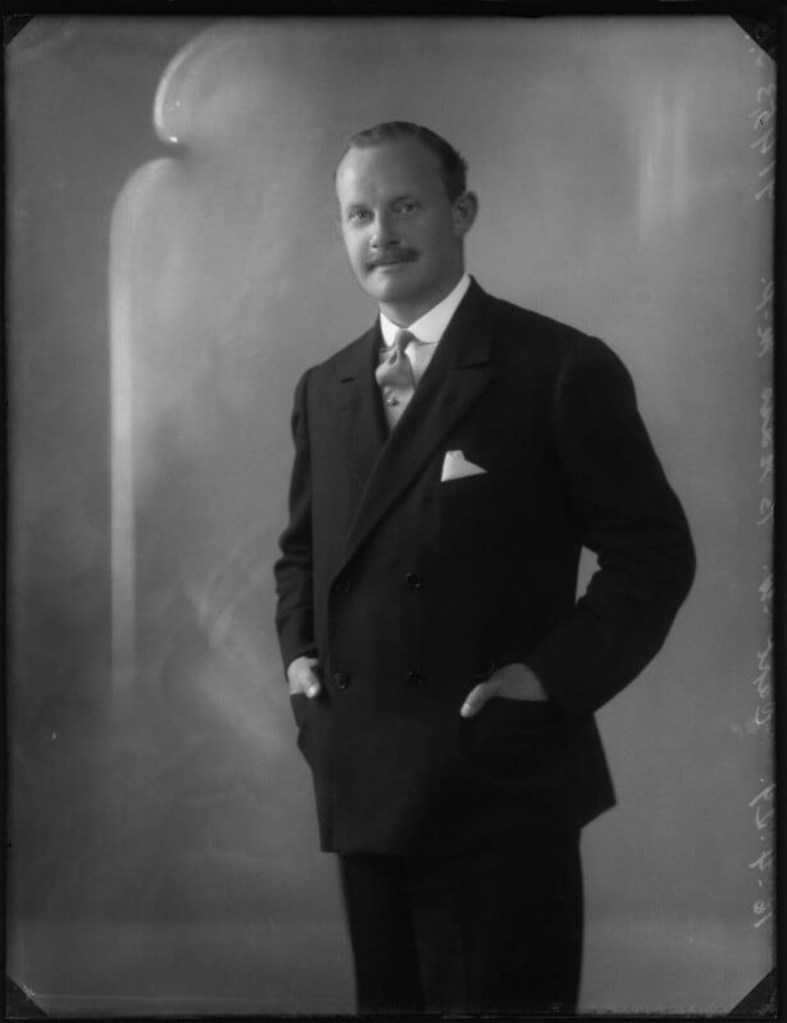
William Brass (1888-1945), 1st Baron Chattisham. Conservative MP for Clitheroe (1922–45), peer (1945). Whole-plate glass negative given to the National Portrait Gallery in 1974
A Lasting Legacy
The legacy of the pinnacle extends beyond a symbolic connection to London and our seat of power. In a time when so much Victorian architecture has been lost or heavily altered, this surviving spire offers a tangible fragment of the Palace of Westminster as Pugin and Barry originally envisaged it. While the main building in London has been repeatedly cleaned, repaired, and adapted, this exiled piece remains a purer (if weathered) example of mid-19th-century gothic revival craftsmanship.
The structure has also contributed to local heritage efforts. It features in guided walks around the castle, appears in photographs shared by tourists, and occasionally sparks conversations about conservation, pollution, and the surprising mobility of historic masonry. In a town that prides itself on its built heritage the pinnacle adds an extra layer of fascination.
The 2015 Renovation
By the early 21st century, nearly eighty years after its arrival, the effects of time, weather, and biological growth had begun to show. Lichens and mosses, thriving in the famously damp Lancashire climate, had colonised parts of the stone, while minor cracking and erosion around the more exposed finials required attention. In 2015, a thorough renovation programme was carried out to secure the structure for another generation.
Specialist conservators worked carefully, using techniques that respected the original Magnesian Limestone while addressing the inevitable wear of exposure on the exposed hill.
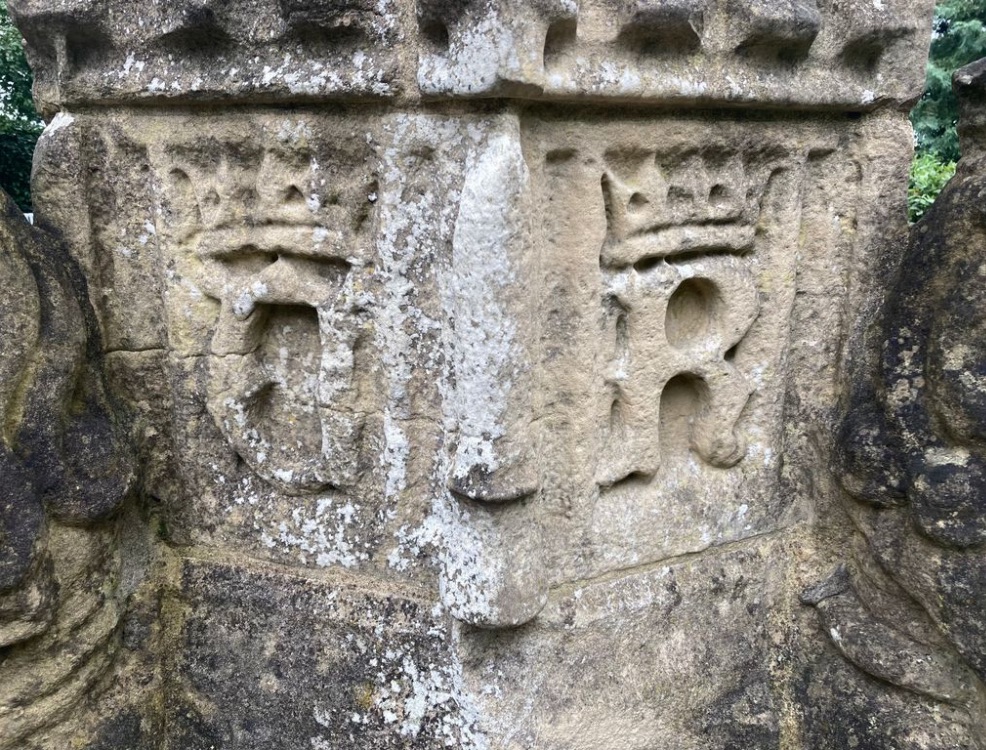
Cleaning removed biological accumulations without damaging the surface; loose or fractured elements were repaired or replaced with matching stone where necessary. The four corner lions, still proudly sejant, received particular care, their fierce expressions vivid reminders of the spire’s royal and parliamentary origins.
The work revealed interesting contrasts in stone behaviour; in London’s smoggy atmosphere the limestone had decayed rapidly through chemical reaction with sulphur compounds. Here in Clitheroe, the primary threats were physical; wind-driven rain, freeze-thaw cycles typical of the Pennine fringe, and the gentle but persistent colonisation by flora that the spire’s brothers in London are unlikely to have ever met.
The renovation demonstrated how context matters enormously in heritage conservation: the same material that failed in the capital has proven remarkably resilient in the cleaner, if wetter, Northwest.
Funding came through a combination of local authority support, heritage grants, and community interest. The project was completed without major fanfare but instead with quiet satisfaction, another small victory for those who value our country’s built history.
To learn more about the Pinnacle please visit the excellent and fascinating website of the Clitheroe Pinnacle Project.
Thank-you for reading. If you enjoyed this piece and would like to support further articles on the wildlife and history of the Northwest, you can buy me a coffee here.
Alex Burton-Hargreaves
(May 2026)

