Ecology, Habitat, Conservation etc of Ragged Robin (Silene flos-cuculi)
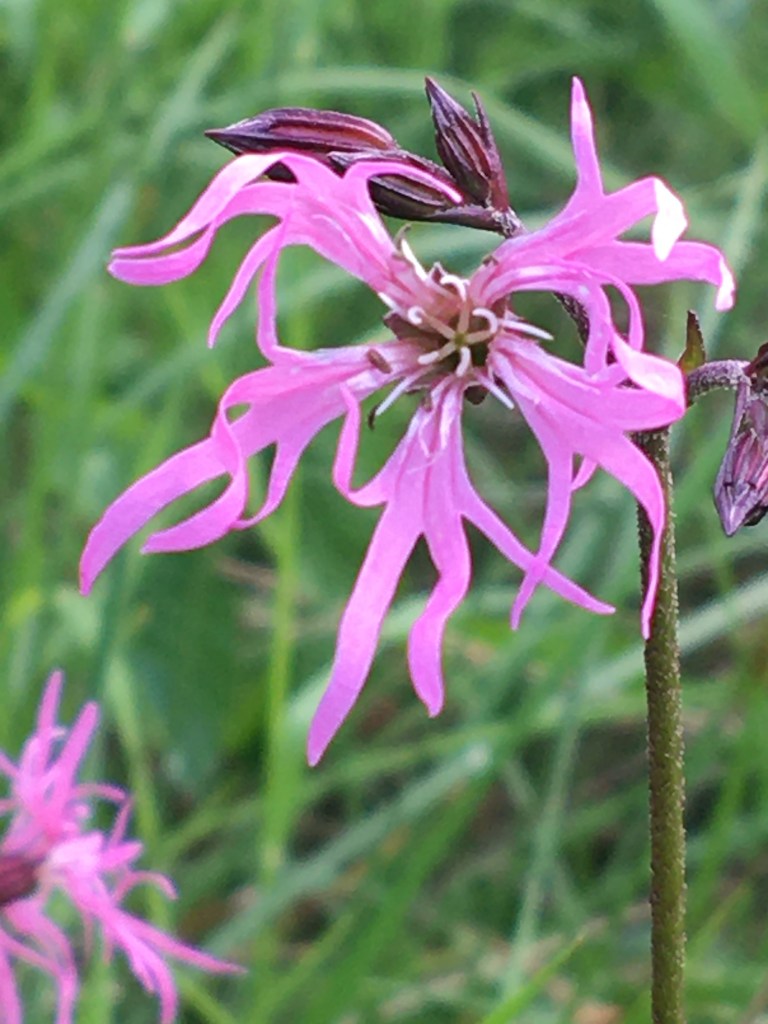
One of the greatest joys of wandering about our countryside in late spring and early summer is returning to a site where you found a particular wildflower blooming in a previous year to find it blooming there once again.
We are lucky here in Padiham to have open common land near to us that has many different species of plant growing upon it, including some meadow specialists that flourish there due to it being mostly untouched and unimproved except for maybe a mow every year or so.
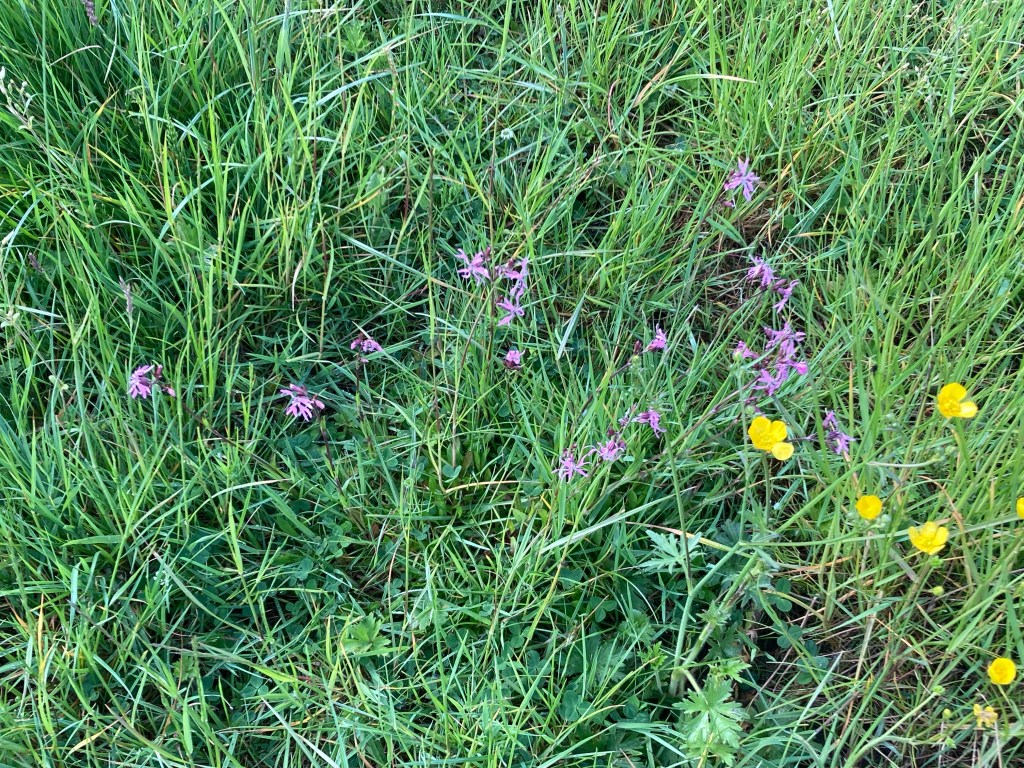
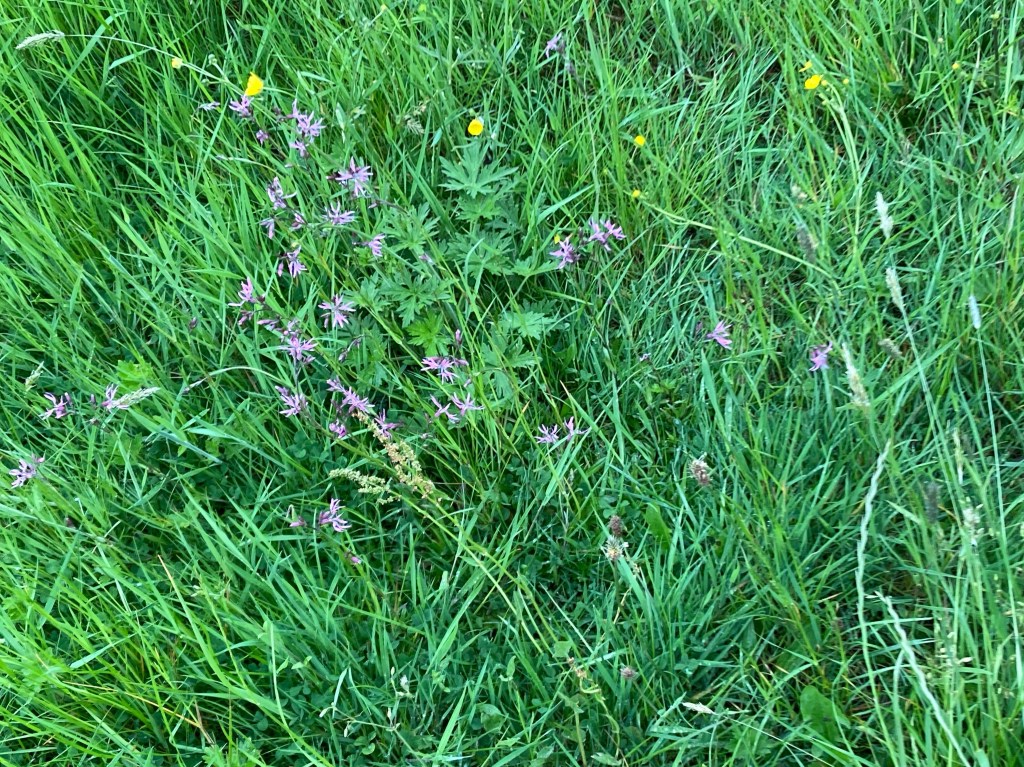
A couple of days ago I decided to set out to one of its furthest corners to see if the small colony of Ragged Robin that has bloomed there in past summers had returned, and was happy, and relieved, to find that not only had it survived being closely cut last summer, and trampled on by the dog walkers that are ubiquitous around here, but was instead flourishing and spreading.
A Plant of Many Names
Ragged Robin (Silene flos-cuculi, formerly Lychnis flos-cuculi) is a plant of many names, these include: Cuckoo Flower (because it flowers as the Cuckoo arrives,) Thunder flower (in some parts of Yorkshire picking it will supposedly bring thunderstorms) Shaggy Jacks, and Marsh Gillyflower.
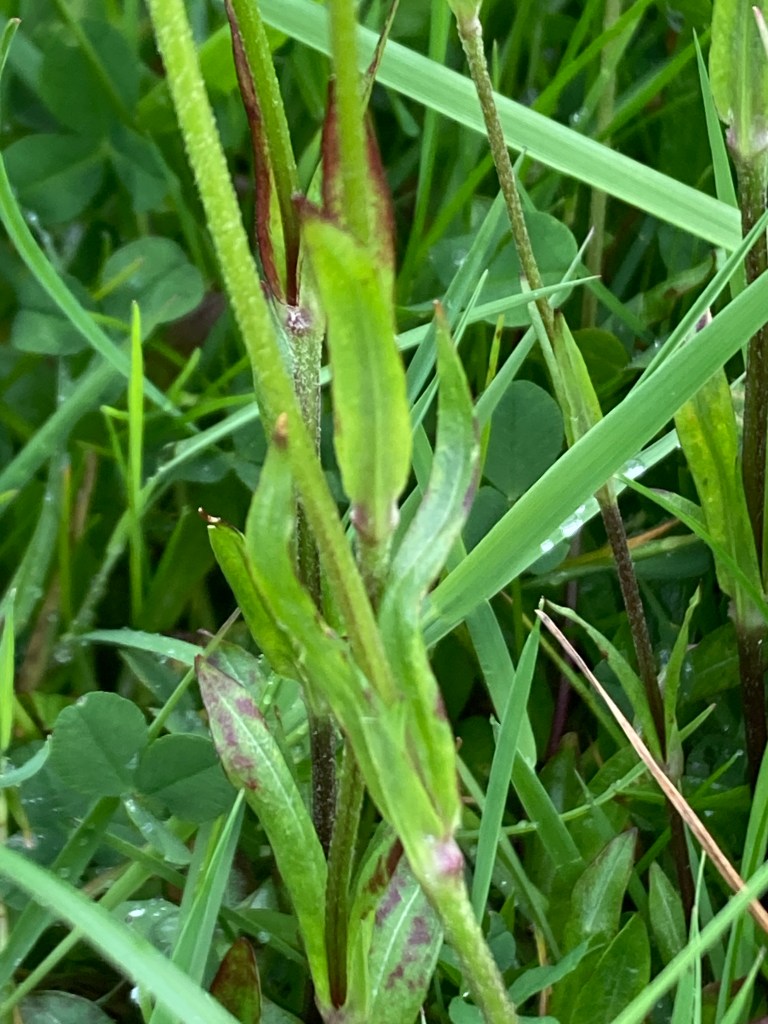
It is a perennial member of the Caryophyllaceae (Pink or Carnation) family and typically grows up-to 30 to 80 cm tall, with upright, branching stems that are often slightly hairy.
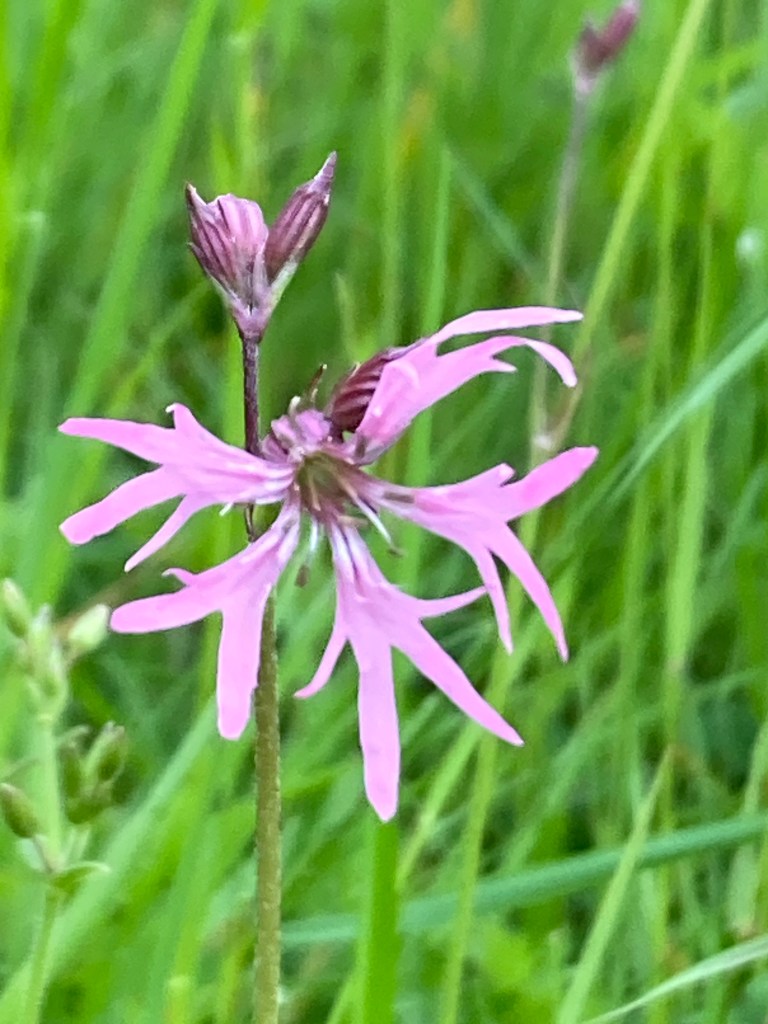
Its main identifying feature is its uniquely shaped flowers, each possessing five petals that are deeply divided into narrow, jagged segments, giving the plant its delightfully ragged appearance, and its most often-used common-name. Their colour is usually a vibrant pink to purplish-pink, though white forms occasionally appear and they are borne in loose clusters at the top of the stems, blooming from May through to August.
The leaves are narrow and grass-like, with the lower ones forming a basal rosette. If you crush a leaf, it has a slightly rough texture, and the plant often grows in dense enough stands to create a hazy pink carpet in the right spot.
Its scientific name derives from Silenus, the mythological woodland deity who served as companion and tutor to the god of wine Dionysus. Flos-cuculi comes from the Latin flos meaning ‘flower’ and cuculi meaning ‘cuckoo’, translating directly as ‘Flower of the Cuckoo’
Habitat
Thriving best in damp, neutral to slightly acidic soils S. flos-cuculi may be found in:
- Wet meadows and rushy pastures
- Roadside ditches and stream margins
- Fenny areas and spring-fed flushes
- Damp woodland clearings and rides
It was once far more common before intensive drainage and agricultural improvement took their toll on many of our traditional wet grasslands. Today it remains a welcome sight in less improved corners of the countryside.
More than just a Pretty Face
Like many of our native wildflowers, Ragged Robin is far more than just a pretty face. Its nectar-rich flowers are a magnet for pollinators, particularly Bumblebees, Hoverflies and various butterflies including Orange-tips and the Common Blue Butterfly, it is also a food plant for the larvae of some moth species.
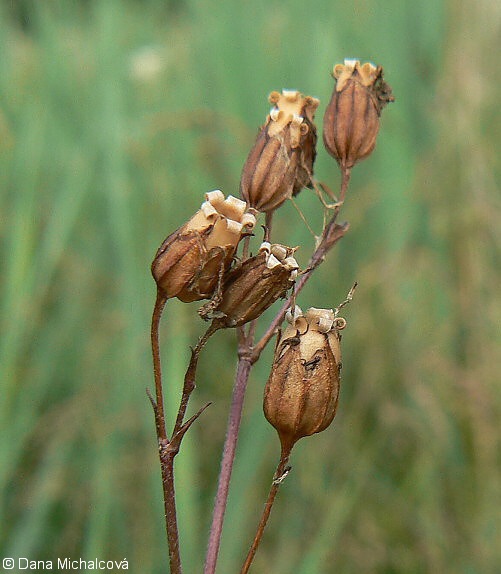
The plant spreads both by seed and through a creeping rootstock, allowing it to form good-sized colonies where conditions suit. In traditional hay meadows, it would have flowered and set seed before the July or August cut, helping to maintain its presence in the sward.
(Dana Michalcová)
Conservation and Cultivation
Like many wetland plants, Ragged Robin has declined in parts of England due to habitat loss. It is considered Near Threatened in some assessments, making every good colony worth celebrating and protecting.
If you have a damp spot in your garden, perhaps a boggy area, the edge of a pond, or a rain garden, Ragged Robin makes an excellent addition. It’s easy to grow from seed or plug plants (please always use British native stock) and will happily self-seed once established.
Planting it with other damp-loving species like Meadowsweet, Birds-foot trefoil or Lady’s Smock (also, rather confusingly, known asCuckooflower) makes for a wonderful mini-meadow effect.
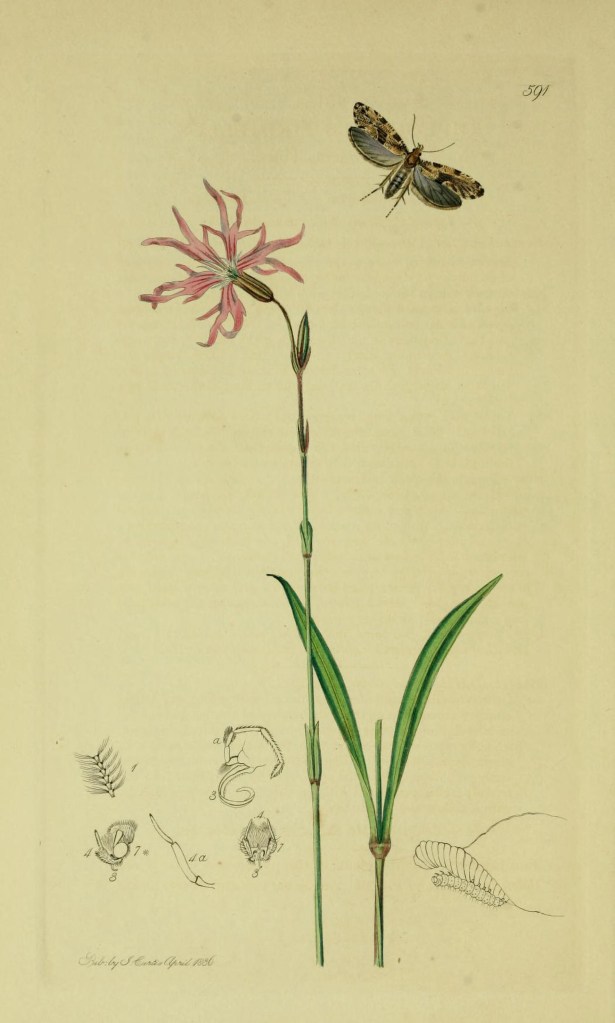
Illustration from British Entomology by John Curtis, published before 1840, portraying a Great Fungus Moth (Morophaga choragella)
To My Brothers
By Norman Rowland Gale (1862 – 1942)
O brothers, who must ache and stoop
o’er wordy tasks in London town,
how scantly Laura trips for you —
A poem in a gown!
How rare if Grub-street grew a lawn!
How sweet if Nature’s lap could spare
a dandelion for the Strand,
a cowslip for Mayfair!
But here, from immaterial lyres,
there rings in easy confidence
the blackbird’s bright philosophy
on apple-spray or fence:
For ploughmen wending home from toil
some patriot thrush outpours his lay,
and voices, wildly eloquent,
the diary of his day.
These living lyrics you may hear
remembering the lane’s romance,
all hung in wicker heels to chirp
thin ghosts of utterance:
But where the gusts of liberty
make Ragged Robin wisely bend,
they quicken hedgerows with their song,
melodiously unpenned.
If souls of mighty singers leave
the vacant body to its hush,
does Shelley linger in the lark,
or Keats possess the thrush?
The end is undecaying doubt,
and in some blackbird’s bosom still
Great Tennyson may sweeten eve
and whistle on the hill.
Come, brothers, to this clean delight,
and watch the velvet-headed tit.
Here ’s honest sorrel in the grass
and sturdy cuckoo-spit:
What shepherds hear you shall not miss,
and at deliverance of dawn
shall see a miracle of bloom
across the sparkling lawn.
The forest musically begs
to fan you with its leafy love;
Oh, fall asleep upon this moss
entreated by the dove!
Here shall that sweet Conservative,
Dear Mother Nature, lend to you
her lovely rural elements
beneath the primal blue.
O brothers, who must ache and stoop
i’er wordy tasks in London town,
how scantly Laura trips for you—
A poem in a gown!
How good if Fleet-street grew a lawn!
How sweet if garden-plots could spare
a bed of cloves to scent the Strand,
a pansy for Mayfair!
Thank-you for reading. If you enjoyed this piece and would like to support further articles on the wildlife and history of the Northwest, you can buy me a coffee here.
Alex Burton-Hargreaves
(June 2026)

