The History of the Manchester Terrier: From Black and Tan Ratter to Elegant Canine Companion

The Manchester Terrier is one of our oldest identifiable terrier breeds, with a lineage that can be traced back centuries. Sleek, black-and-tan, and combining the speed of a sighthound with the tenacity of a terrier, it was purpose-bred for vermin control and sport. Today, it remains a spirited yet affectionate companion, though it is considered a vulnerable native breed in its homeland.
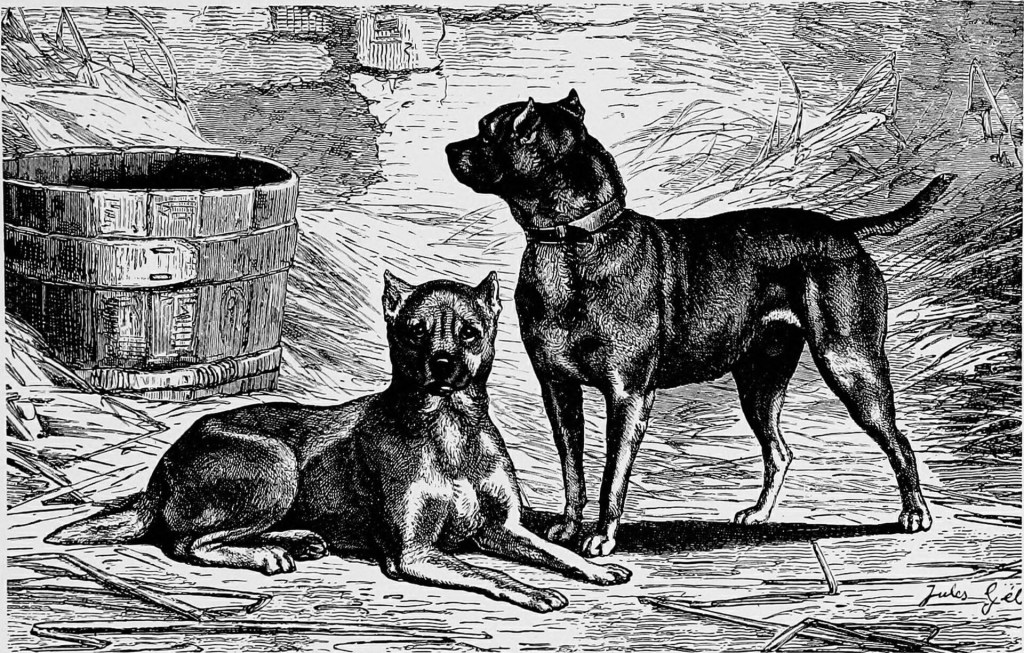
Early Ancestors: The Black and Tan Terrier
The Manchester Terrier’s tale begins with the Black and Tan Terrier, a rough-coated working dog prized for its rodent-killing prowess in rat-infested urban areas. References to similar dogs appear as early as the late 16th century (some sources cite the 1570s), with descriptions in works like John Caius’s De Canibus Britannicis (early 1500s) and Sydenham Edwards’s Cynographia Britannica (early 1800s).
These early terriers were versatile vermin hunters, used in homes, mills, and even on ships to control rats and mice. They were hardy street dogs, often associated with the working class in the growing towns and cities of the industrial revolution.
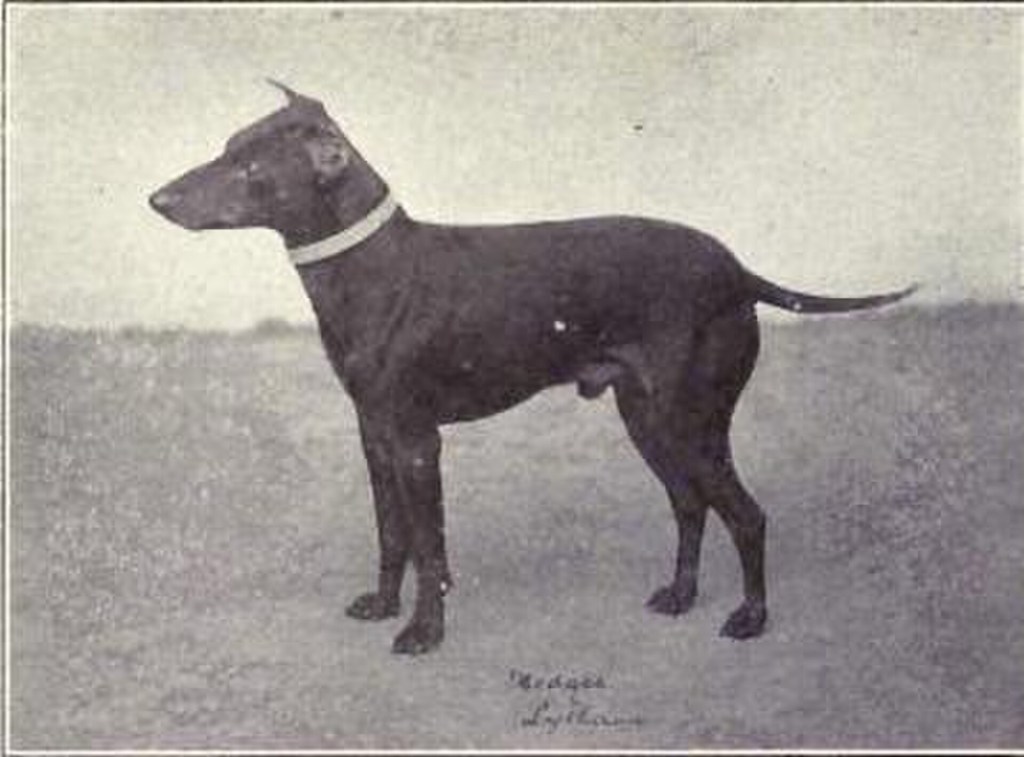
19th-Century Dog Development: The Cross with the Whippet
By the early 1800s, England faced massive rat problems as rapid industrialisation brought thousands of people to towns before their infrastructure could keep up. Sports like rat-baiting (where dogs were pitted against large numbers of rats in enclosed areas, with bets on kill counts) became popular pastimes, especially among mill workers in ‘Cottonopolis’ (as Manchester was known at the time).
As the saying goes; “cometh the hour, cometh the man,” and thus entered John Hulme into the scene, a breeder from Manchester credited with crossing the Black and Tan Terrier with the Whippet (a fast coursing dog) to create a superior all-rounder: a dog that excelled at both ratting and rabbit hunting.
The result was a sleek, agile, smooth-coated dog with the drive of a terrier and the speed and grace of a whippet. By 1860, Manchester had become the epicenter of breeding for these dogs, leading to the name Manchester Terrier. They were sometimes still called Black and Tan Terriers into the early 20th century.
A famous example of their ratting ability is a 5-pound Toy variety named ‘Tiny’, who reportedly killing 300 rats in under 55 minutes in a pit.
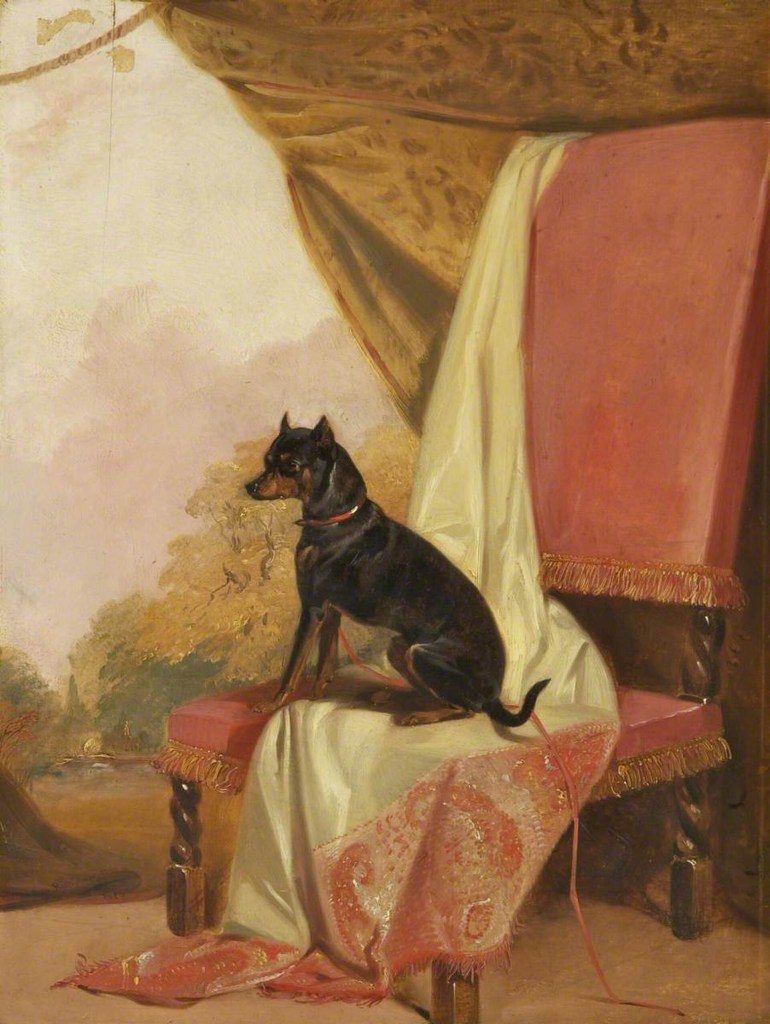
Dignified Demeanour
The breed peaked in popularity during the Victorian era, when it became known as the ‘Gentleman’s Terrier’ for its dignified demeanour. It appealed to both working-class ratters and the gentry and smaller versions (the ancestors of the modern Toy Manchester) were favored by women as companions and flea catchers.
Early dogs often had their ears cropped to prevent injury in rat pits or fights, giving them a sharp look. The 1895 ban on ear cropping caused a decline in popularity, as many disliked the natural pendant or button ears that resulted, but breeders have worked to refine the button ear type preferred today in some standards.
The rise of modern pest control methods further reduced demand for working ratters.
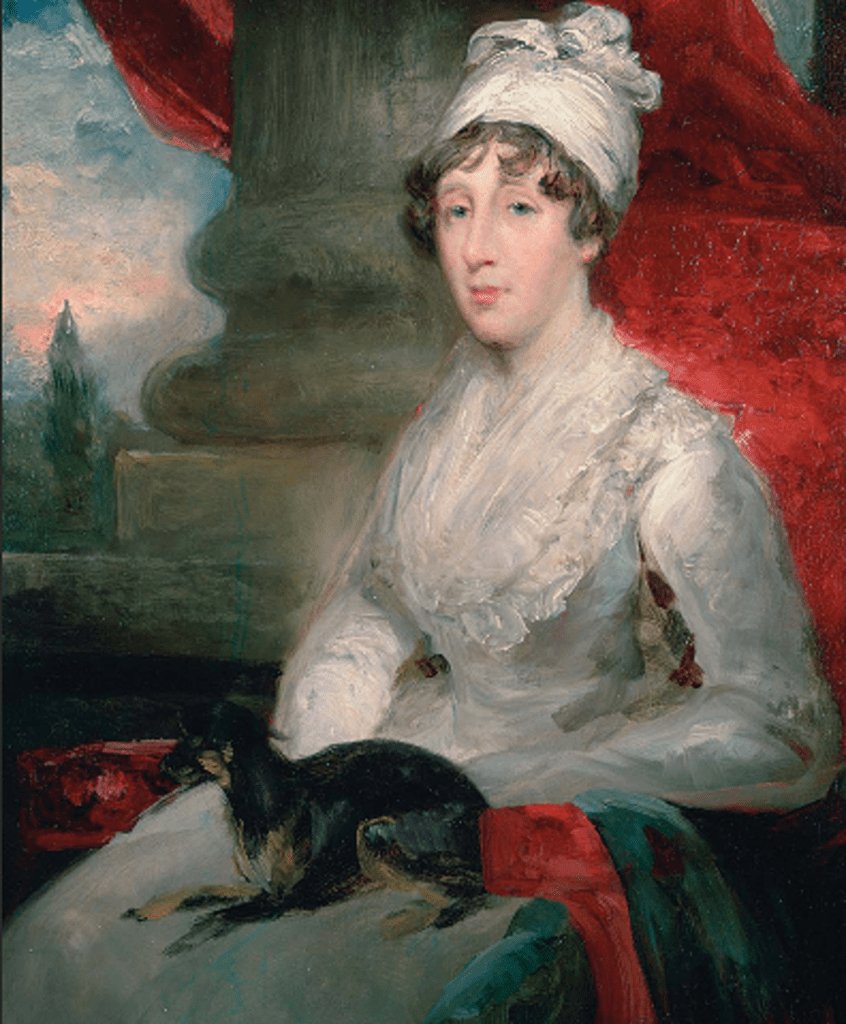
Painted some time between 1804 and 1815 by R. A. John Jackson (1778–1831)
The Manchester Terrier Today
World War II nearly wiped out the breed in Britain; only 11 were registered with the Kennel Club in 1945. Dedicated efforts by clubs like the British Manchester Terrier Club (founded 1937) saved it, though it remains on the vulnerable list with modest annual registrations. In the U.S, the breed has a dedicated following through clubs like the American Manchester Terrier Club.
Today is valued as a spirited, intelligent, athletic companion suitable for various activities, from obedience to terrier trials. Despite its modern refinement it still retains the strong hunting instincts it picked up in the rat pits of Angel Meadows, Hulme and Deansgate in those rough and tough times when Manchester’s dogs were as hard as their folk.
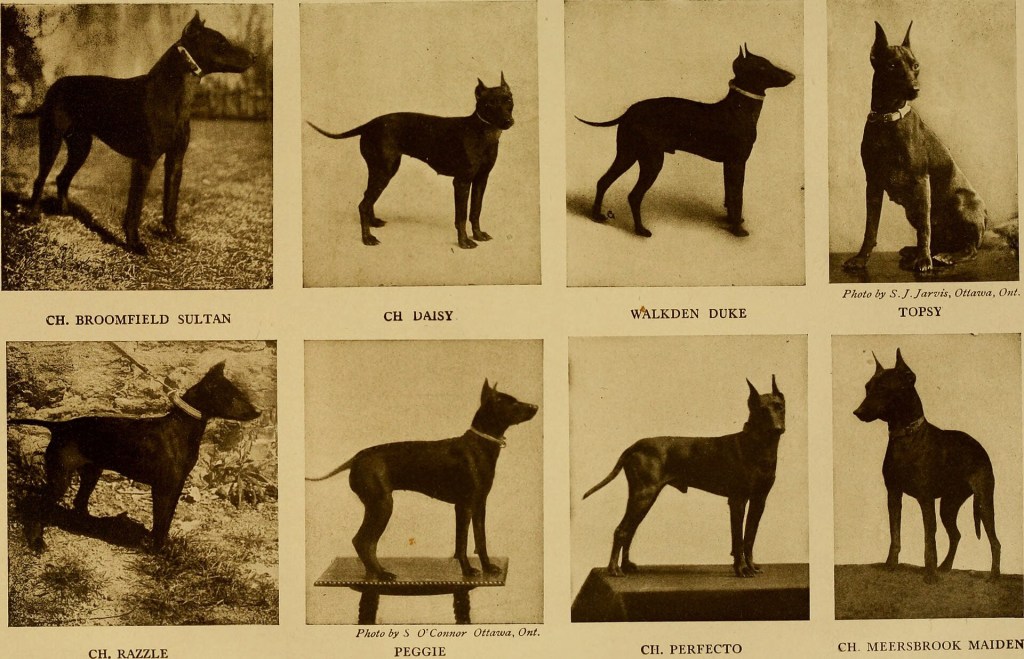
OLD-FASHIONED BLACK-AND-TAN TERRIERS (I88l). Manchester district, the old-fashioned terrier being used to hunt the rivers and water- courses where the rodents were to be found in plenty. Rat-pits were also very much in vogue, one of the principal rendezvous being a room in ” The Three Tuns ” public-house, in Chapel Street, Bolton, then kept by old Joe Orrell, quite a character in his way and an enthusiastic lover of the sport. One of the most famous dogs, by reason of his winning so many matches, was a cross-bred terrier, dark brown in colour; and, as rabbit-coursing was also freely indulged in by the same school, the idea occurred to one John Hulme, who lived at Crumpsall, to produce a dog which would suit both purposes; hence it was that he bred from this terrier and a Whippet. The Lee (Bolton), T. Swinburn, Joe Holt, and a few others who earned the sobriquet of ” The Manchester School.” It was from their joint efforts that the variety became known as the Manchester terrier, and was gradually brought to a state of perfection in colour, markings, and type. Most of these worthies have joined the great majority, but Mr. Swinburn, Mr. Holt, and Mr. Lee—the last-named, by the way, is now the oldest dog fancier in the country—still survive. In those days very few dog shows were promoted, the majority of them being held in public-houses, and, of course, the individuals before mentioned took an active interest in them; wherefore it follows that classes for these terriers were introduced, and very shortly many other adherents.
Excerpt from The new book of the dog; a comprehensive natural history of British dogs and their foreign relatives, with chapters on law, breeding, kennel management, and veterinary treatment, by Robert Leighton, 1907
Thank-you for reading. If you enjoyed this piece and would like to support further articles on the wildlife and history of the Northwest, you can buy me a coffee here.
Alex Burton-Hargreaves
(June 2026)

