Ecology, Biology, Distribution etc of Sexton Beetles (Genus Nicrophorus) in Northwest England
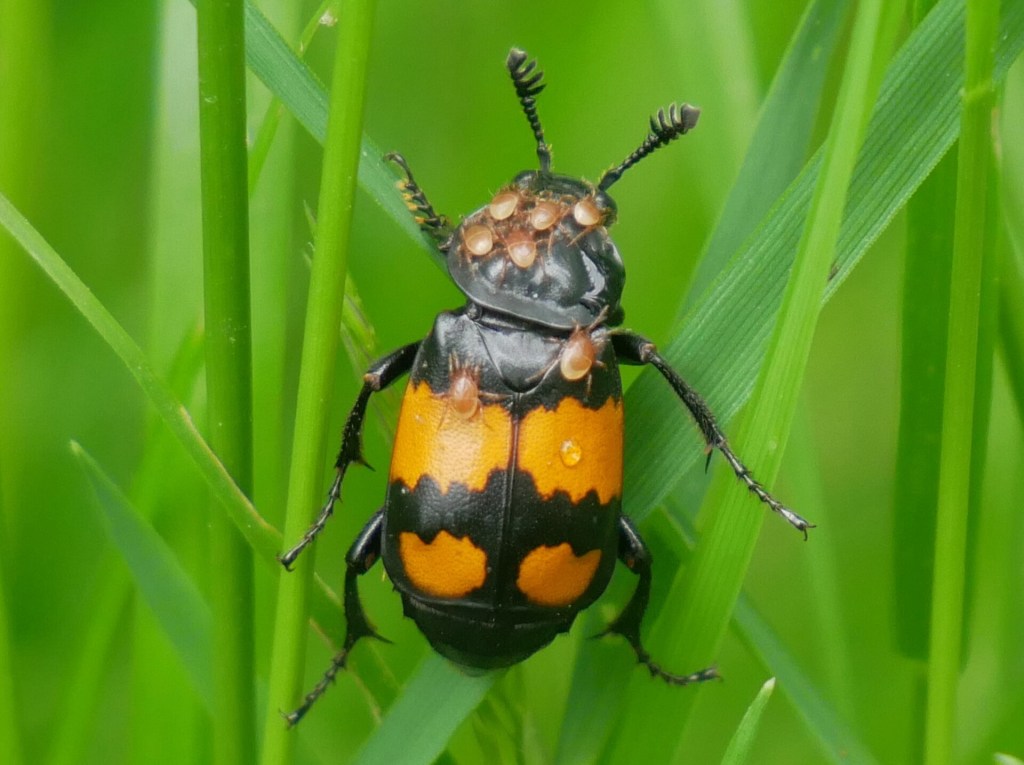
A sexton is a church official responsible for the physical care of the building and its surrounding grounds. Their duties typically include maintaining the property, digging graves in the churchyard, and ringing the church bells. The word traces back to medieval Latin sacristanus
(Image by Christian Kahle)
Sexton beetles, also known as burying beetles, are nature’s undertakers and very good at their job.
They belong to the genus Nicrophorus within the family Silphidae (carrion beetles) and play a vital ecological role by locating, burying, and recycling small animal carcasses, thereby reducing the spread of disease and returning nutrients back to the soil.
Their bodaciously bold black-and-orange patterns and complex parental behaviour make them among the most charismatic and studied beetles in the British countryside.
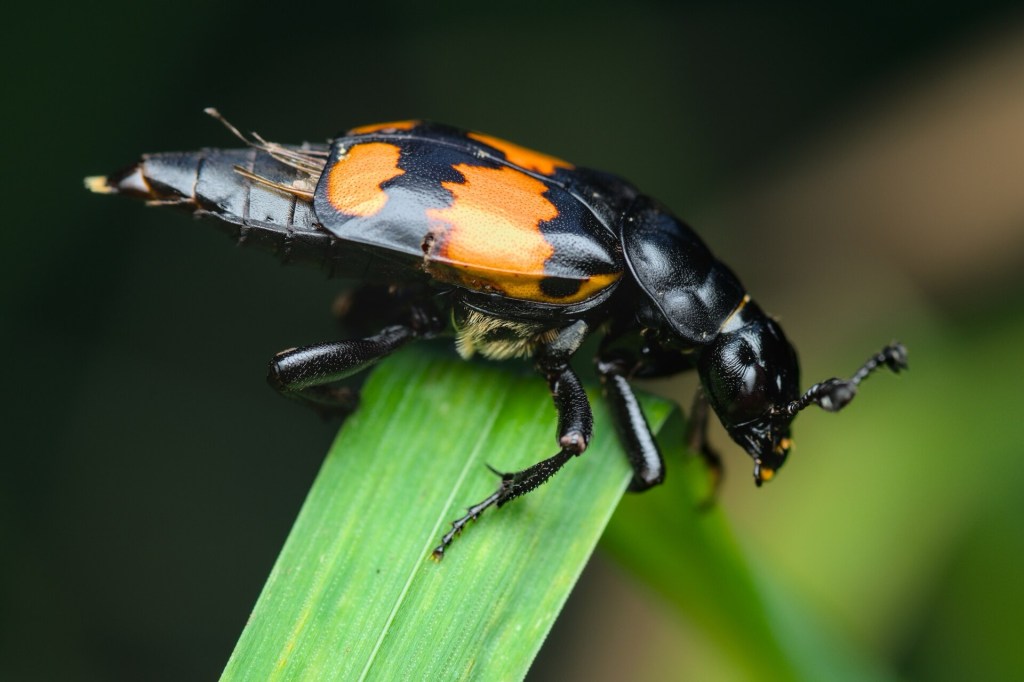
The epithet of this species’ scientific name combines the Latin word vespillo, meaning ‘grave-digger’, with the Greek suffix oides, meaning ‘resembling’
(Ludivine Lamare)
Appearance and Identification
Sextons are relatively large beetles (typically 12 to 30 mm) with robust, flattened bodies and clubbed antennae highly sensitive to the odours of decay. Most species display bold orange or reddish bands on their black elytra (wing cases). The most commonly found species in the northwest include:
- Common Sexton Beetle (Nicrophorus vespilloides): The most frequently encountered, with two orange bands and orange antennal tips.
- Black Sexton Beetle (Nicrophorus humator): Largely all-black with orange antennal tips; one of the largest.
- Banded Sexton Beetle (Nicrophorus investigator) and others like N. vespillo.
Their bright colouration serves as a warning to predators, and many individuals carry phoretic mites that help maintain carcass hygiene by consuming fly eggs and larvae.
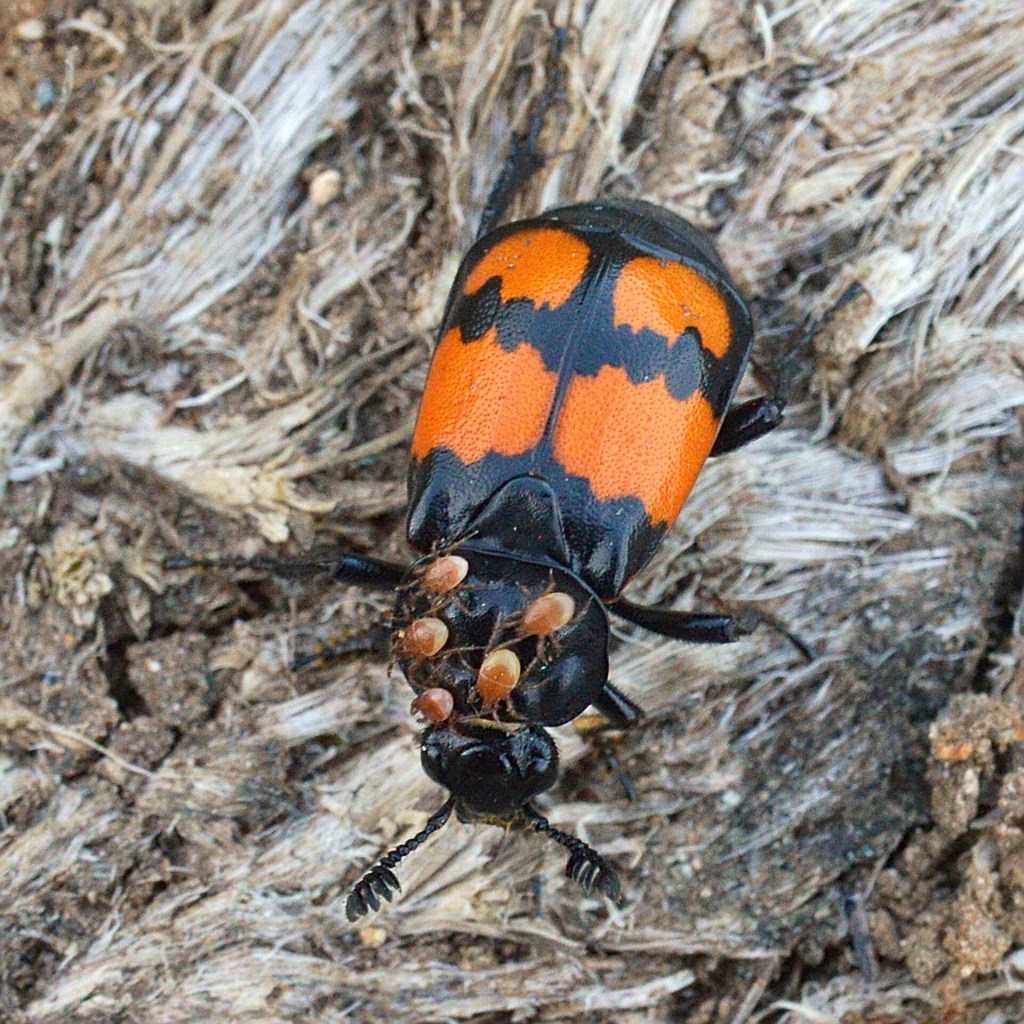
(Image by Ryan Hodnett)
Behaviour, Ecology, and Biparental Care
The genus name Nicrophorus, deriving from Greek roots meaning ‘death carrier’, aptly describes their specialised ecology. Adults use their powerful sense of smell to detect small carcasses (mice, voles, birds, etc) from great distances and then a pair work together to bury the carcass in a shallow underground chamber, removing fur or feathers, shaping it into a brood ball, and preserving it with antimicrobial secretions.
Nicrophores are unusual in the insect kingdom for practicing biparental care. Both male and female cooperate extensively: they defend the carcass from competitors, maintain its condition, and regurgitate pre-digested carrion to feed the hatching larvae.
This cooperative parenting improves the survival chances of their offspring and demonstrates sophisticated social behaviour.
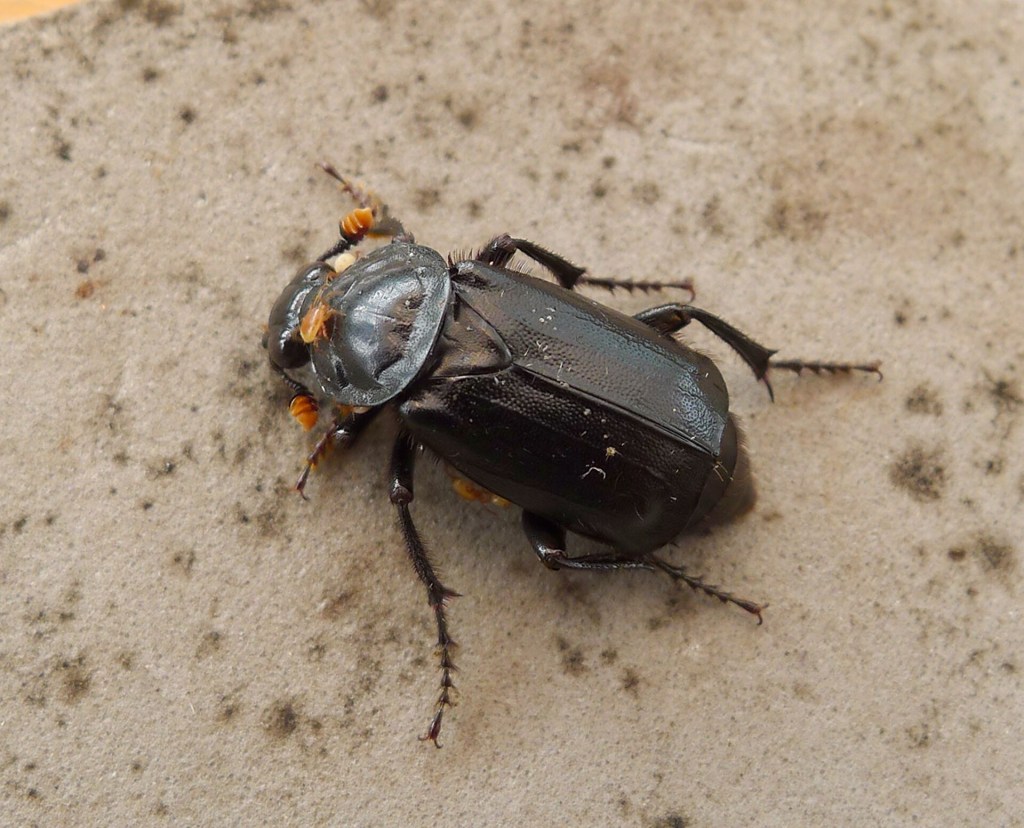
(Image by Gail Hampshire)
Distribution and Occurrence in the Northwest
Adult Sexton beetles are mainly active from April to October and are often drawn to light traps at night.
Widespread across the region they inhabit woodlands, grasslands, hedgerows, farmland, gardens, and coastal areas, anywhere small vertebrates live, and die.
They are particularly common in coastal areas, such as the pinewoods and dunes at Formby, where Nicrophorus humator is often seen, as the sandy soils and mix of habitats: coastal dunes, heathlands, and adjacent woodlands, provides ideal conditions for both foraging and burial.
Indeed when I worked on the dune systems of Murlough in Northern Ireland with the National Trust I spent many hours observing Sexton beetles and the mix of habitats there was virtually identical in its nature.
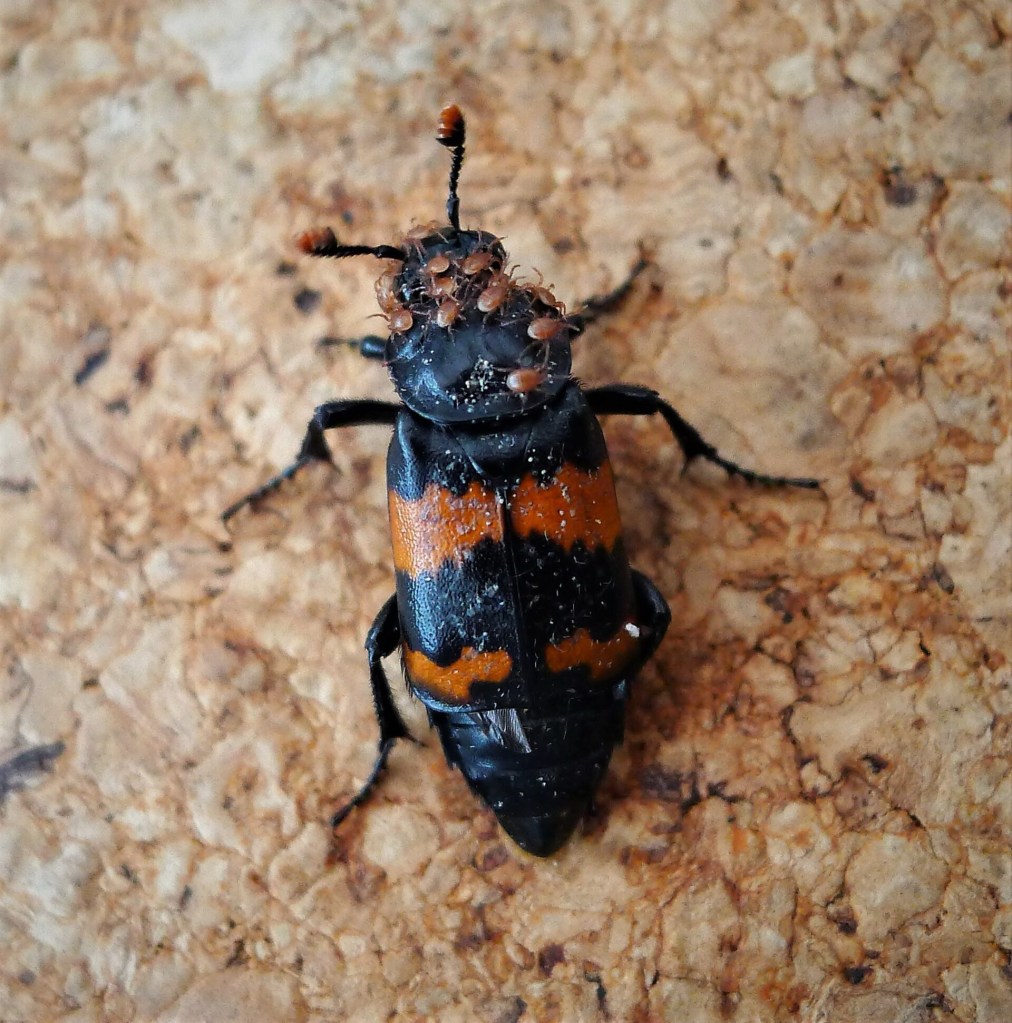
(Gail Hampshire)
Conservation and Importance
Most Nicrophorus species are common and not of high conservation concern, but they are highly dependent on healthy populations of small mammals and undisturbed soil patches, so habitat fragmentation and intensive land management poses their greatest threats.
As this species is an excellent indicator of ecosystem’s health it’s always helpful to submit sightings to groups like the Silphidae Recording Scheme or Lancashire Wildlife Trust, every sighting helps them build up a picture of how well this species is faring, and by extension how well the wider environment is faring too.
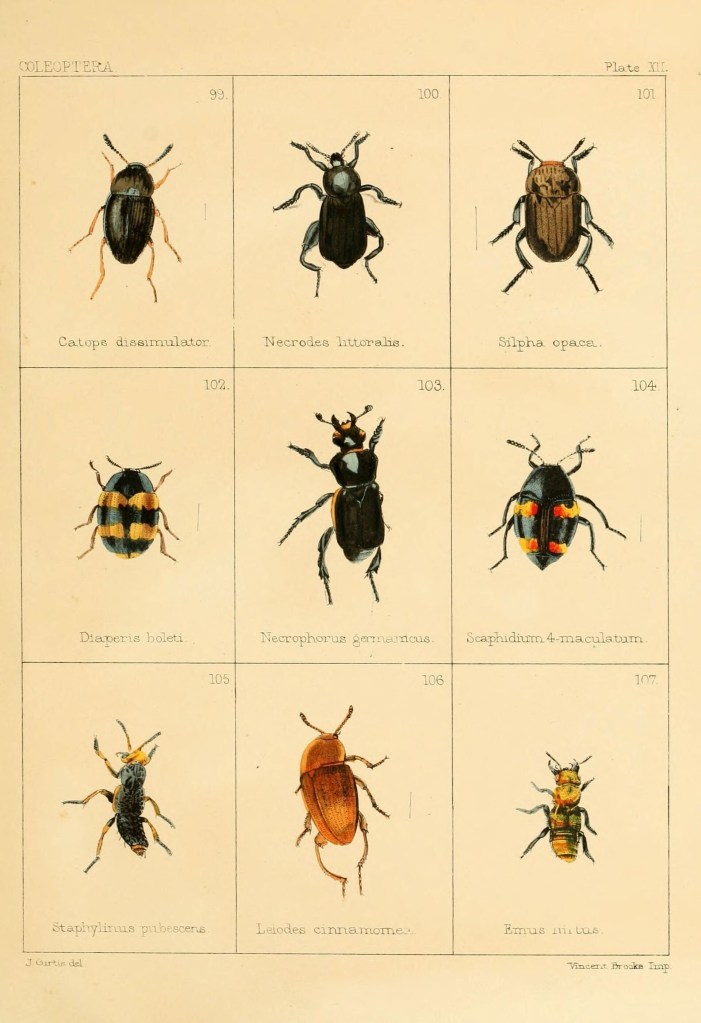
Whenever you feel guilty that you haven’t cleaned the house
–Sexton beetles raise their kids in a decomposing mouse
From There are mums way worse than you by Glenn Boozan
Thank-you for reading. If you enjoyed this piece and would like to support further articles on the wildlife and history of the Northwest, you can buy me a coffee here.
Alex Burton-Hargreaves
(June 2026)

