Ecology, Biology, Habitat, and Medicinal Uses of Shining Cranesbill (Geranium lucidum)
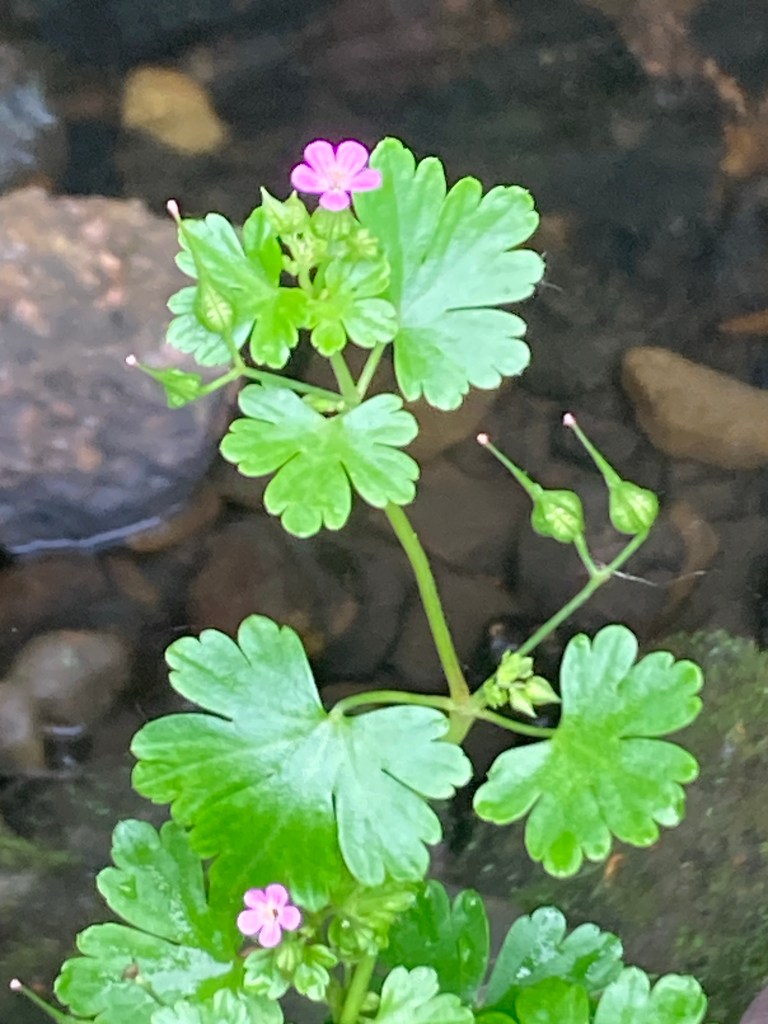
Lucidum is the singular form of the Latin adjective lucidus, which translates to ‘bright’ or ‘shining’
Shining Cranesbill (Geranium lucidum), sometimes known as ‘gentleman’s buttons’, is a charming, glossy-leaved annual wildflower that brightens walls, banks, and rocky spots throughout the British isles.
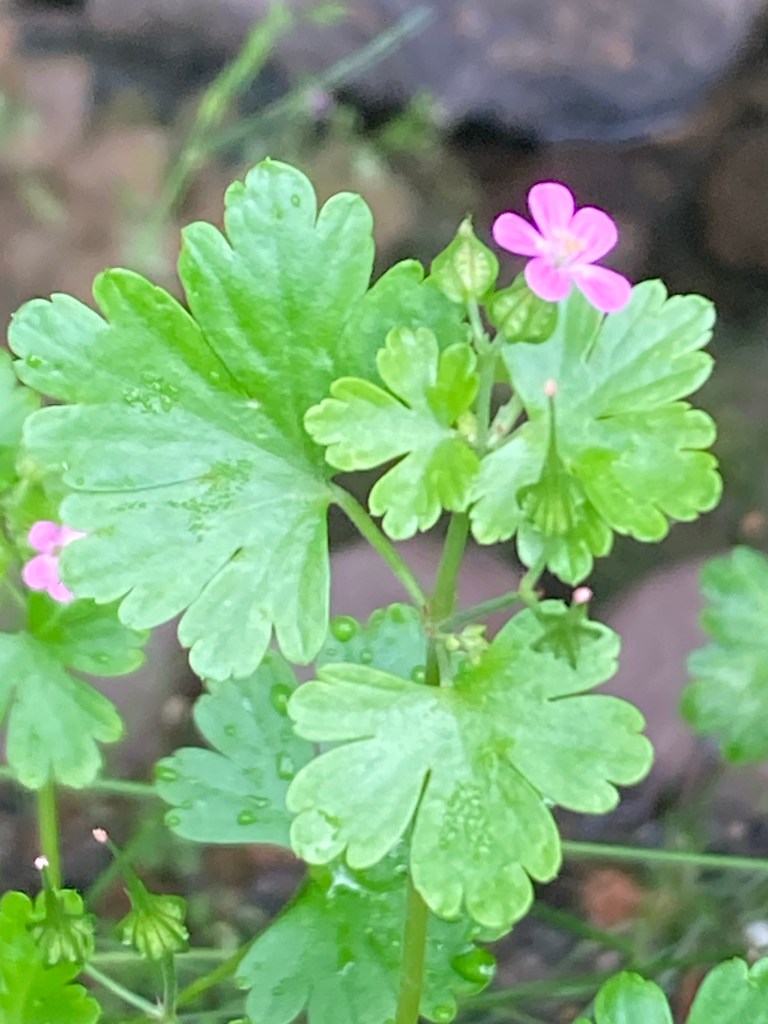
It gets its common-name from its distinctive shiny, reflective leaves, which set it apart from relatives like Herb Robert (Geranium robertianum). The leaves are rounded or kidney-shaped, divided into 5 to 7 lobes cut about halfway, often with a glossy green surface that can flush red. Stems are brittle, fleshy, hairless, and frequently reddish, growing up to 35 to 40 cm tall (though often shorter and sprawling).
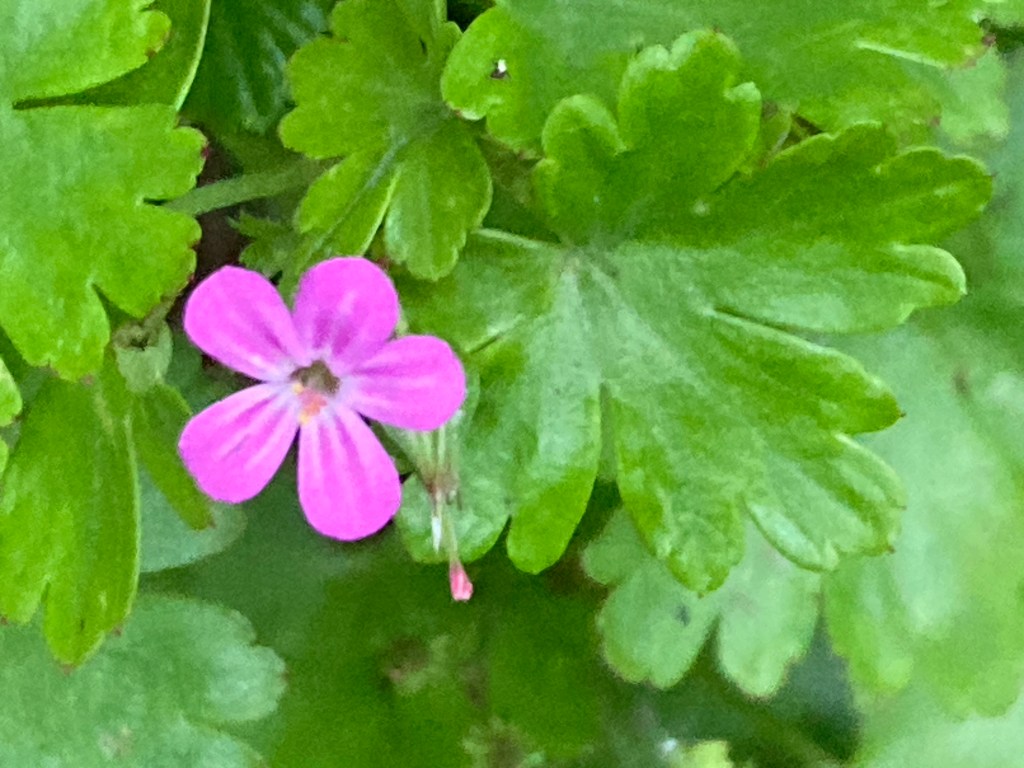
In bloom from April through to August its flowers are small, pale pink (sometimes white), with five unnotched petals. The plant belongs to the Geraniaceae family, and its fruits form the classic ‘cranesbill’ shape of a long, beak-like capsule that explosively disperses seeds, helping the plant colonise crevices in walls or higher spots on slopes.
Habitat and Ecology
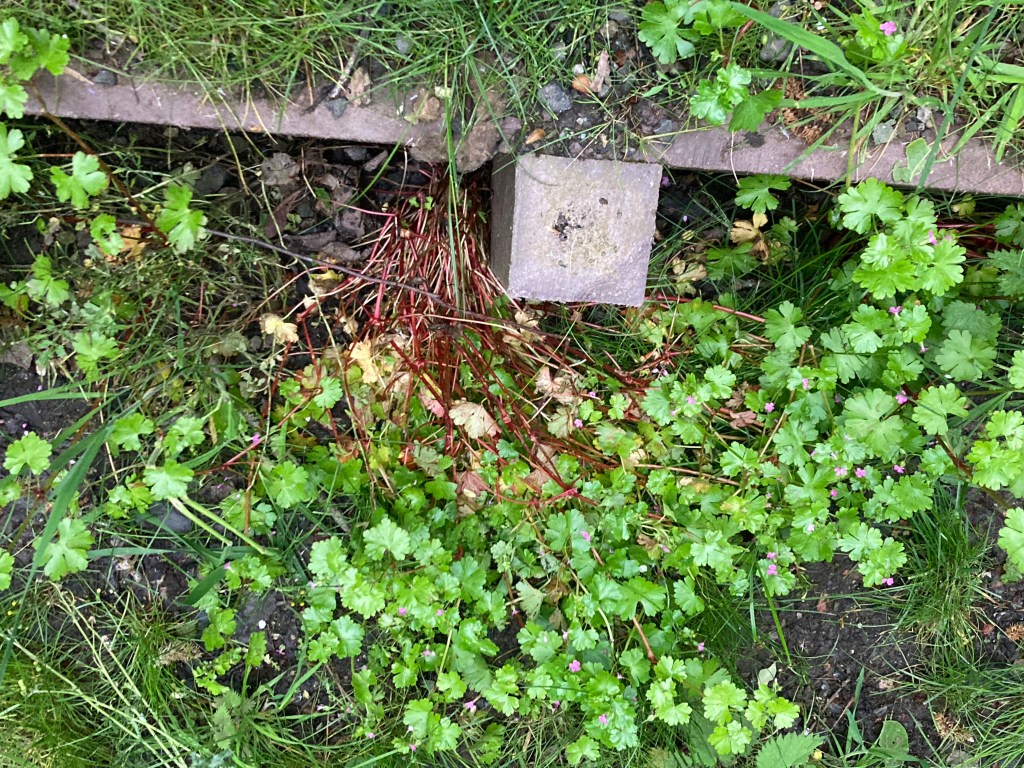
Thriving in a variety of settings this species prefers calcareous (chalky or limestone-rich) soils and commonly grows on:
- Mortared walls and rock outcrops
- Steep dry banks
- Roadside verges
- Churchyards
- Waste ground
- Garden boundaries
- Hedgebanks
It adapts well to neutral or even moderately acidic soils, such as the sandstone areas of Cheshire.
The plant’s ability to exploit man-made habitats like railway ballast, gutters and curb-sides makes it a familiar sight in urban areas where it provides early-season nectar and pollen for various insects, including bees and Hoverflies.
Ecological Value
As a mat-forming annual, it acts as temporary ground cover on roadside banks and disturbed wasteland, holding thin layers of soil together without permanently choking out larger perennial flora.
While not a primary host for many specialist species Shining Cranesbill does serve as a food plant for the larvae (caterpillars) of a few lepidoptera species including:
• Annulet moths (Charissa obscurata), whose caterpillars feed on Shining Cranesbill, along with other herbaceous plants and heather. This subtle grey moth is widespread and associated with dry, stony, or chalky habitats.
• Barred Carpet moth (Martania taeniata) Classified as Nationally Scarce due to its low population and fragmented range this species frequents damp, shaded woodlands and similar sheltered, humid environments, very much like the site I found this colony of G. lucidum at (I’ll have to return to see if I can spot any).
• Brown Argus butterflies (Aricia agestis), aterpillars of this expanding species have increasingly used various cranesbills, including Shining Cranesbill, as food plants beyond their traditional rock-rose hosts.
Medicinal and Traditional Uses
Historically G. lucidum was valued mainly for its diuretic and astringent properties as, like many members of the Geranium genus, it contains tannins and other compounds that contribute to these effects, helping to tighten tissues, reduce inflammation, and promote fluid balance in the body.
As a diuretic it is used to support kidney function and increase urine output, aiding in the management of fluid retention.
As an astringent this plant’s tannins make it useful for conditions involving excessive secretions, such as mild diarrhea, or for topical applications on wounds and mucous membranes to help staunch minor bleeding and soothe irritation.
In other parts of Europe it is sometimes applied for healing wounds, skin complaints, and general anti-inflammatory purposes. However, it has never achieved the same prominence in British folk medicine as its relative, Herb Robert (Geranium robertianum), which was far more widely gathered and employed.
Scientific research focused specifically on Geranium lucidum seems to be fairly limited from what I can find. While the broader Geranium genus has been studied for bioactive compounds (including flavonoids and tannins) with potential antioxidant, antimicrobial, and anti-inflammatory activities, there seem to be no robust clinical trials confirming the efficacy or safety of Shining Cranesbill for therapeutic use.
For serious herbal applications, please consult a qualified medical herbalist and rely on better-researched cranesbill species.
Foraging Safely
As with all wild plants:
- Correct identification is essential.
- Avoid harvesting from roadsides, polluted areas, or sites treated with pesticides.
- Do not use internally or topically without professional guidance, especially if pregnant, breastfeeding, or on medication.
- Potential for allergic reactions exists, as with any herbal remedy.
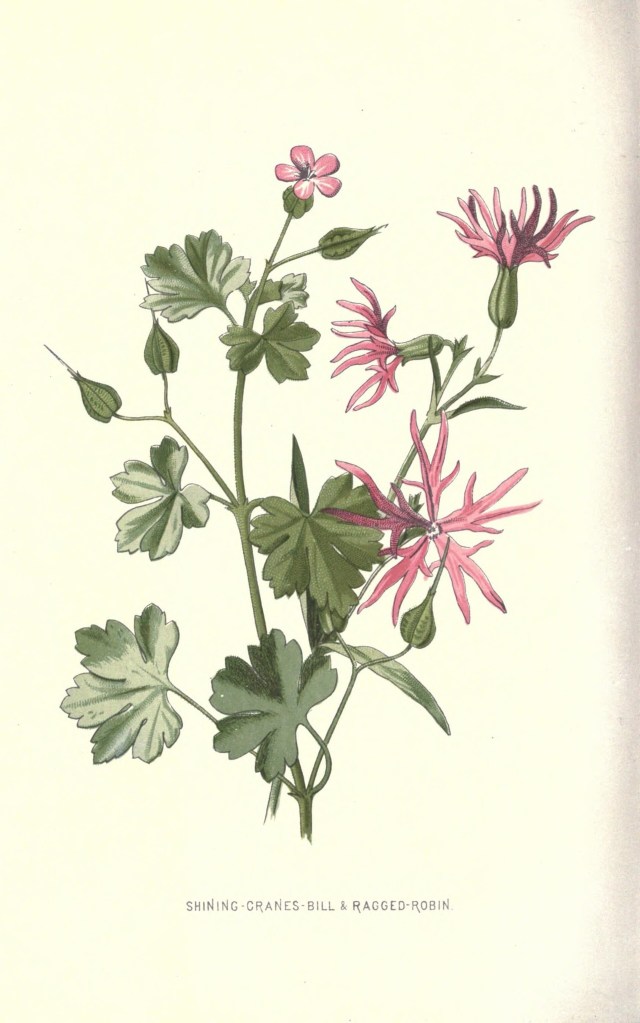
From Familiar wild flowers figured and described, by F. Edward Hulme, 1878
“…the two smallest geraniums (Lucidum and Herb-Robert) are made to delight us with their leaves rather than their blossoms…”
From John Ruskin’s Proserpina
(I shall write about John Ruskin’s life in Cumbria soon)
Thank-you for reading. If you enjoyed this piece and would like to support further articles on the wildlife and history of the Northwest, you can buy me a coffee here.
Alex Burton-Hargreaves
(June 2026)

