Ecology, Identification, Uses, Folklore etc of Yellow Flag Iris (Iris pseudacorus)
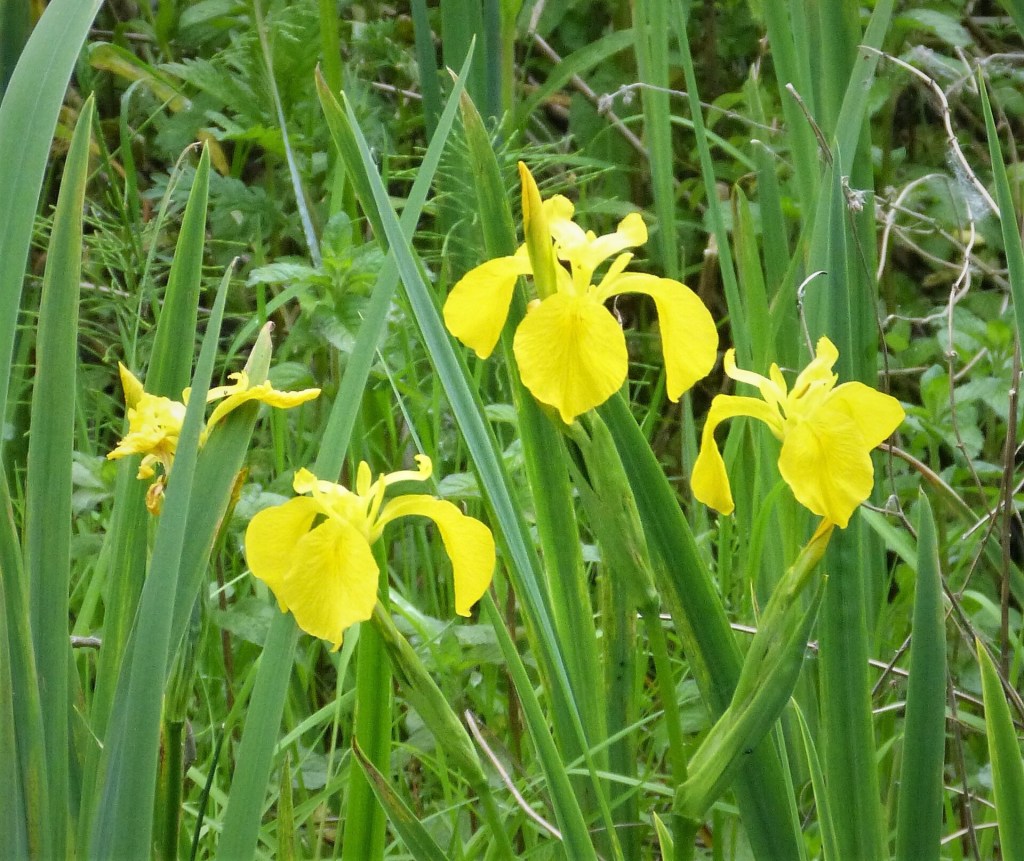
Yellow Flag Iris (Iris pseudacorus) is our only native aquatic Iris (the other being the rather different Stinking Iris of drier habitats), and it feels thoroughly at home in the cooler, wetter climate of Northern England.
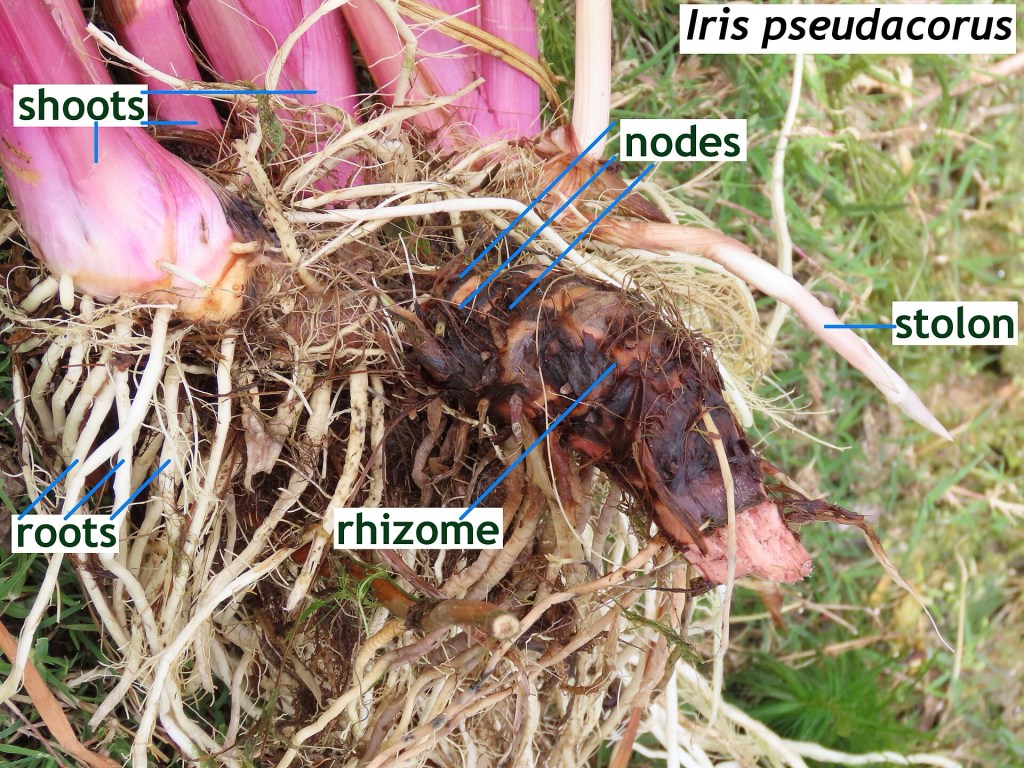
A perennial plant it is hard to miss once you know it, growing from a thick, creeping rhizome to send up robust, sword-shaped leaves that can reach up to a metre or more in height. These leaves are a vibrant green with a prominent central midrib and a slightly bluish tint, arranged in a fan-like fashion that gives the plant its ‘flag’ appearance.
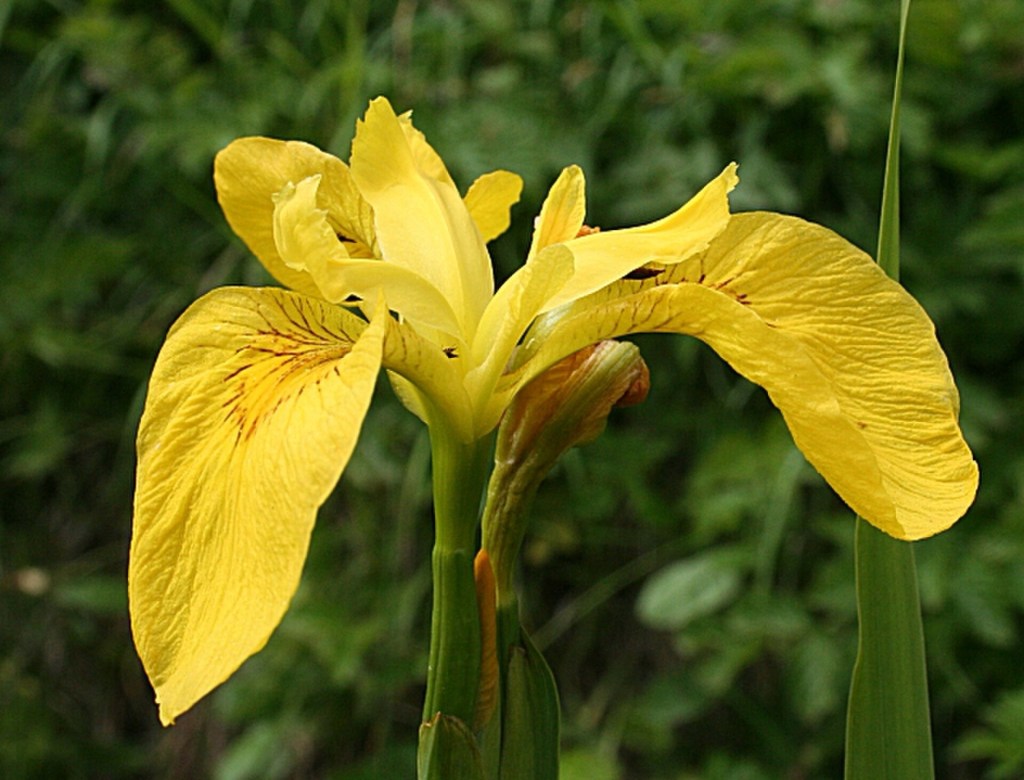
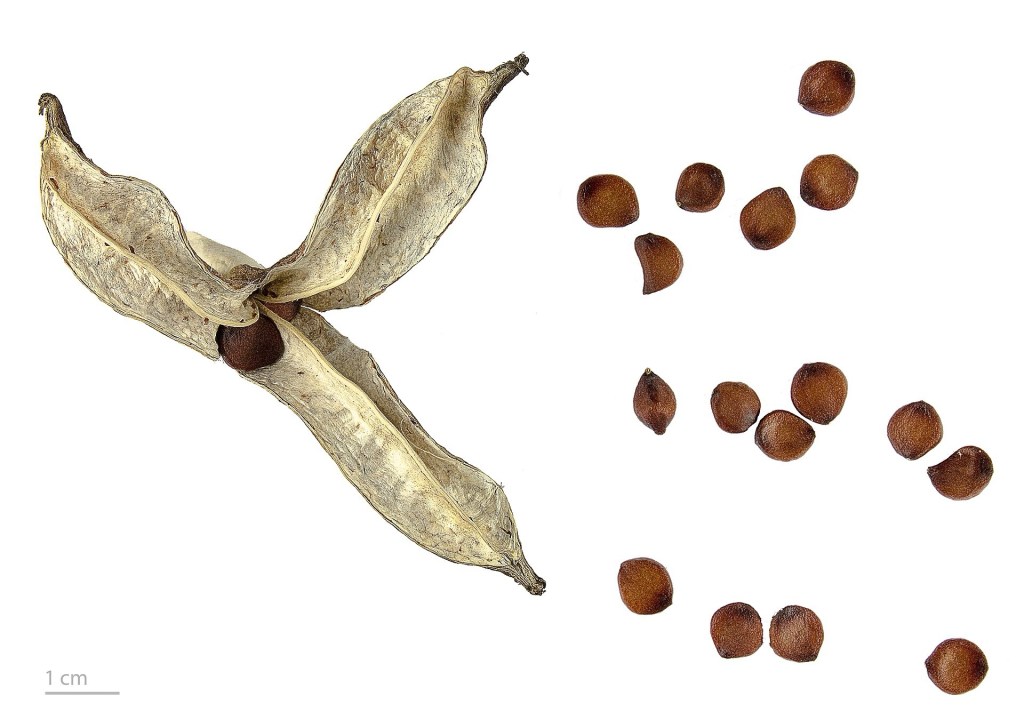
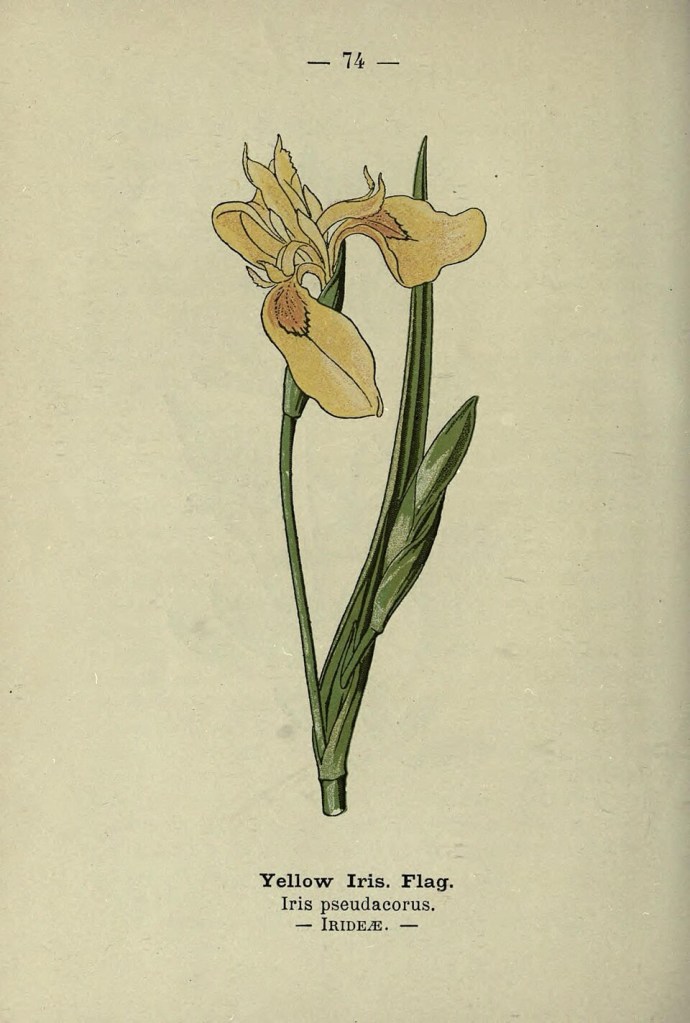
The flowers appear from May to August (sometimes into September in milder spots), borne on stout stems. Each bloom is a classic Iris shape: three large, drooping outer petals (falls) that are a rich, golden yellow, often with darker brownish or purplish veining near the base, and three smaller, upright inner petals (standards). At the centre sits the distinctive ‘beard’ of stamens and style branches. After flowering, it produces large, green, capsule-like seed pods that eventually turn brown and split open to reveal rows of flattened, brown seeds.
The specific epithet pseudacorus means ‘false Acorus’, referring to the similarity of its leaves to those of Sweet Flag (Acorus calamus), though the two are unrelated.
Habitat
Yellow Flag thrives in the wet, often nutrient-rich soils that characterises so much of the country, in particular here in the northwest. You’ll find it in:
- The margins of ponds, lakes, and slow-moving rivers
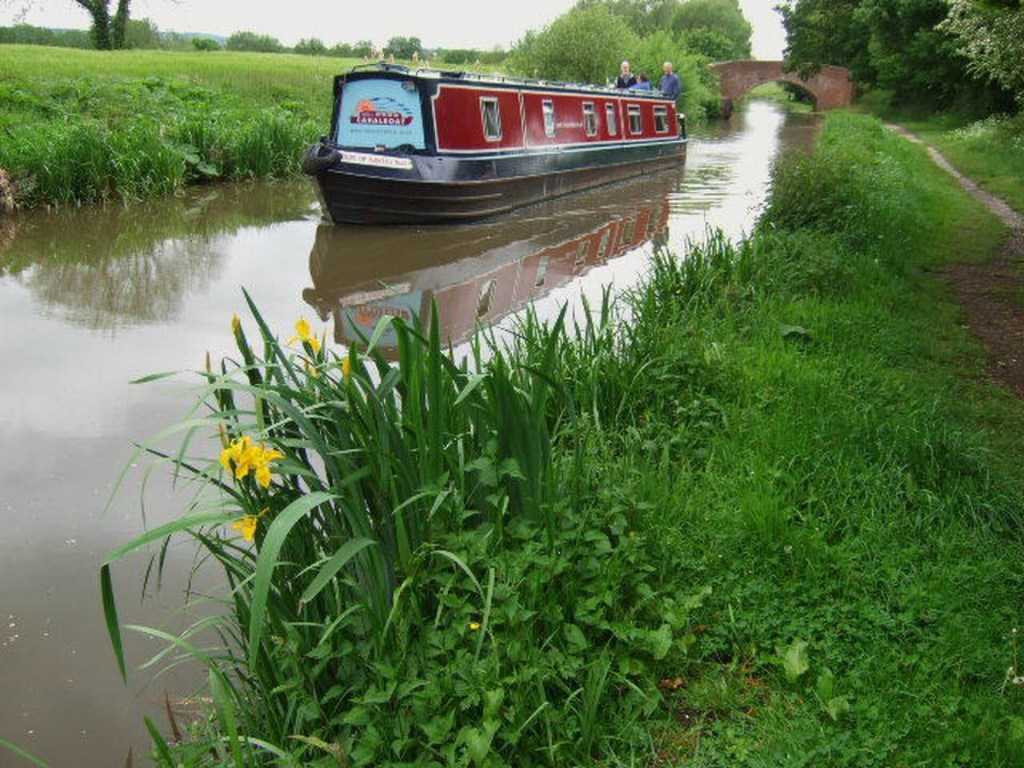
- In ditches, canals, and fenny areas
- Wet woodlands and carr
- Saltmarshes and coastal wetlands (it tolerates some salinity)
It is particularly abundant in the lowland areas of Lancashire, especially round the fringes of the Fylde plain’s many marl pits, the meres of the Cheshire plains, and our canal banks. Its preference for damp, neutral to slightly acidic conditions suits our local ground perfectly, and it can even tolerate periodic submersion.
(John Richfield)
Ecological Value
Like many wetland plants, I. pseudacorus plays an important role in its ecosystem. Its dense clumps provide cover and nesting sites for birds such as Moorhen and Reed Warbler, while the rhizomes help stabilise banks and prevent erosion. The flowers are visited by a range of pollinators, particularly larger bees (including Bumblebees) that are strong enough to push open the petals to reach the nectar and pollen.
The seeds are dispersed by water and can float for some time, allowing the plant to colonise new areas along waterways. In autumn and winter, the decaying leaves add to the detritus that supports aquatic invertebrates.
(Roger Culos)
Uses
Yellow Flag has a long association with human culture, one of its most important traditional uses was as a source of natural dyes, making it particularly valuable in the textile industry.
Its flowers yield a bright yellow dye, the leaves can produce green or yellowish tones, famously used in colouring Harris tweed in the Western Isles of Scotland, and the rhizomes (roots) give brown or, when combined with iron sulphate or bog iron, a strong black or blue-black dye. This was employed for tartans, tweeds, and even as a source of ink for manuscripts.
In the Northwest, where wool and cloth production has deep historical roots, such plant dyes would have been a valuable local resource in areas with abundant wetlands. The plant’s tannin-rich roots also made it useful in leather tanning and ink-making.
Yellow Flag has a long history in British herbal traditions too, as documented by figures like John Gerard, and Nicholas Culpeper in his Complete Herbal. The rhizome is strongly astringent, cooling, and drying and traditional uses included:
• Treating diarrhoea and excessive bleeding (due to its astringency).
• As a powerful cathartic or purgative (though this was risky due to its acrid nature).
• Juice of the root for toothache (rubbed on the gum), coughs, dropsy, and even as a cosmetic poultice for bruises and skin discolouration.
Culpeper noted its value for ‘drawing forth choler’ and various internal complaints. In parts of Northern England, it featured in folk medicine, though records are sparser than for more accessible meadow plants.
Important Caution: Modern sources strongly advise against internal use. The fresh plant contains irritants that can cause dermatitis, and it is considered toxic to humans and pets if ingested in quantity. Always consult qualified practitioners and source any herbal materials responsibly
Symbolism and Mythology
The very name Iris comes from Greek mythology. Iris was the personification of the rainbow and a swift messenger of the gods, bridging the realms of sea, sky and earth. Daughter of the sea god Thaumas and the cloud nymph Electra, she carried messages for Hera and others, sometimes travelling along rainbows or even beneath the waves.
This association means that the flower is often used as a symbol of hope, communication and connection between worlds.
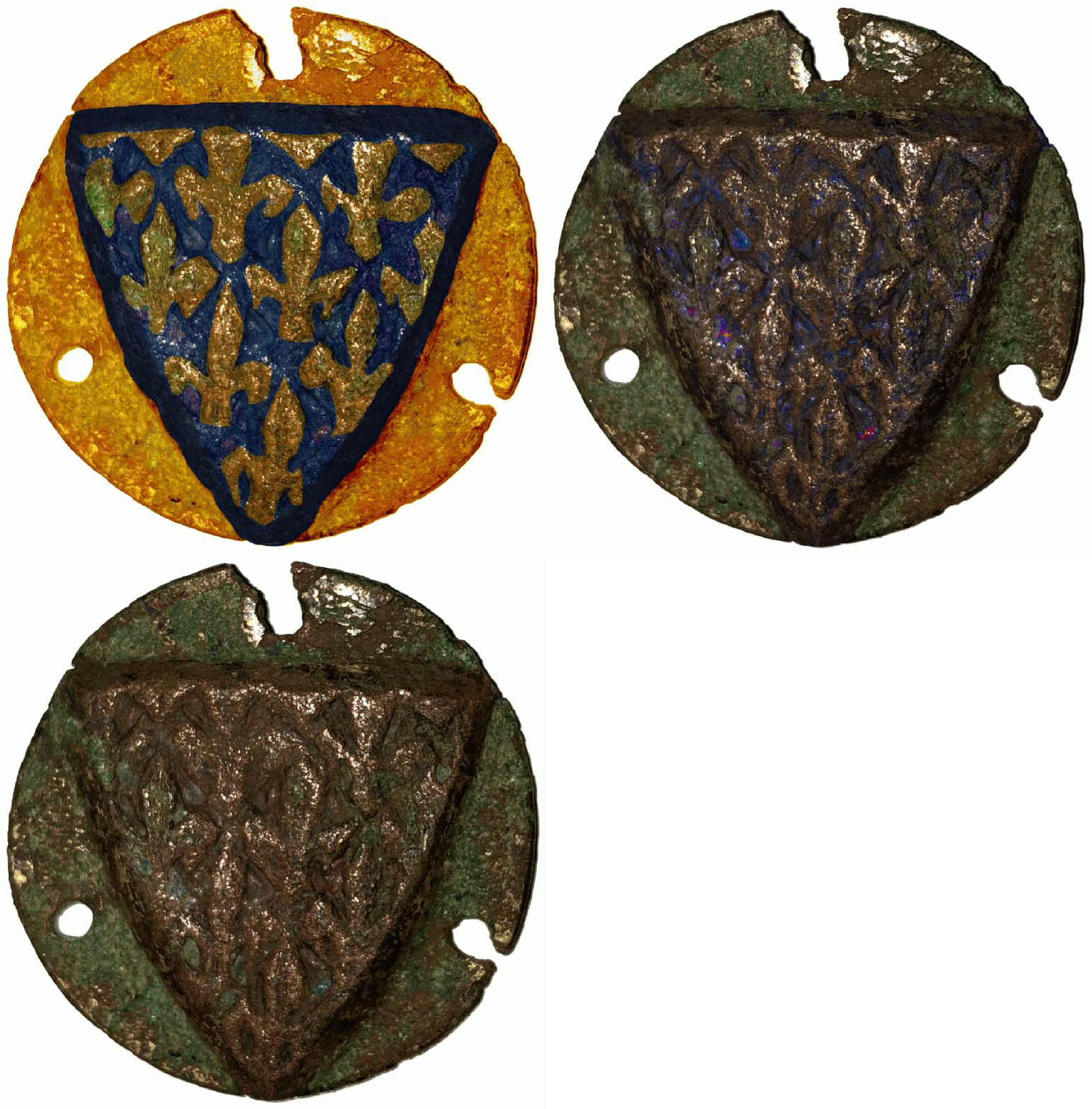
Perhaps the most famous folkloric link is to the fleur-de-lys, the iconic heraldic emblem long associated with French royalty. Though often called a ‘lily’, many historians and botanists believe the stylised three-petalled design more closely resembles the Yellow Flag Iris than the white Madonna Lily.
One enduring legend ties it to Clovis, the first Christian king of the Franks. According to the tale, while leading his army across a river (possibly the Lys in Flanders, where Yellow Flags grow abundantly), Clovis followed a doe to a safe ford. Yellow Irises on the opposite bank marked the shallow crossing. Grateful, he adopted the flower as a symbol of victory and divine favour, placing one in his helmet, the three petals representing faith, wisdom and chivalry (or variations such as prosperity, royalty and valour).
Back here in Britain common names like Daggers, Jacob’s Sword and Water Flag reflect the plant’s sword-shaped leaves and watery habitat, and in Celtic tradition it is associated with water spirits and the fairy realm, sometimes seen as protective for travellers near treacherous waters.
(John Poysen)
Conservation and Gardening
A common species it is not currently a species of conservation concern, though like all wetland plants it benefits from the protection of its habitats against drainage, pollution, and development. In parts of North America and elsewhere it has become invasive, but here in its native range it is a welcome and characterful part of our biodiversity.
If you have a pond or damp area in your garden, it makes an excellent addition (always source from reputable native stock suppliers). It is robust, low-maintenance, and provides that splash of early summer colour while supporting local wildlife. Pairing it with Marsh Marigold, Water Mint or Water Lilies makes for a lovely wetland corner.
On The Middlewood Way
By Lancashire poet William Barton
On the Middlewood Way the festival of May has almost ended –
white and pink blossom replaced by crimson clover,
spindly dog daisies, blue forget-me-nots, fox-gloves, and king-cups.
Yellow flag iris flourish in the shallow pools
which run alongside the old permanent way.
The new growing tips of the hawthorn hedges
lining the track are blood red.
Under the trees the path is lit by a shifting pattern of sunlight,
as self-seeded youngsters struggle for light and space,
under the fuller canopy of older residents.
Further along, a stand of densely planted pines
casts an ominous green shadow.
By contrast the light on the canal bank
is almost painful in its brightness.
A boat painted in gaudy traditional livery
chugs quietly past, leaving behind a friendly greeting
and a swirl of sunlit ripples.
On the hillside the sharp yellow gorse bushes are still in full bloom
complementing the clumps of pink rhododendron.
In the distance, a optimistic red fox takes refuge
behind a stone wall overlooking a field of sturdy lambs.
A heron in clerical grey bickers with two raggedy crows
beside a stream clattering over moss covered stones.
The muddy track watered by last night’s rain is every shade of brown.
but in the distance the hills are slate grey
merging into the colour of clouds and sky,
and the white-washed Bowderstonegate Farm stands out sharply
against a rinse of greens and greys.
Thank-you for reading. If you enjoyed this piece and would like to support further articles on the wildlife and history of the Northwest, you can buy me a coffee here.
Alex Burton-Hargreaves
(June 2026)

