Ecology, History, Uses etc of Borago officinalis, Including a Simple Recipe for Borage Cordial
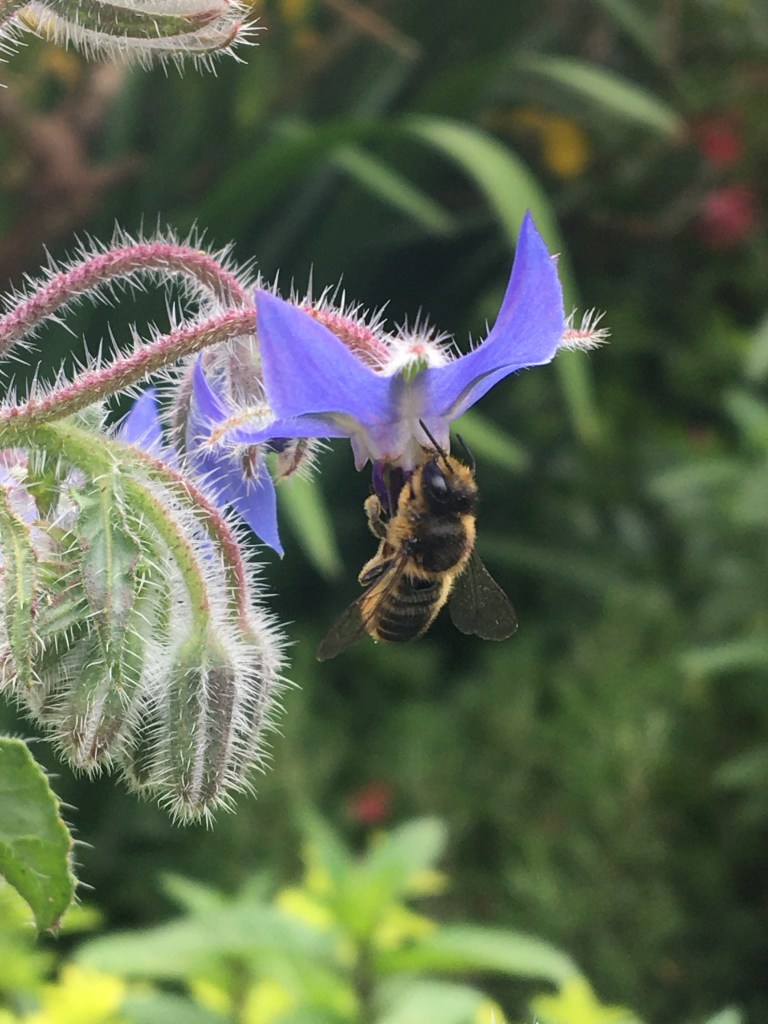
Borage, with its striking star-shaped blue flowers and bristly, cucumber-scented leaves, is a charismatic annual herb that brings a touch of Mediterranean sunshine to the (usually) cool British landscape.
Known variously as starflower, the ‘bee plant’, or the ‘herb of courage’, Borago officinalis (of the family Boraginaceae) is a familiar sight in cottage gardens and allotments all across the British Isles, and occasionally escapes into waste ground, roadsides, and disturbed soils too.
Its bright blue blooms, with their prominent black anthers forming a central cone, are a magnet for pollinators and a delight for foragers and gardeners alike. Though not a true native, Borage has naturalised readily in our region thanks to its self-seeding habit and tolerance for a range of conditions.
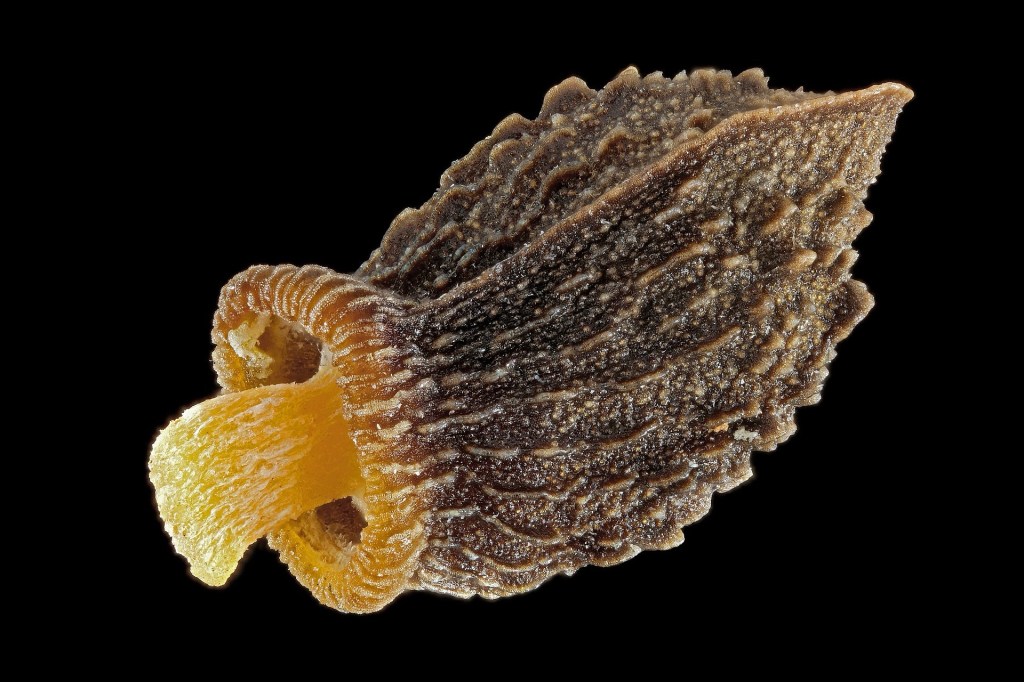
with a white or yellowish appendage called an elaiosome. This fat body attracts ants, which carry the seed to their nest. Seed dispersal by ants is known as myrmecochory
(text and image by Hans Stuessi)
Description and Identification
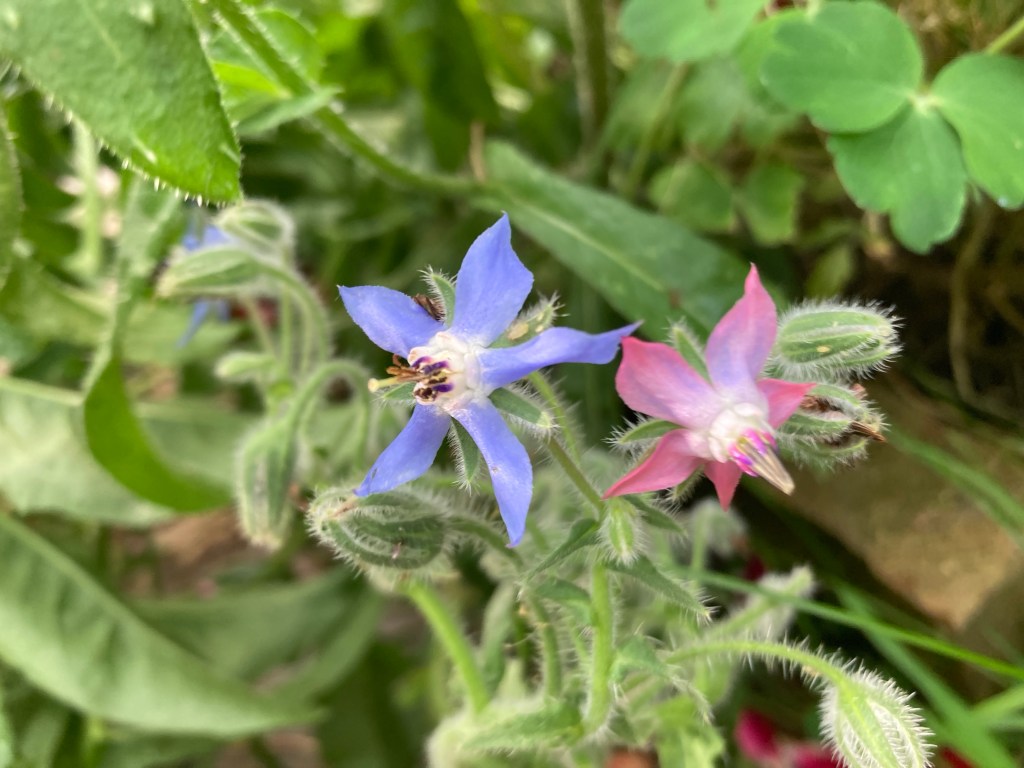
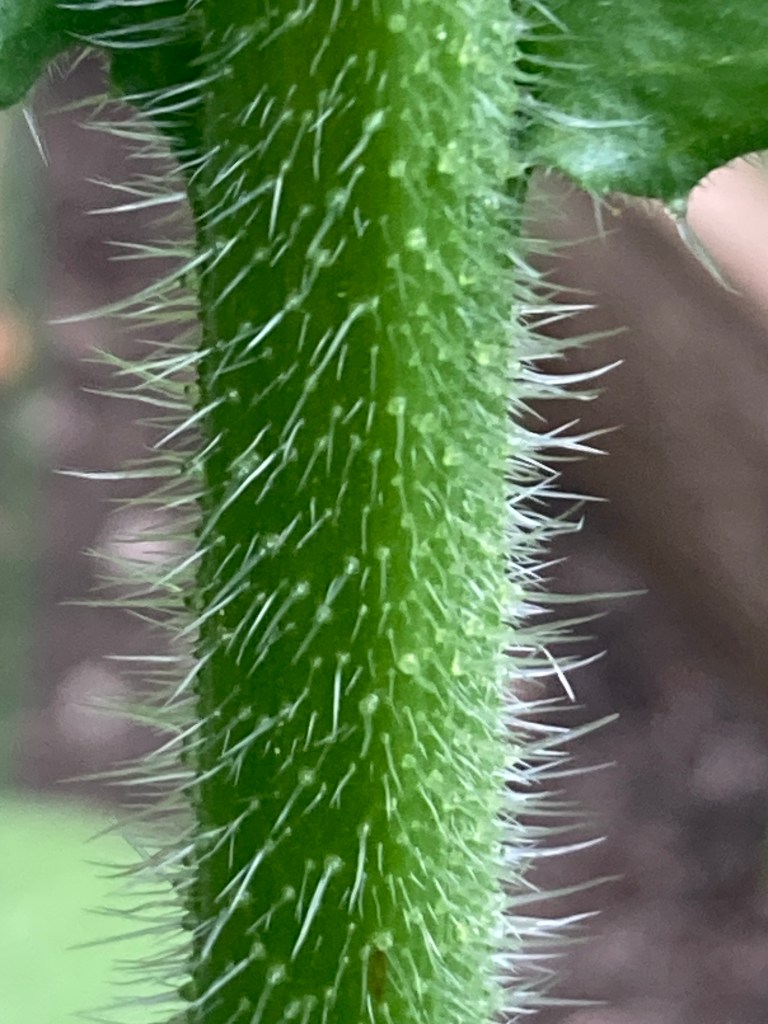
A fast-growing annual that typically reaches 30 to 60 cm (sometimes up to 1 metre) in height Borage’s stems and leaves are covered in stiff, white hairs that can feel prickly to the touch, a trait shared with many members of the borage family, including Comfrey. The leaves are large, oval to lance-shaped, with a wrinkled texture and a distinctive fresh, cucumber-like scent when crushed.
The flowers appear from June through to September (or longer in milder spots), held in loose, drooping clusters, and each bloom is a perfect five-pointed star, usually a vivid sky-blue, although it changes colour as it blooms from pink through to purple. After flowering, the plant produces four dark nutlets containing seeds that ensure it returns year after year in the same spot.
Habitat & Ecology
While native to the Mediterranean region, Borage has become widely naturalised across much of Europe, including Britain, where it is most commonly found as a garden escape or relic of cultivation on:
- Disturbed ground and waste places
- Roadside verges and railway embankments
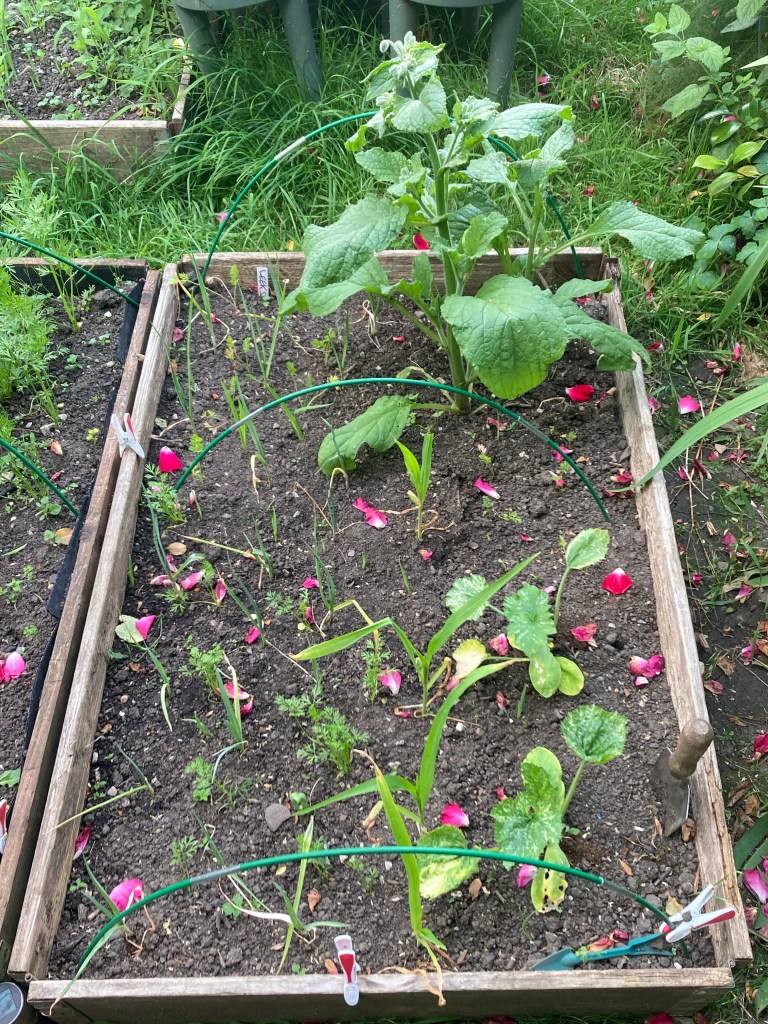
- Allotments and vegetable patches
- Churchyards and old garden boundaries
- Sunny banks and field edges
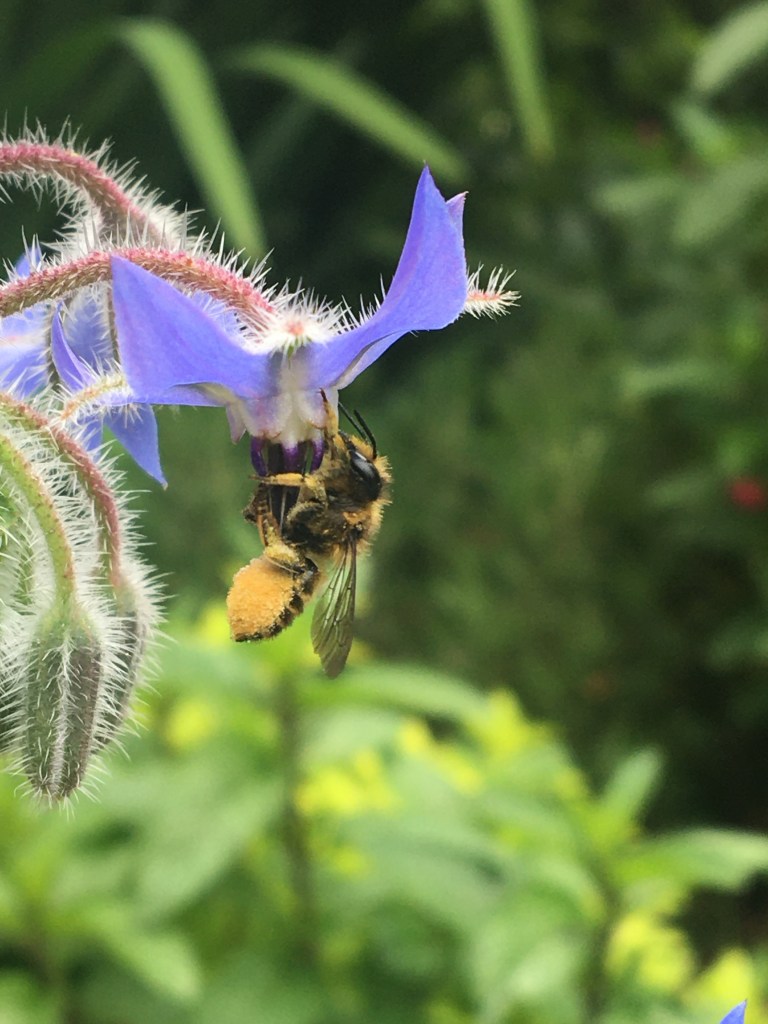
Ecologically, Borage punches above its weight. Its flowers produce abundant nectar and pollen, making it one of the very best plants for bees, with honeybees, Bumblebees, and solitary bees all flocking to it (hence ‘bee-plant’).
The plant’s hairy leaves and stems also offer some protection against certain pests, and it is sometimes used in companion planting to deter unwanted insects or to improve soil structure when dug in as green manure. As an annual, it colonises gaps quickly without becoming aggressively invasive in our cooler climate, though it self-seeds freely enough to appear in unexpected corners year after year.
“Borage for Courage”
The name Borago may derive from the Latin borra (rough hair) or possibly from Arabic or Celtic roots, but its reputation as the ‘herb of courage’ is well established. Medieval and Tudor herbalists praised it for lifting the spirits and strengthening the heart. The old saying “Borage for courage” encouraged its use in drinks given to soldiers before battle.
In Britain, Borage arrived with monastic gardens and their herbal traditions. By the 16th and 17th centuries, it featured in the works of John Gerard and Nicholas Culpeper. Gerard noted its cheerful effect: “It maketh a man merry and joyful”. It was commonly added to wine, ale, or cordials, the young leaves and flowers imparting a cool, cucumber flavour (see later for recipe).
Here in Northwest England, Borage found a natural home in the cottage gardens and kitchen plots of Lancashire and Cheshire. It suited the region’s climate and was valued both medicinally and culinarily. Traditional uses included treating fevers, respiratory complaints, and melancholy, as well as external applications for skin conditions.
Modern Uses and Foraging Notes
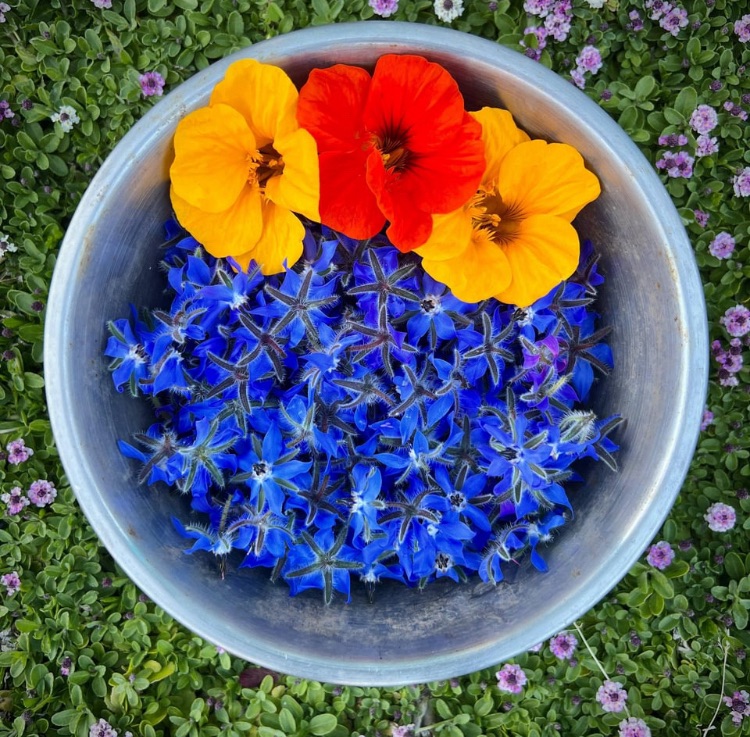
Today, Borage is enjoying something of a revival. The flowers make beautiful, edible garnishes for salads, desserts, or ice cubes in summer cordials, and the young leaves can be used sparingly in salads or cooked like spinach (older leaves become rather hairy and less palatable).
It is rich in minerals and gamma-linolenic acid (GLA), which reduces the severity of PMS symptoms (e.g; breast pain and bloating), helps soothe discomfort related to menopause, aids nerve health in individuals experiencing diabetic neuropathy, and boasts anti-inflammatory properties, offering supportive relief for conditions like rheumatoid arthritis.
Foraging tips:
- Pick young leaves and open flowers from clean, unsprayed sites away from busy roads.
- Use gloves if the hairs irritate your skin.
- Always be 100% certain of identification.
- Consume in moderation; pregnant or breastfeeding individuals should seek professional advice.
Ego Borago
In his influential work The Herball or Generall Historie of Plantes, the English herbalist John Gerard quoted an old Latin verse that perfectly captures the plant’s reputation for bringing joy and courage:
Pliny calleth it Euphrosinum, because it maketh a man merry and joyfull: which thing also the old verse concerning Borage doth testifie:
Ego Borago
Gaudia semper ago.
(I, Borage, bring alwaies courage / joy)
Further on Gerard continues with his own enthusiastic endorsement:
“Those of our time do use the flowers in sallads to exhilerate and make the mind glad. There be also many things made of these used everywhere for the comfort of the heart, for the driving away of sorrow and increasing the joy of the mind. The leaves and floures of Borage put into wine make men and women glad and merry and drive away all sadnesse, dulnesse and melancholy…”
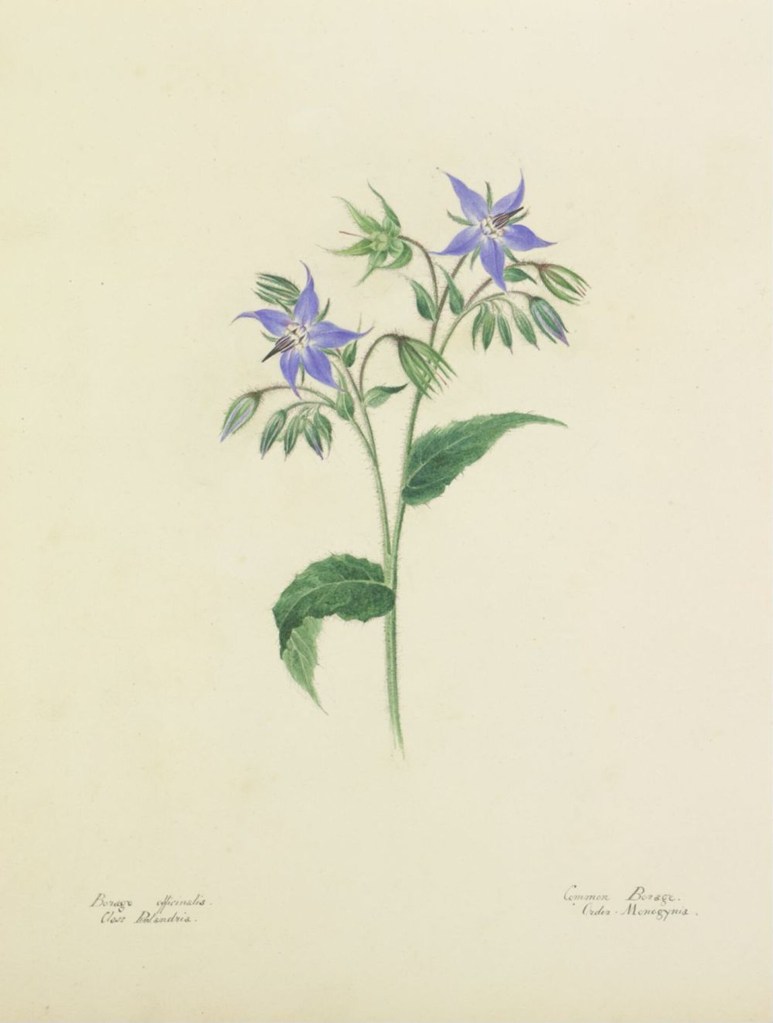
Lydia Penrose (1787–1842)
Nepenthe of Borage (A simple recipe for about 300 to 400ml of Borage Cordial)
Ingredients:
• 1 to 2 large handfuls (about 50 to 75 g / 1 to 2 cups loosely packed) of fresh Borage flowers picked on a dry morning (remove any green sepals if desired for a clearer syrup)
• 250 to 300 ml (1 to 1¼ cups) of fresh water
• 250 to 300 g (1 to 1¼ cups) of white sugar or clear honey (a 1:1 ratio by volume is traditional for a medium syrup; use more sugar/honey for a thicker, better-keeping version)
• Optional flavourings: a few fresh Borage leaves (for a stronger cucumber note), a strip of lemon peel, or a small sprig of lemon balm
Method (a simple infusion style, closest to the likely Tudor practice):
1. Gently rinse the Borage flowers if needed and pat dry. Place them in a clean heatproof bowl or jug.
2. Bring the water to a gentle boil, then pour it over the flowers. Cover and allow to infuse for 30 to 60 minutes (or longer for a stronger infusion), much like making a strong tea. This extracts the colour, mild flavour, and purported virtues.
3. Strain the liquid through a fine sieve or muslin cloth, pressing gently on the flowers to release more liquid. Discard the spent flowers (or better still compost them).
4. Measure the resulting liquid and pour it into a clean saucepan. Add an equal volume (or slightly more) of sugar or honey.
5. Heat gently over a low to medium heat, stirring until the sugar/honey is fully dissolved. Do not boil vigorously, keep it to a gentle simmer for 5 to 10 minutes to thicken slightly and help preserve it. Skim off any scum that rises.
6. Allow to cool slightly, then pour into sterilised glass bottles or jars while still warm. Seal tightly.
Storage: Store in the refrigerator for 2 to 4 weeks (the sugary version keeps longer than honey). For longer storage in the historical manner, use a higher sugar ratio and/or add a splash of brandy or vinegar as a preservative.
How to Use (in the Spirit of Gerard)
• As a cordial: Dilute 1 to 2 teaspoons in a glass of wine, ale, cider, or water. Gerard would approve of adding it to wine “to make men and women glad and merry”
• For cheer: Take a small spoonful neat or in warm water as a comforting tonic.
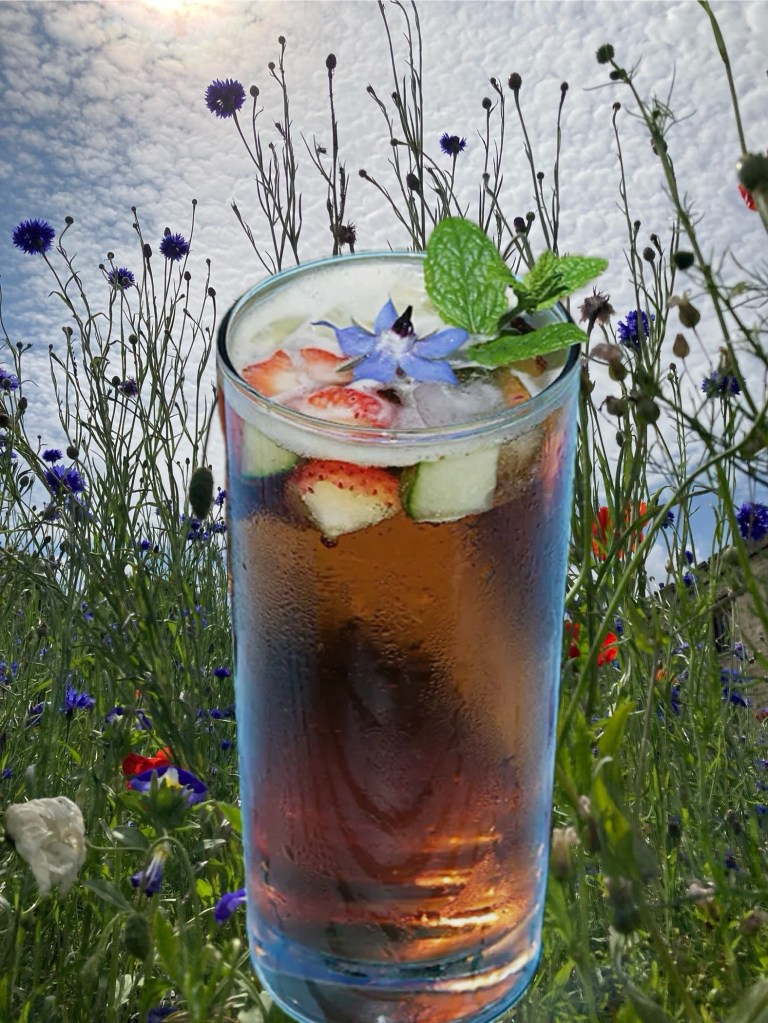
• In drinks: Use in lemonade, elderflower cordial mixes, summer punches, or Pimms, floating fresh borage flowers on top for authenticity and beauty.
Thank-you for reading. If you enjoyed this piece and would like to support further articles on the wildlife and history of the Northwest, you can buy me a coffee here.
Alex Burton-Hargreaves
(June 2026)

