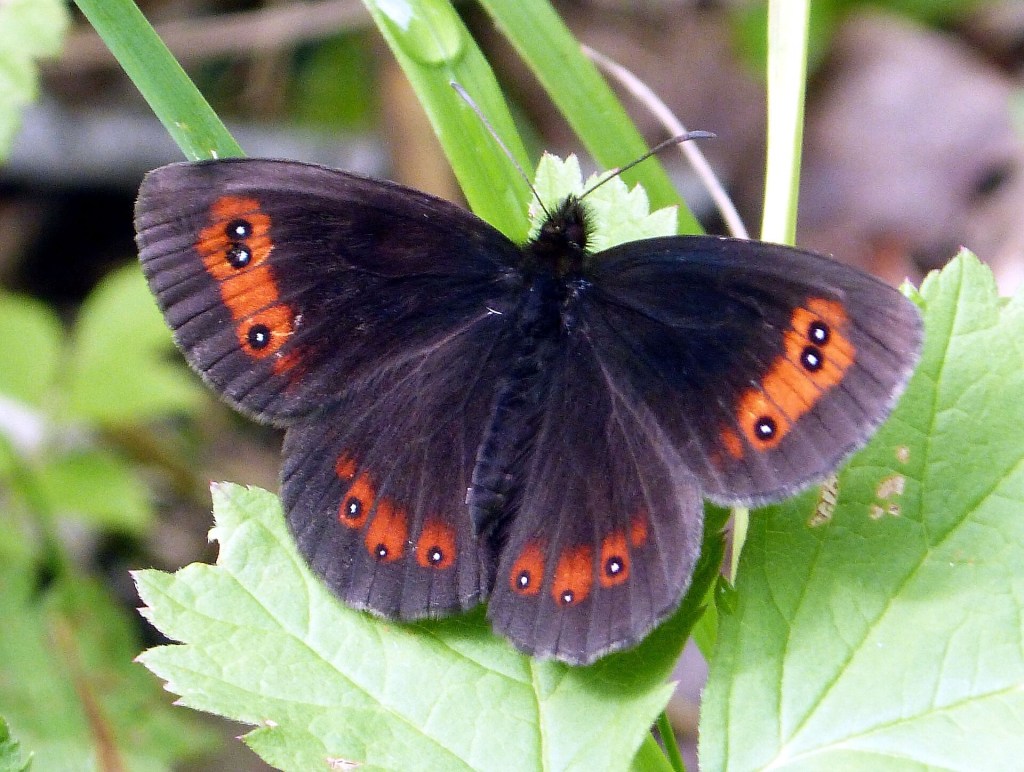
The limestone outcrop of Arnside Knott, rising high above Morecambe Bay in its isolated location in northern Lancashire, is one of the most important butterfly sites in England and among its many species, the Scotch Argus (Erebia aethiops) holds special significance.
This dark, elegant butterfly, so-named after Argus Panoptes, the All-Seeing Giant of Greek mythology, is widespread across much of Scotland, yet in England it survives at just two locations: Arnside Knott and Smardale Gill.
The Arnside colony occupies the southernmost edge of the species’ British range and has long fascinated lepidopterists.
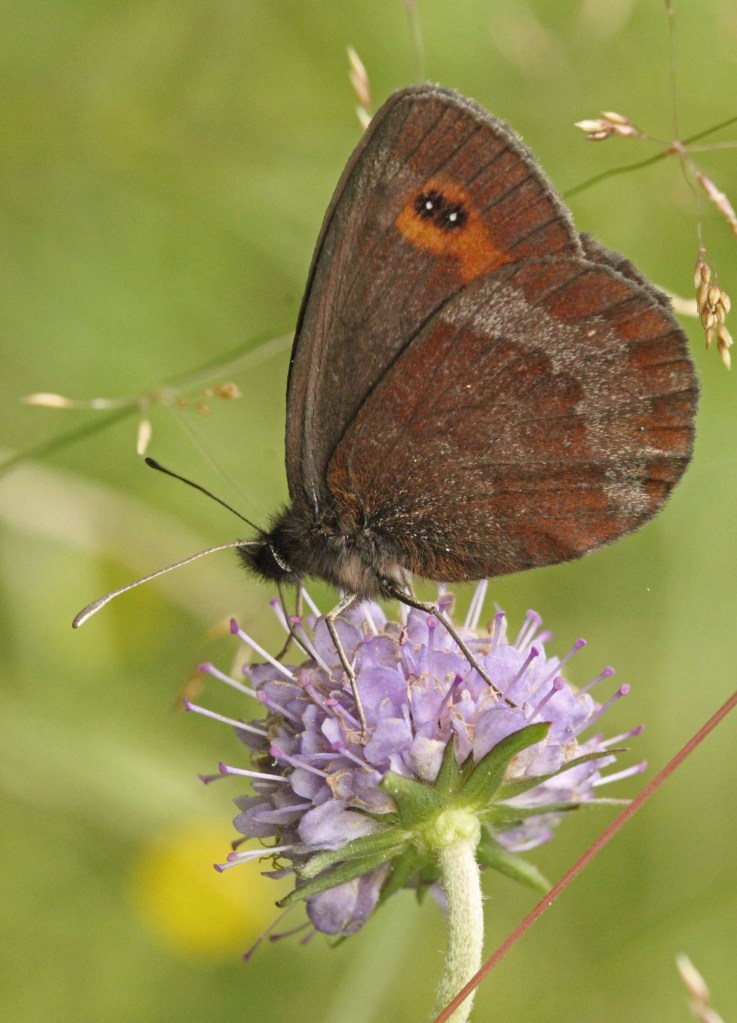
Erebia derives from the Greek root for darkness Erebus (Ἐρεβία)
(Janet Graham)
Appearance and Identification
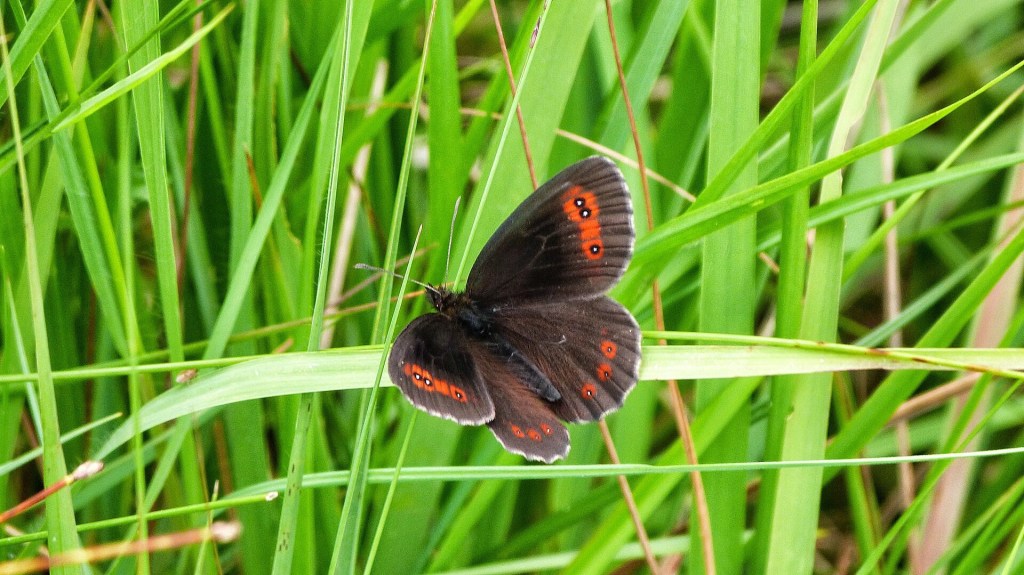
The Scotch Argus is a medium-sized butterfly with a wingspan of roughly 44 to 52 mm. Both sexes are predominantly dark chocolate-brown and their upperwings carry a distinctive band of bright orange-brown containing a row of black eyespots, each typically centred with a small white pupil. In flight the butterfly appears almost black, flashing its orange bands as it moves.
Males tend to be slightly smaller and darker than females, with more intense colouring and when settled with wings closed, the mottled brown underside provides excellent camouflage against the limestone grassland and leaf litter.
Habitat at Arnside Knott
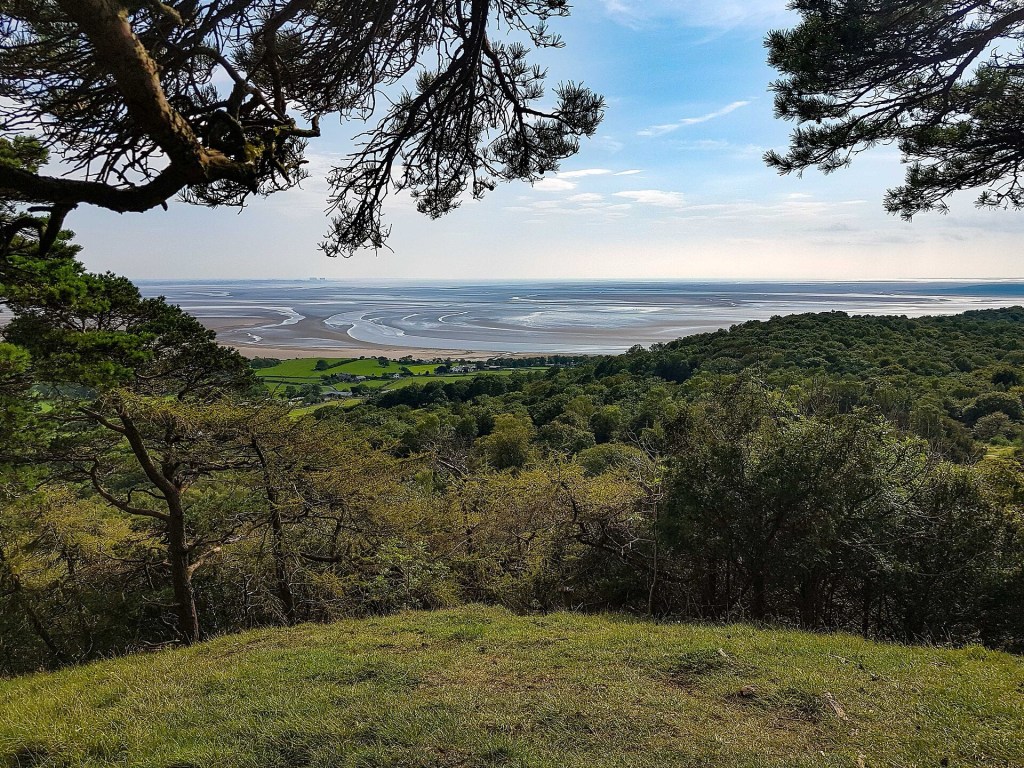
Arnside’s Scotch Argus population occupies an area of sheltered limestone grassland interspersed with woodland edges and clearings, the combination of open, sunny slopes and nearby tree cover creating a warm microclimate that the butterflies favour.
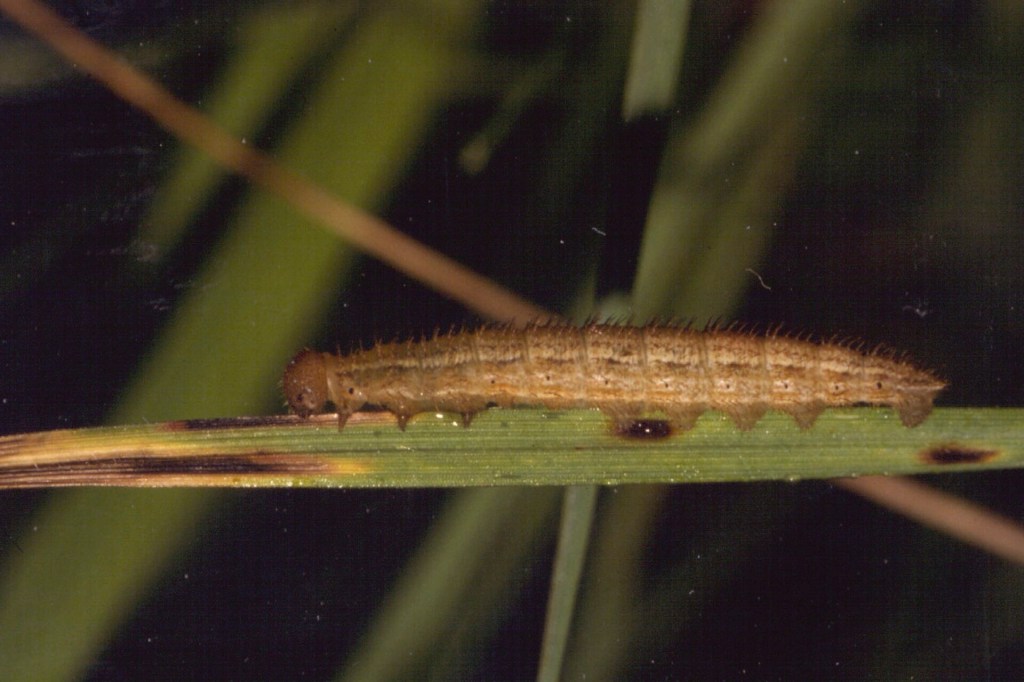
Their larval foodplants are various grasses, particularly species of Agrostis, Festuca and Poa, which thrive in thin soils over Carboniferous limestone. Adults are often seen flying low over the grass, stopping frequently to nectar on scabious, knapweed, thistles and other late-summer flowers.
The site’s topography is crucial. The Knott rises steeply from the surrounding lowlands, providing a range of aspects and shelter from the prevailing winds that sweep across the estuary.
This sheltered, sunny environment allows the colony to persist despite being far south of the butterfly’s Scottish strongholds.
(Specimen seen at Arnside by Alastair Rae)
Life Cycle and Behaviour
Adults typically emerge in late July and fly through August, with numbers peaking in the first half of the month depending on weather. Males patrol territories, chasing rivals and seeking females, and mating pairs can sometimes be found resting low in the vegetation. Females lay eggs singly on grass blades and the larvae overwinter and resume feeding in spring before pupating. This species is single-brooded.
Scotch Argus are strongly associated with warm, still conditions, on sunny days they can be abundant and conspicuous, however in cool or windy weather they become far harder to find, often resting deep in the grass.
(Erwin Rennwald)
Conservation Status and Research
The Scotch Argus is listed as Vulnerable on the Red List of British Butterflies (2021) as, while still common and widespread in Scotland, its English populations are tiny and isolated. Historical records show that the species once occurred more widely in northern England, but most colonies have disappeared, leaving only Arnside Knott and Smardale Gill.
Genetic studies of the Arnside population have provided encouraging news. Research examining the structure of British Scotch Argus populations found that the Arnside colony, despite its isolation at the southern range margin, does not appear to suffer from severe inbreeding. This suggests that the population retains enough genetic diversity to remain viable, provided its habitat continues to be managed appropriately.
Conservation management at Arnside focuses on maintaining open grassland while retaining some woodland edge and scrub for shelter. Overgrazing, or conversely scrub encroachment and excessive shading could both threaten the colony. The site is carefully monitored by local butterfly recorders and conservation organisations like Butterfly Conservation Lancashire.
Visiting Arnside Knott
The best time to search for Scotch Argus is on warm, sunny days in late July and August. Paths on the southern and western slopes of the Knott often yield the highest numbers and the butterflies can be relatively approachable when nectaring or resting, making them rewarding subjects for photography. Visitors should stick to established paths though to avoid trampling the fragile grassland habitat.
Arnside Knott is rich in other butterflies too, including High Brown Fritillary, Northern Brown Argus and various skippers, so a visit in high summer offers a chance to see several scarce species in a single outing.
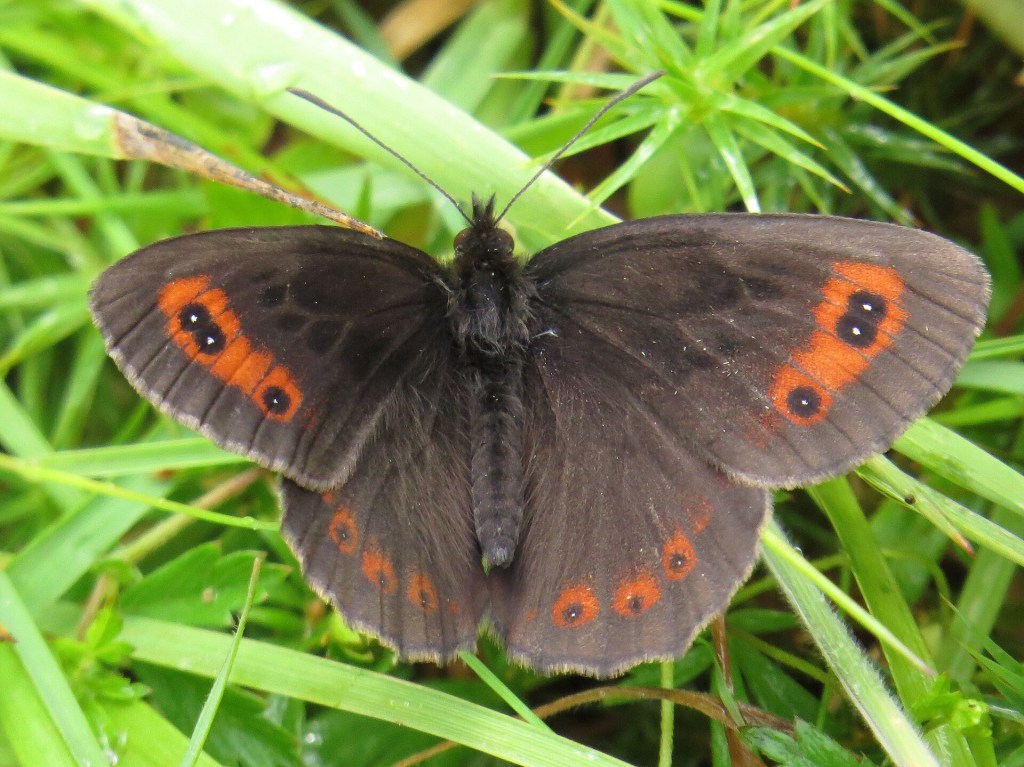
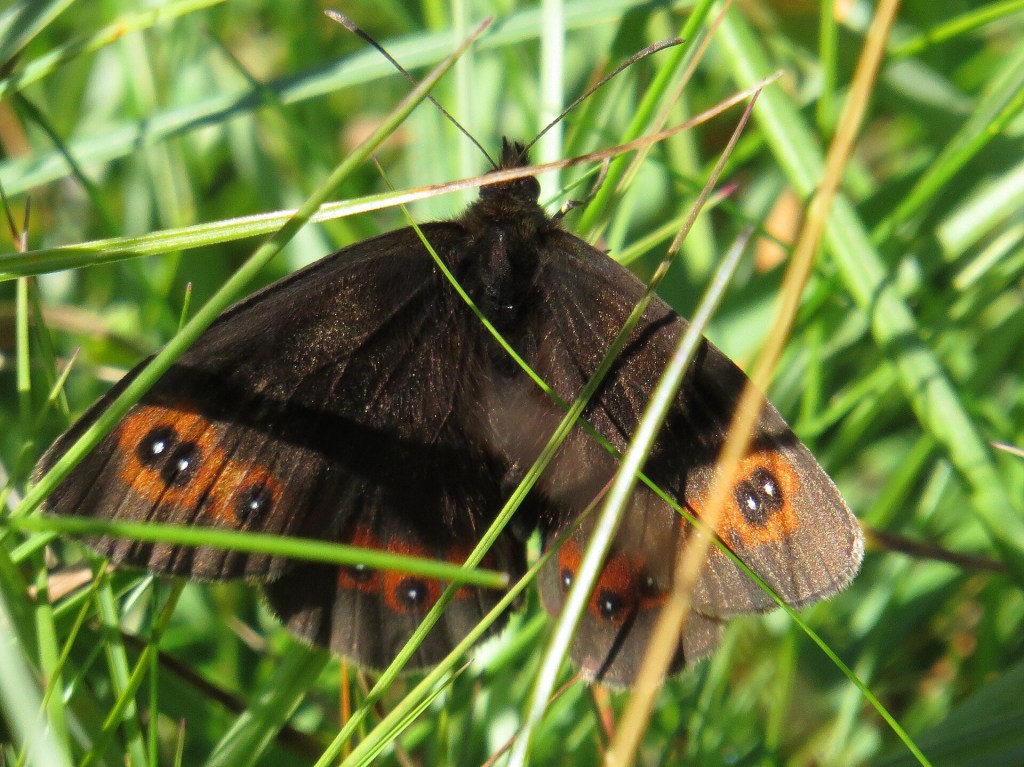
Aethiops translates from Ancient Greek as ‘burnt-face’, deriving from aithō (αἴθω) meaning ‘I burn’ and ōps (ὤψ) meaning ‘face’.
It was used as a noun and adjective to mean ‘Ethiopian’ and is used in several scientific descriptions
(photographed at Arnside by Alastair Rae)
A Southern Outpost
The Scotch Argus of Arnside Knott represents a classic ‘rear-edge’ population of a cold-adapted species. As climate change is predicted to alter conditions across Britain, such marginal colonies may become increasingly important both for the survival of the species and for scientific study. Their continued presence depends on careful habitat management and the ongoing interest of naturalists who monitor and protect these special places.
In the sheltered limestone grasslands of Arnside Knott, this dark-winged butterfly continues to hold its ground, a small but steadfast reminder of a once-wider English distribution, and a living link to the open upland landscapes of Scotland.
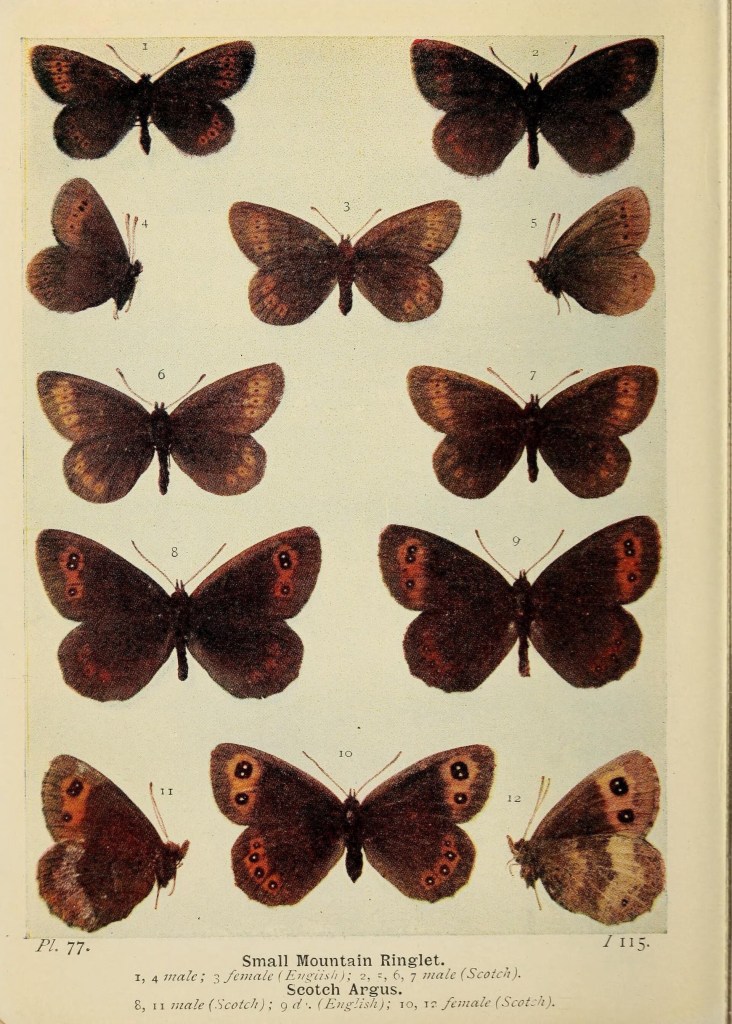
Plate 77 from The butterflies of the British Isles, Richard South, 1906, Small Mountain Ringlet (1-7) and Scotch Argus (8-12)
And (Hera) set a watcher upon her (Io), great and strong Argus, who with four eyes looks every way. And the goddess stirred in him unwearying strength: sleep never fell upon his eyes; but he kept sure watch always.
A description of Argus from a fragment of the lost epic Aegimius (sometimes attributed to Hesiod, sometimes to Cercops of Miletus), translated by Hugh G. Evelyn-White.
Thank-you for reading. If you enjoyed this piece and would like to support further articles on the wildlife and history of the Northwest, you can buy me a coffee here.
Alex Burton-Hargreaves
(July 2026)

