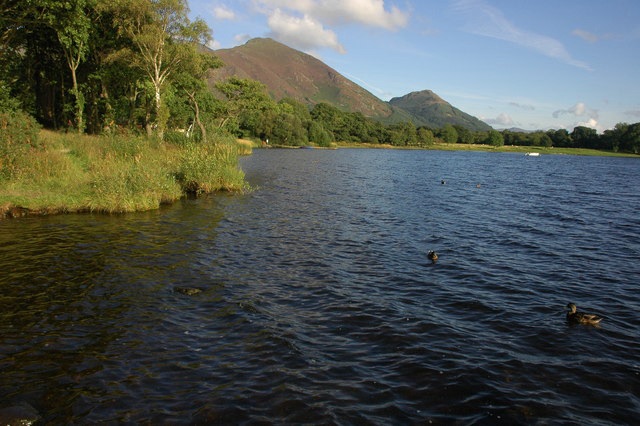
(Phillip Halling)
England’s Lake District is home to several species that are considered living relics of the last Ice Age, these include three distinctive cold-water fish: the Vendace, the Schelly and the Arctic Charr. All belong to the salmonid family and depend on deep, cool, well-oxygenated lakes for their survival.
Their populations are restricted, vulnerable, and, as I’ll cover later in this article, of high conservation importance.
The Vendace
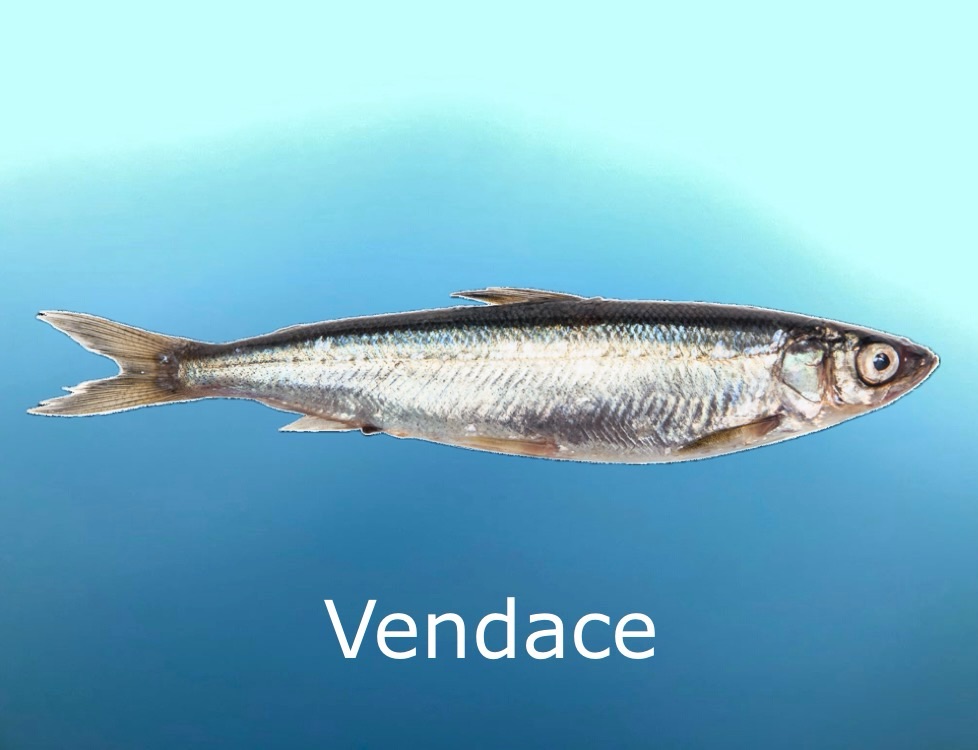
The Vendace is Britain’s rarest freshwater fish with native populations occurring only in Derwent Water and Bassenthwaite Lake. The Bassenthwaite population was long feared extinct, but individuals have been recorded again since the 2010s. Scottish populations in Castle Loch and Mill Loch disappeared in the twentieth century but conservation translocations have established refuge populations, notably at Loch Skeen in Dumfries and Galloway.
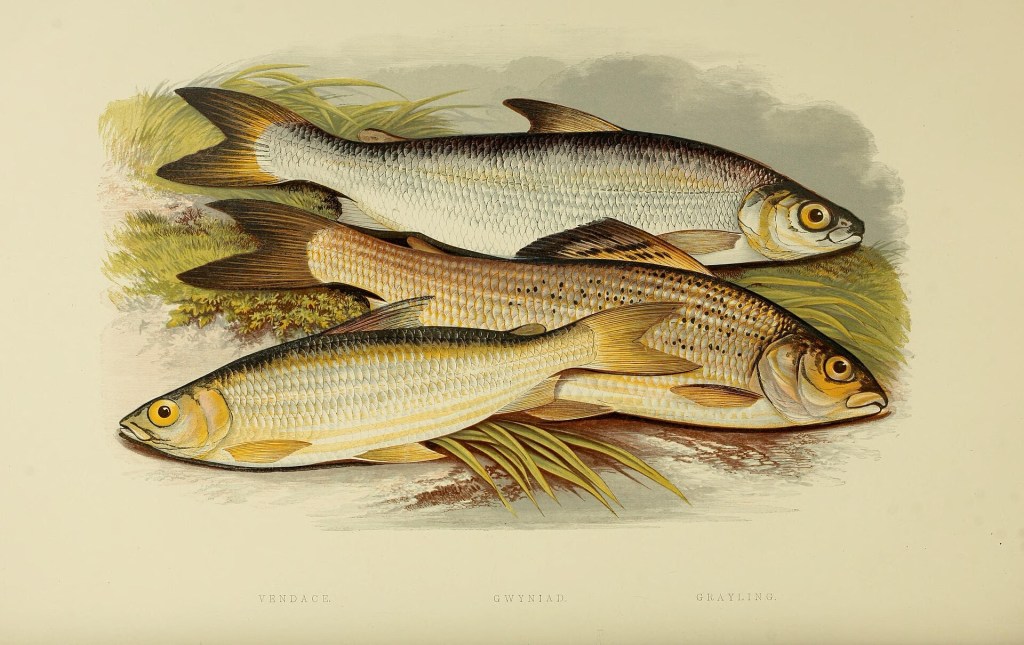
It is a small, streamlined, silvery whitefish with large eyes and an adipose fin. Adults typically reach 20 to 30 cm and they live in open water, feeding mainly on zooplankton, and requiring cool, oxygen-rich conditions.
Most authorities treat the British form as Coregonus albula (Linnaeus, 1758), though it is sometimes recognised as the distinct Coregonus vandesius (Richardson, 1836). The genus name Coregonus comes from the Greek kórē (‘pupil of the eye’) and gōnía (‘angle’), referring to the angular shape of the pupil. Albula is Latin for ‘whitish’, describing their silvery appearance. Vandesius, and the common name ‘Vendace’, derive from the Middle French vandoise or vendoise (a name for the Dace), ultimately coming from a Celtic root related to the Old Irish find (‘white’).
The Schelly
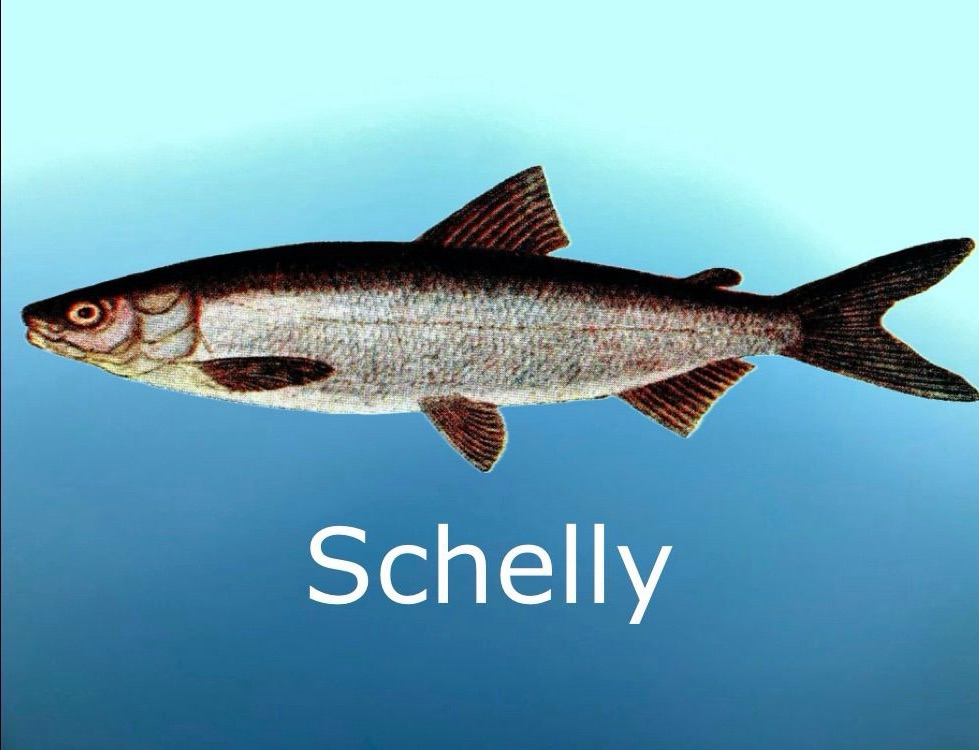
Schelly is the local name for Lakeland’s unique population of European Whitefish, it occurs in just four lakes: Haweswater, Ullswater, Brothers Water and Red Tarn. Related forms are known as Powan in Scotland and Gwyniad in Wales.
Populations are generally stable except at Haweswater, where water-level fluctuations from abstraction and predation by cormorants have caused declines. Limited conservation introductions have been made into nearby waters such as Blea Water and Small Water. It is a deeper-bodied whitefish than the Vendace, typically reaching 30 to 35cm and, much like the Vendace, juveniles feed on zooplankton while adults take benthic invertebrates, it also needs cool, oxygenated water.
It is usually regarded as Coregonus lavaretus (Linnaeus, 1758), though some authorities list the English form as the distinct Coregonus stigmaticus (Regan, 1908). Lavaretus is a Latinisation of the French vernacular name for the species: lavaret, while stigmaticus refers to its distinctive markings or spots.
The Arctic Charr
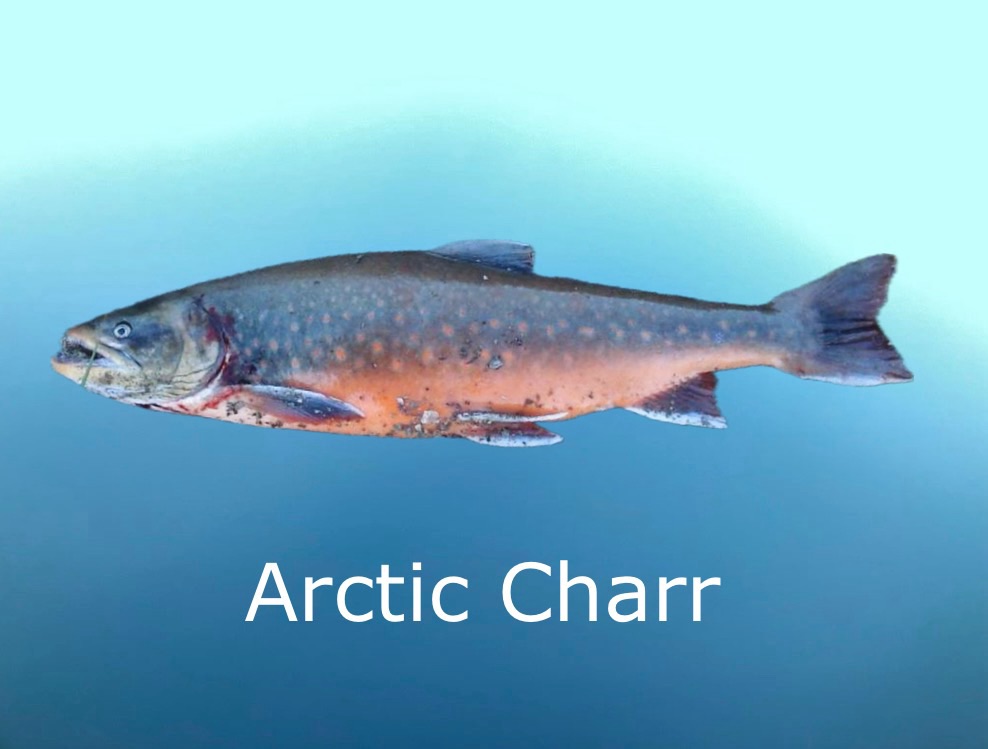
Arctic charr are the most widespread of these three fish in the Lakes and perhaps the most iconic. Native populations occur in Windermere, Coniston Water, Buttermere, Crummock Water, Ennerdale Water, Haweswater, Thirlmere, Wastwater and a few other waters.
Windermere supports one of the best-studied populations in the world and historically contained multiple races distinguished by spawning time (autumn or spring) and locations within the North or South Basin. A former river-spawning form in the River Brathay is thought to have been lost, it was last described by the fisheries biologist Winifred Frost in her mid-20th-century studies.
These cold-adapted salmonids develop striking spawning colours, with males showing vivid red or orange undersides. They occupy deeper, cooler waters and are highly sensitive to environmental change.
The scientific name is Salvelinus alpinus (Linnaeus, 1758). Salvelinus derives from an old name for Charr related to the German Saibling (‘little salmon’), and Alpinus is Latin for ‘alpine’ or ‘of the mountains’. The English name ‘Charr’ or ‘Char’ is thought to come from an Old Irish word meaning ‘fiery red’, referring to the spawning colours.
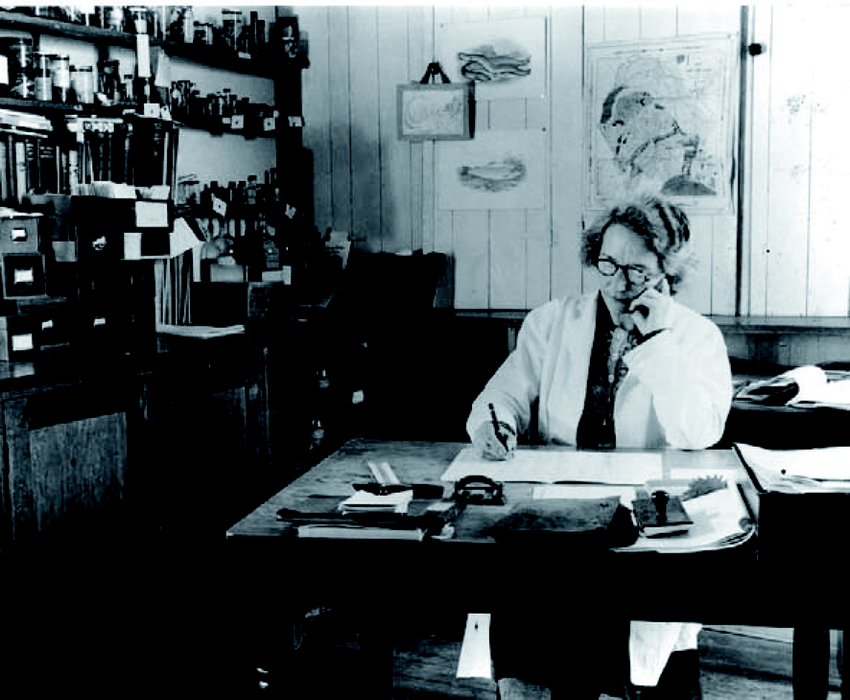
Winifred Frost (1902–1979) in her room at Ferry House (the Freshwater Biological Association’s Windermere Laboratory). She was a pioneer in Charr research and her 1965 paper stands as a classic study on the species.
Photo from the FBA collection.
Piscine Presence
The Arctic Charr has a long cultural presence in Lakeland literature. Daniel Defoe, in A Tour through the Whole Island of Great Britain (1724–27), singled out Windermere for its Charr, describing it as “famous for the char fish found here and hereabout, and no where else in England… It is a curious fish, and, as a dainty, is potted, and sent far and near, as presents to the best friends”.
William Gilpin, ‘pioneer of the picturesque’, gave a vivid description in his 1786 observations on the mountains and lakes of Cumberland and Westmoreland: “The Charr is most remarkable. It is near twice the size of a herring. Its back is of an olive-green: its belly of a light vermillion: softening in some parts into white; and changing into a deep red, at the insertion of the fins”.
The cultural importance of Arctic Charr, once netted commercially, potted as a delicacy, and later the subject of a traditional recreational fishery, helped contribute to the Lake District’s recognition as a UNESCO world heritage site in 2017.
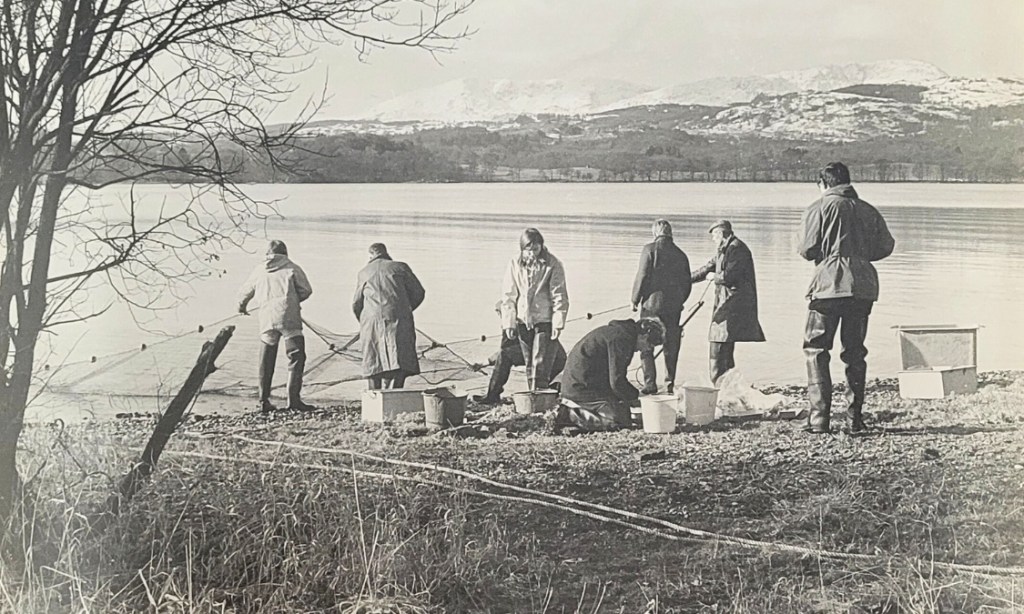
(FBA collection)
Under Pressure
All three species face similar pressures. Warming of lake waters reduces the volume of cool, oxygen-rich habitat they need, nutrient pollution from agriculture and sewage accelerates eutrophication, further lowering oxygen levels in deeper layers. Sedimentation smothers spawning grounds, and non-native fish introduce competition and predation. Because these species sit near the southern edge of their climatic ranges in Britain, they are particularly vulnerable.
Lake Windermere illustrates these problems most clearly, although its waters are no longer as clear as they once were. As England’s largest natural lake it supports complex Arctic Charr populations that have been studied for decades, yet they have declined markedly.
Nutrient enrichment from agricultural run-off and sewage discharges have increased algal growth and reduced oxygen in the deeper waters that Charr rely on in summer. Rising water temperatures linked to climate change compound the stress, and invasive non-native species, especially Roach and Ruffe, compete for food or predate on eggs and young.
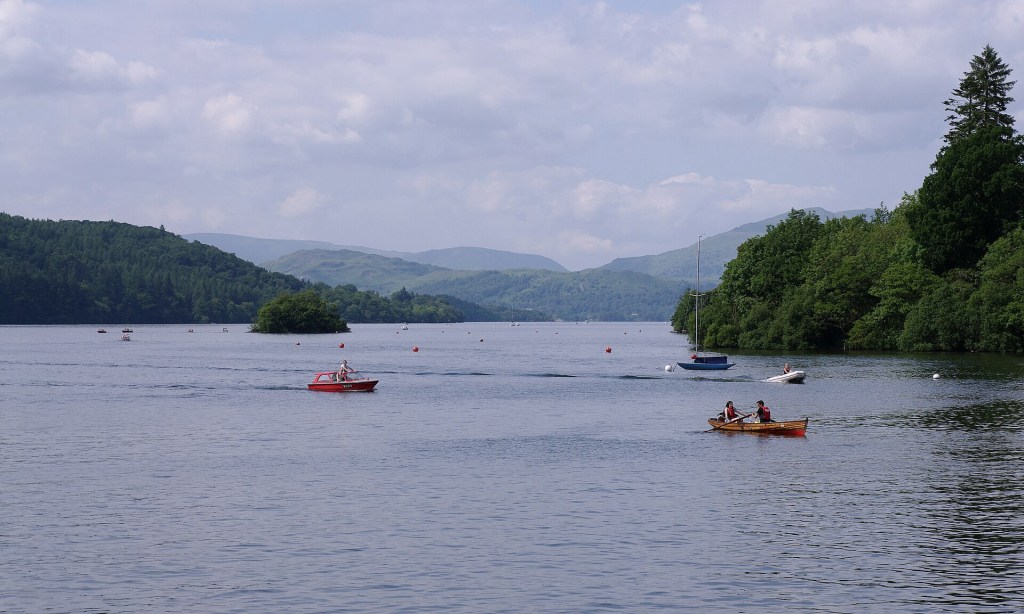
(Matt Buck)
Historically overfishing reduced stocks earlier in the twentieth century, and the combination of modern pressures has left the remaining populations under significant threat. Projects such as the Lake District – Charr Recovery & Management (LD-CHARM) Project are now using hydroacoustics, environmental DNA and genetic studies to map remaining spawning grounds, assess population health and guide practical conservation measures.
These Ice Age survivors remain sensitive indicators of the ecological health of the Lake District’s eponymous lakes. Their continued presence depends on ceasing pollution, reducing the spread of non-native species, protecting spawning habitat from disturbance and adapting to warming waters.
Though these rare, unique, and beautiful fish have survived the advance and retreat of the ice-sheets, and everything else that has been thrown at them since, let us not be the force that proves their downfall, but rather that which frees them, and helps them spread and flourish beyond the cold, deep confines of their ancient lacustrine lairs.
“Those lakes where oft in storm and shine,
pure Wordsworth piped his pastoral reed;
Where Coleridge nursed his powers divine,
and Southey earned a Laureate’s meed;
Where Ruskin ’mid their loved repose
still weaves his grand, poetic prose…
And thus it is, O mystic char!”
(From the Lyra Piscatoria by Rev, Richard Glover (1837–1919)
Thank-you for reading. If you enjoyed this piece and would like to support further articles on the wildlife and history of the Northwest, you can buy me a coffee here.
Alex Burton-Hargreaves
(August 2026)

