The Famous Cricketing Poem by Francis Joseph Thompson, Including a Brief Biography of the Author
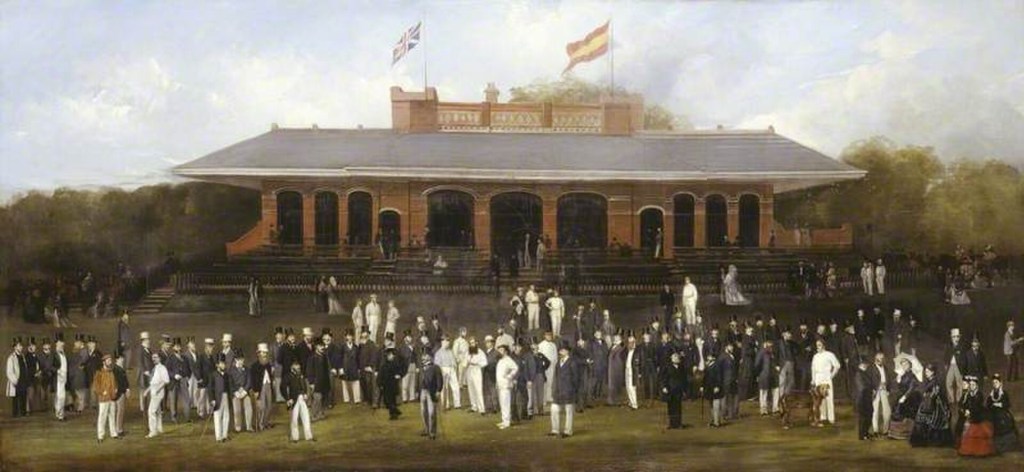
(Henry Barraud 1811-1874)
At Lord’s
By Francis Joseph Thompson (1859–1907)
It is little I repair to the matches of the Southron folk,
though my own red roses there may blow;
It is little I repair to the matches of the Southron folk,
though the red roses crest the caps, I know.
For the field is full of shades as I near a shadowy coast,
and a ghostly batsman plays to the bowling of a ghost,
and I look through my tears on a soundless-clapping host
as the run stealers flicker to and fro,
To and fro:
O my Hornby and my Barlow long ago!
It’s Glo’ster coming North, the irresistible,
the Shire of the Graces, long ago!
It’s Gloucestershire up North, the irresistible,
and new-risen Lancashire the foe!
A Shire so young that has scarce impressed its traces,
ah, how shall it stand before all-resistless Graces?
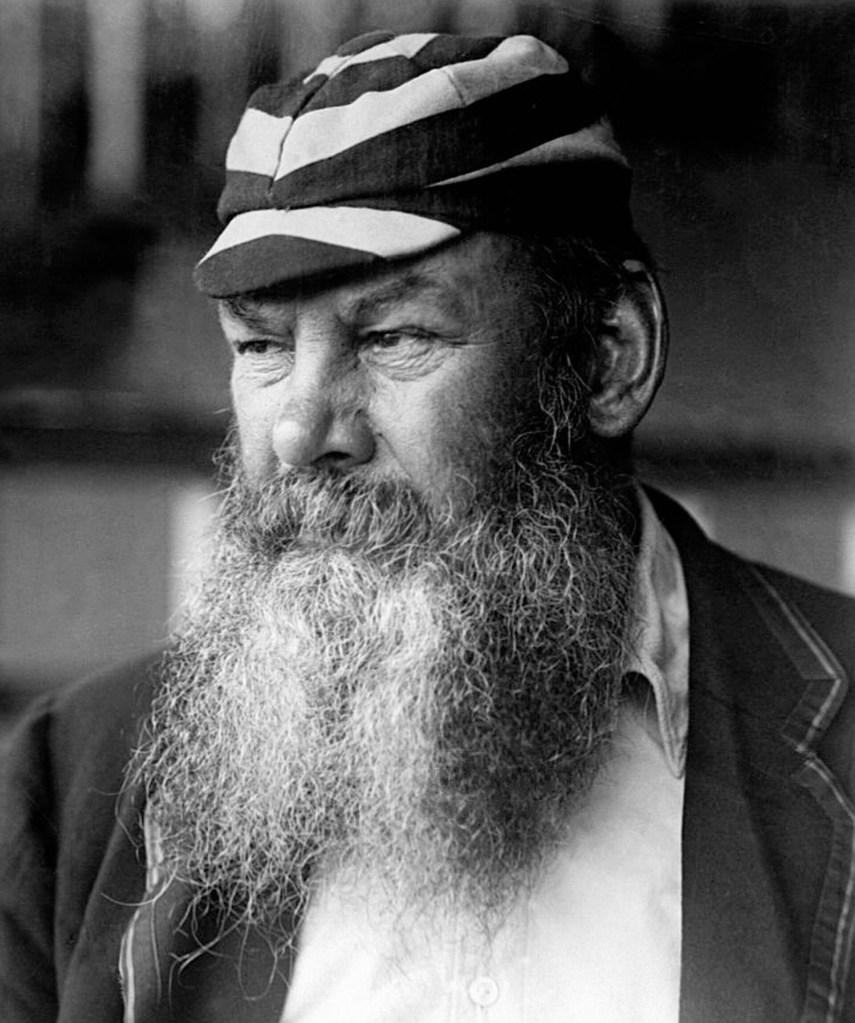
(George Beldam)
O, little red rose, their bats are as maces
to beat thee down, this summer long ago!
This day of seventy-eight they are come up north against thee
This day of seventy-eight long ago!
The champion of the centuries, he cometh up against thee,
with his brethren, everyone a famous foe!
The long-whiskered Doctor, that laugheth the rules to scorn,
while the bowler, pitched against him, bans the day he was born;
And G.F. with his science makes the fairest length forlorn;
They are come from the West to work thee woe!
It is little I repair to the matches of the Southron folk,
though my own red roses there may blow;
It is little I repair to the matches of the Southron folk,
though the red roses crest the caps, I know.
For the field is full of shades as I near a shadowy coast,
and a ghostly batsman plays to the bowling of a ghost,
and I look through my tears on a soundless-clapping host
as the run stealers flicker to and fro,
To and fro:
O my Hornby and my Barlow long ago!
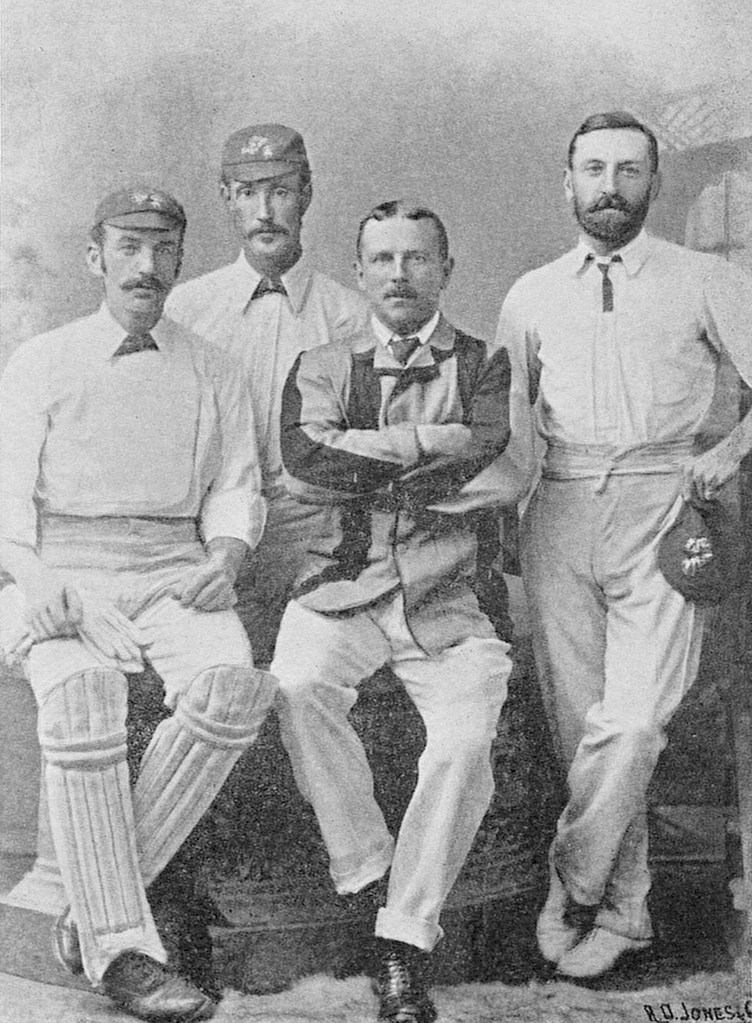
From left to right: Dick Pilling, Alexander Watson, A. N. Hornby, Dick Barlow
Taken in 1896 by E. Hawkins of Brighton
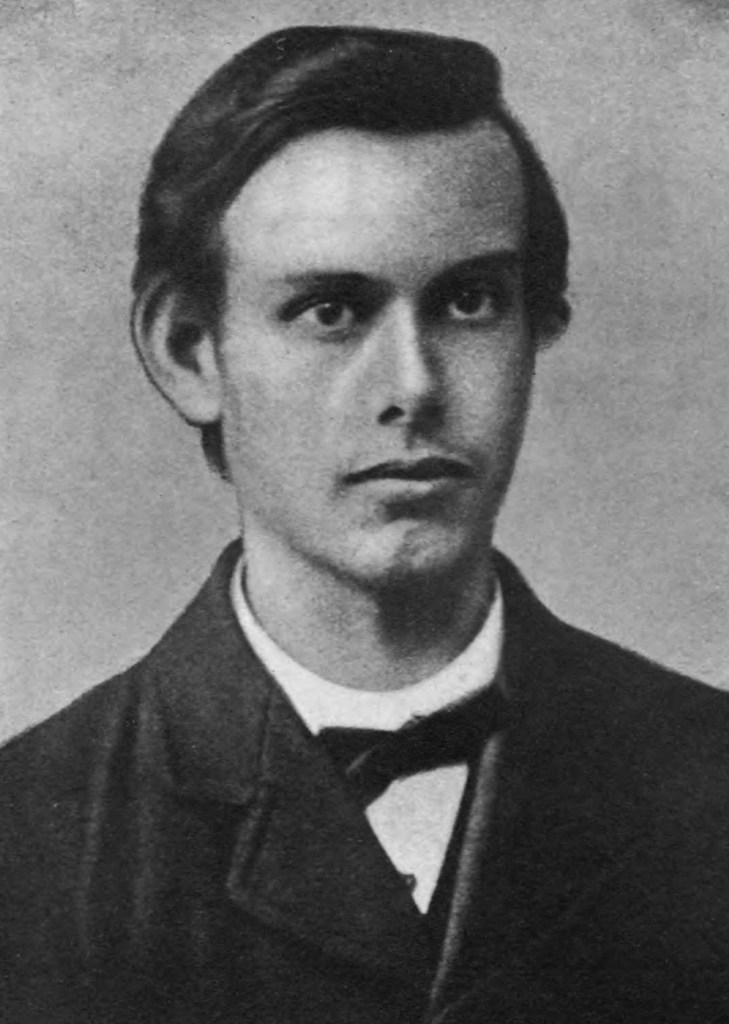
A Short Biography of Francis Thompson (1859–1907)
Francis Joseph Thompson was an English poet and Catholic mystic, best remembered for his religious masterpiece The Hound of Heaven and for the nostalgic cricket poem At Lord’s.
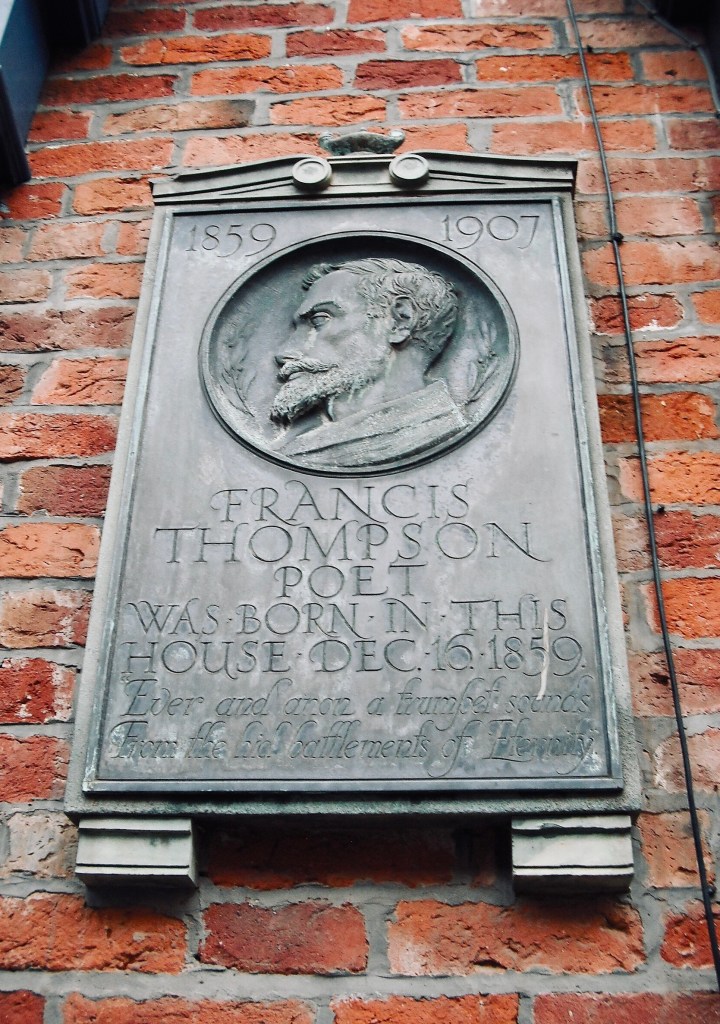
He was born on the 16th of December 1859 on Winckley Street, Preston, Lancashire, the son of Charles Thompson, a homeopathic doctor who had converted to Roman Catholicism, and Mary Morton, the family moved to Manchester when he was a child. Educated at Ushaw College (a Catholic seminary near Durham) with a view to the priesthood, he proved unsuited to that calling, so at his father’s insistence he studied medicine at Owens College, Manchester (later the University of Manchester) from about 1877, but he disliked the subject, failed his examinations repeatedly, and abandoned the attempt around 1883-85.
During his Manchester years he developed a deep love of cricket and frequently watched Lancashire at Old Trafford. Around 1879 he fell ill and began taking laudanum (opium mixed with alcohol) for pain and nervous trouble; the addiction worsened after his mother gave him Thomas De Quincey’s Confessions of an English Opium-Eater. In November 1885, after a quarrel with his father, he left for London to pursue writing, and there he sank into destitution, living on the streets, selling matches and newspapers, and remaining dependent on opium.
In 1888 he submitted poems to the Catholic magazine Merry England, edited by Wilfrid Meynell. Meynell and his wife Alice sought him out, rescued him from near collapse, arranged medical care and a period of recovery at a monastery in Storrington, Sussex, and became his lifelong patrons and friends. Under their support he published three volumes of poetry; Poems (1893, which included The Hound of Heaven), Sister Songs (1895), and New Poems (1897), and later turned to prose. He never fully escaped opium or fragile health and died of tuberculosis on the 13th of November 1907 in a hospital in St John’s Wood, London, a short distance from Lord’s Cricket Ground, aged 47.
History of the poem At Lord’s
At Lord’s was inspired by a Lancashire vs. Gloucestershire match Thompson watched at Old Trafford in July 1878, when he was 18 or 19. Lancashire’s openers A. N. “Monkey” Hornby and Dick Barlow put on a substantial partnership; the visiting side included the Grace brothers (W. G., E. M., and G. F.). The game ended in a draw.
Nearly thirty years later, in the summer of 1907 (the last year of his life), a friend invited him to Lord’s to watch Middlesex play Lancashire, hoping the outing might lift his spirits. Thompson accepted but, as the day approached, found the prospect of confronting the red roses of his native county and the memories of his youth too painful. He stayed at home and wrote the poem instead. It frames the distant 1878 match through a ghostly, elegiac vision of the present, with the famous refrain “O my Hornby and my Barlow long ago!”
At Lord’s was not published in Thompson’s lifetime; it appeared posthumously. The opening (and closing) stanza has become the best-known passage in cricket poetry and its imagery has supplied titles for several cricket books, including G. D. Martineau’s The Field is Full of Shades and Eric Midwinter’s history of Lancashire cricket Red Roses Crest the Caps.
Although Thompson is primarily remembered for his religious verse, this short lyric is widely regarded as the finest and most evocative poem ever written about the Gentleman’s Game.
Thank-you for reading. If you enjoyed this piece and would like to support further articles on the wildlife and history of the Northwest, you can buy me a coffee here.
Alex Burton-Hargreaves
(August 2026)

