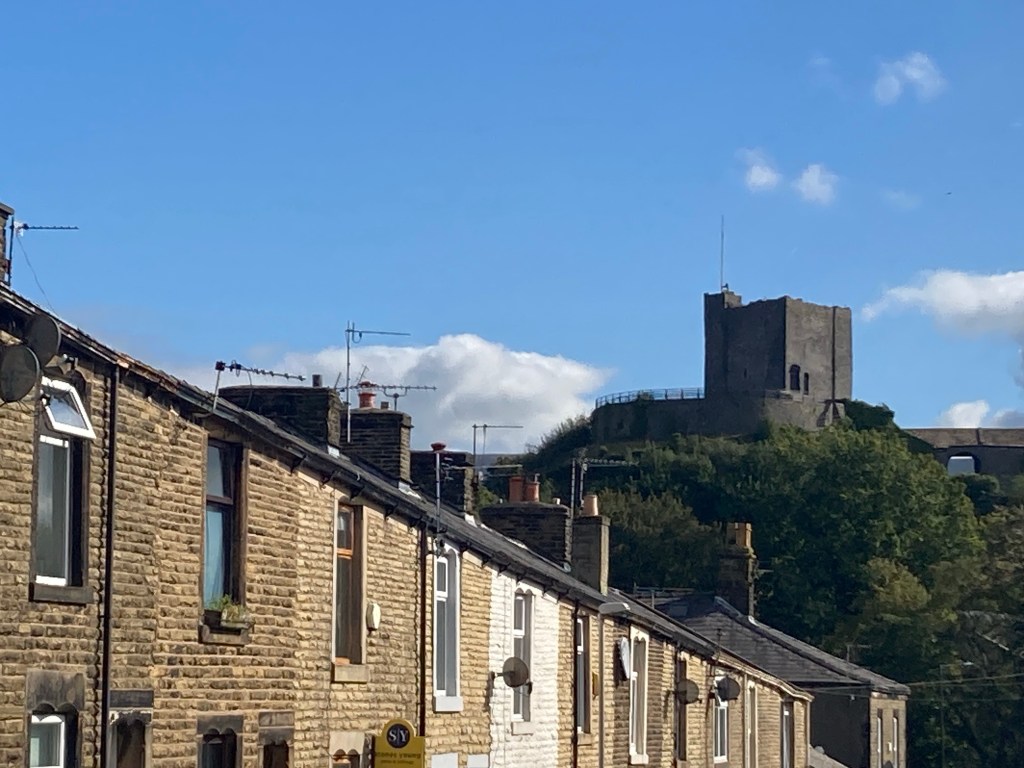
Growing up in Clitheroe, in our converted four-story tanning mill on Shawbridge St, the town’s Norman castle, standing alone on its limestone mount in the centre gazing over the surrounding spires and rooftops like a monumental owl snoozing with one eye open, was a familiar and friendly landmark.
I could see it out of the window when I woke up, it loomed over me on my way to school or messing about in town, its silhouette was adopted for my parents civil engineering company ‘Clitheroe Consultants’, and I even climbed it and its ramparts as a teenage rite-of-passage which we called “raiding the castle”, once almost getting to the top! (an incredibly foolhardy feat which is virtually impossible nowadays due to the installation of cctv and railings)
Over the centuries the compact, yet still imposing, structure will undoubtably have brought comfort to many others in a similar manner, although for much more pragmatic reasons at some points in history, especially when royalist troops and reavers roamed, and thus it was adopted a long time ago as a symbol of the town.
In the years since living there, and despite the fact that I now find myself writing about such historic landmarks, it has never occurred to me to write about this particular one until now, so to rectify that here I present a condensed history of the unique and rather special fortification known as Clitheroe Castle.
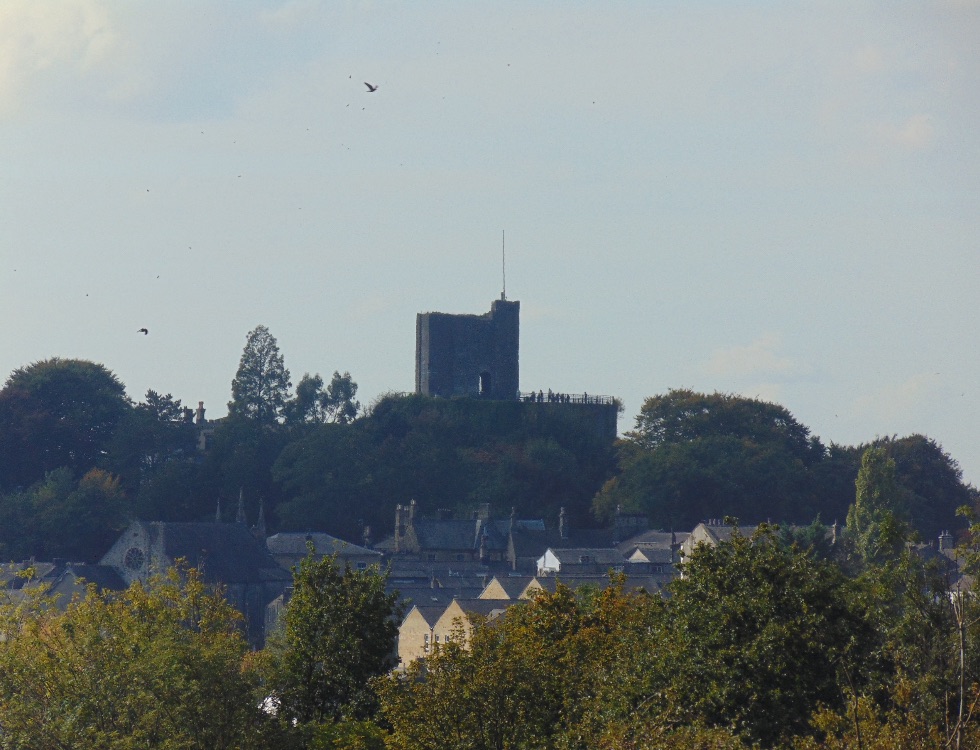
Construction of the Castle
Documentary evidence confirms the presence of a military structure at Clitheroe by 1102 with a charter of that year referring to land below ‘le baille’ (the bailey), which indicates an existing fortification.
Some historians have linked an earlier reference in the Domesday Book to a castle associated with Roger de Poitou, who held extensive lands in the area after the Norman Conquest, though Clitheroe itself is not named directly. Historical precedents tell us that a timber fortification is likely to have predated the stone castle on this naturally strong site.
The stone keep that survives today is generally attributed to Robert de Lacy (died 1193), a member of the powerful de Lacy family who held the ‘Honour of Clitheroe’. A 14th-century source, the Historia Laceiorum, credits him with building the castle and a chapel dedicated to St Michael. Construction of the keep is often dated to around 1186, and the chapel is documented by 1122, having reinforced walls that formed part of the inner bailey defences.
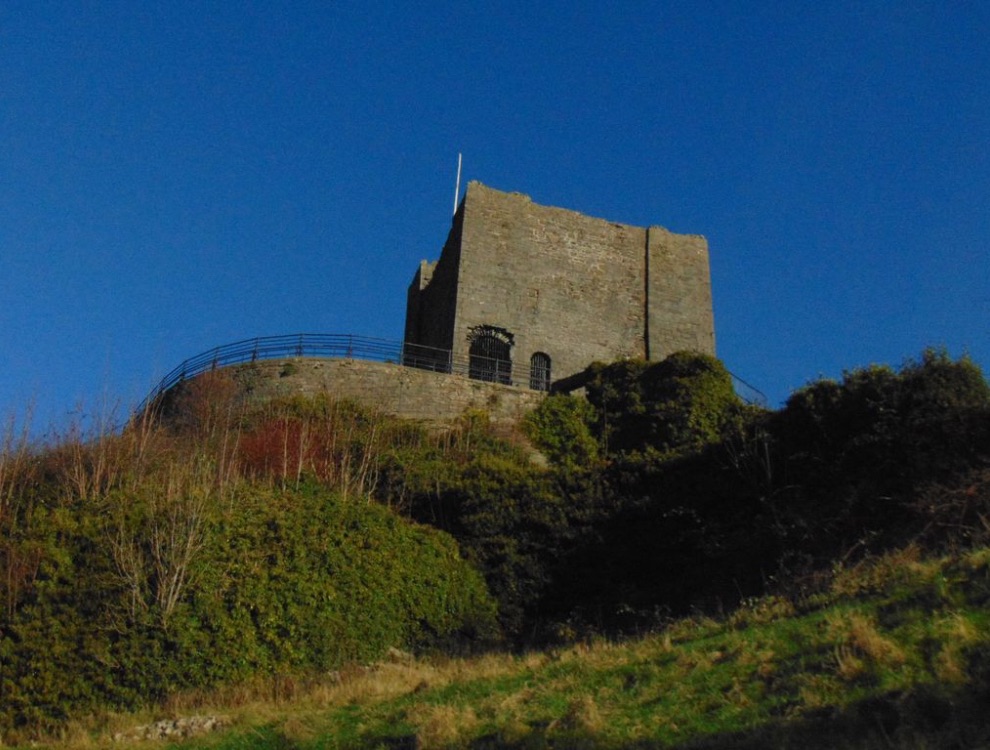
The castle is of motte-and-bailey (or enclosure castle) form with the keep sitting at the highest northern end of the rock outcrop. It is a compact square tower, originally three storeys high, with thick walls of around 10ft in places and flat corner turrets, one of which contains a spiral staircase (which I once went up with our neighbour Ron Townsend, a local steeplejack who was tasked with repairing the flagpole).
The main entrance was originally at second-floor level and a curtain wall enclosed the keep (surviving in part except on the south side), with a lower bailey to the south containing other buildings.
Additional defences included a ditch on the west side, although I’ve always struggled to picture exactly where this was.
The Honour of Clitheroe
Clitheroe Castle served as the caput (administrative centre) of the Honour of Clitheroe, a large estate stretching along the western side of the Pennines. The de Lacy family, whose principal seat was at Pontefract, used it as a base for local governance and it functioned as a court, small prison, and centre for the administration of the surrounding forests and manors. A small garrison was maintained through the 13th century.
After the death of Henry de Lacy in 1311, the honour passed to the Earldom of Lancaster and later became part of the Duchy of Lancaster, later, in the early 14th century, repairs were carried out and a new gate was built.
Further works, including a new chamber in 1425, are recorded and the castle continued as an administrative centre even as its military importance declined.
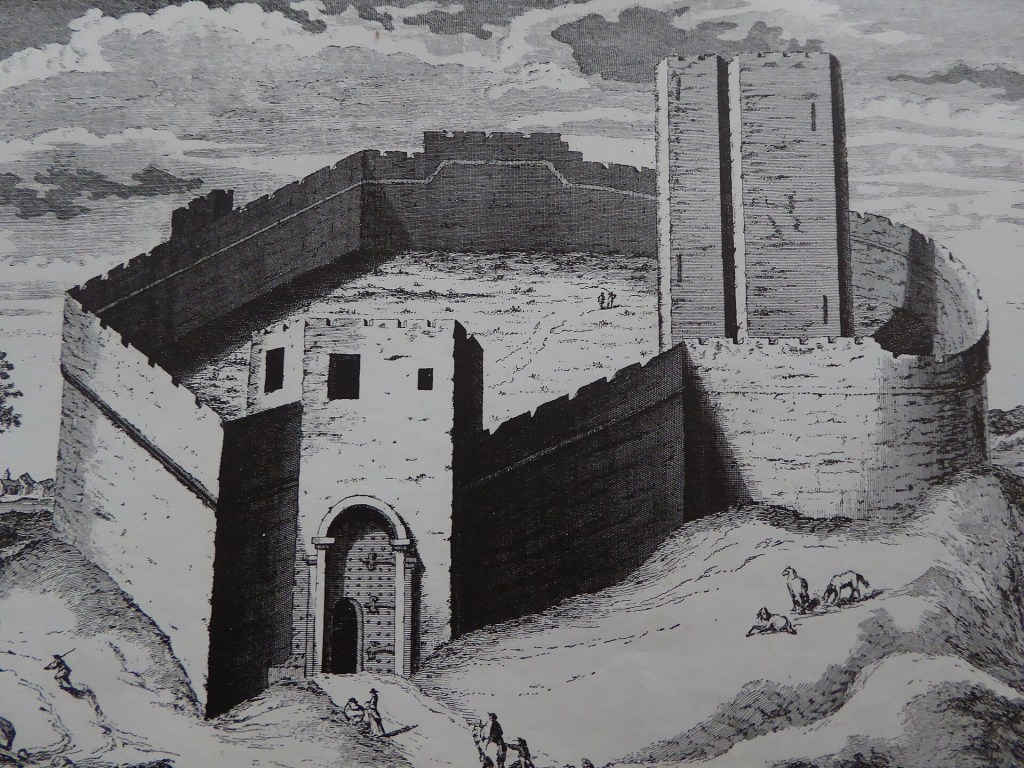
published in 1912 by P.H. Ditchfirld
The Castle’s Role during the Wars of the Roses
During the Wars of the Roses, the castle saw notable use. After the Lancastrian defeat at the Battle of Hexham in 1464, the deposed King Henry VI was captured near Clitheroe (having taken refuge at nearby Waddington Hall) and held overnight at the castle before being taken to the Tower of London. Edward IV is said to have authorised expenditure on repairs around this period.
By the early 17th century the castle was described as “very ruinous,” with some parts collapsed, though it still served as the centre for the hundred court of Blackburnshire.
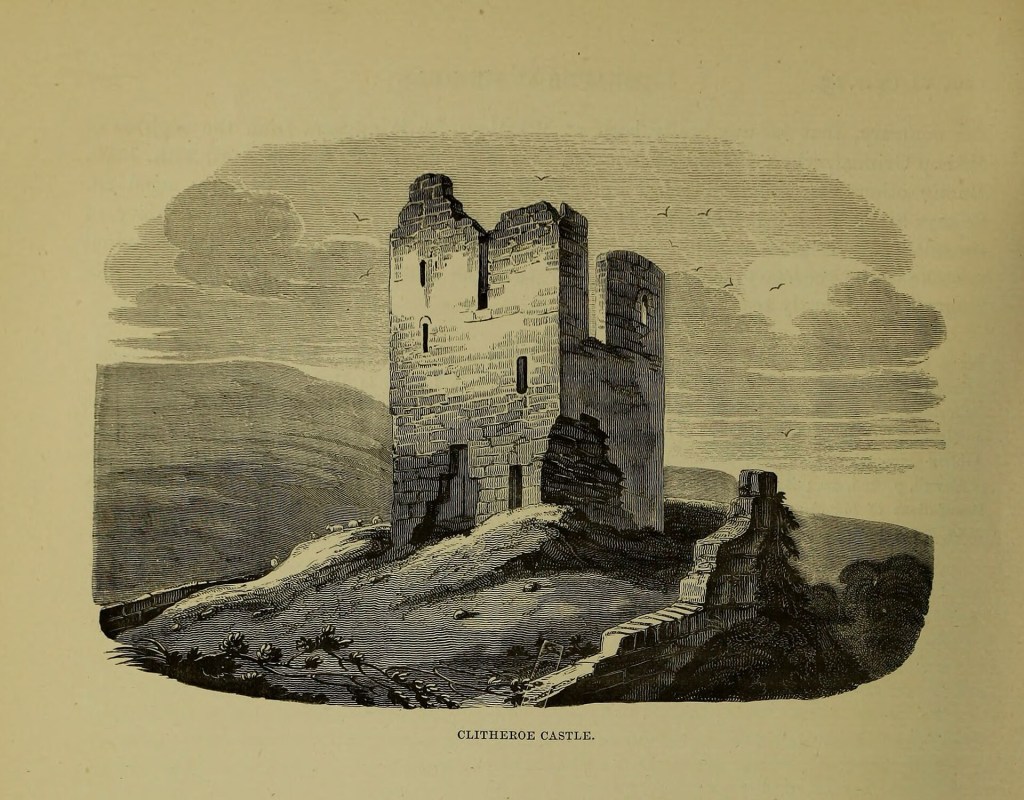
The “very ruinous” state of the castle is apparent in this illustration from the History of the original Parish of Whalley penned by Thomas Dunham Whitaker and published in 1801
The English Civil War
In 1644, during the English Civil War, Royalist forces under Prince Rupert occupied and garrisoned the castle (repairing the main gateway) while responding to the siege of York.
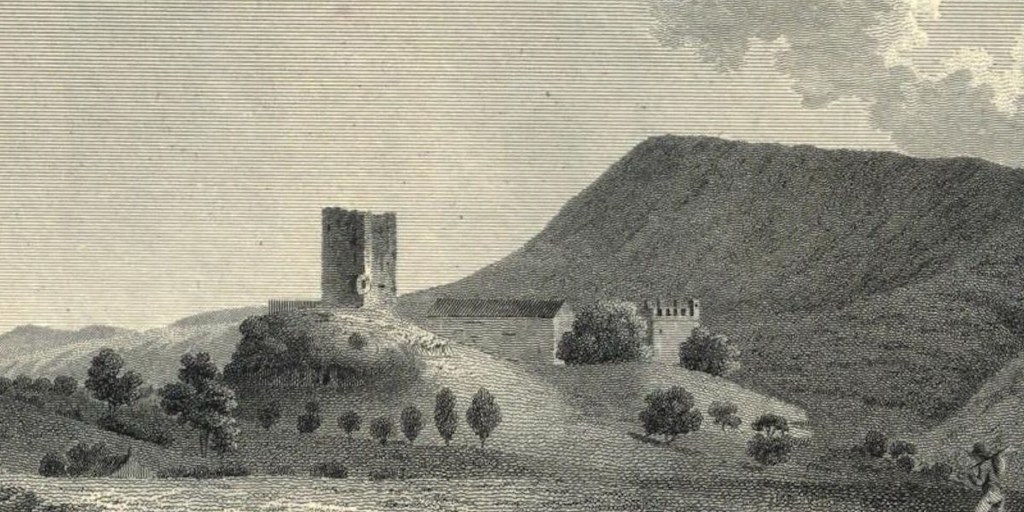
After the decisive Royalist defeat at the Battle of Marston Moor later that year, the garrison was abandoned. In 1649, following further unrest involving Lancashire militia who briefly reoccupied the site, Parliament ordered the castle to be slighted (partially demolished or rendered unusable) to prevent future military use, the keep was damaged but not completely destroyed.
Post-Medieval Ownership and Decline
The site remained Crown property for a time before Charles II granted it to General George Monck, 1st Duke of Albemarle, in 1660.
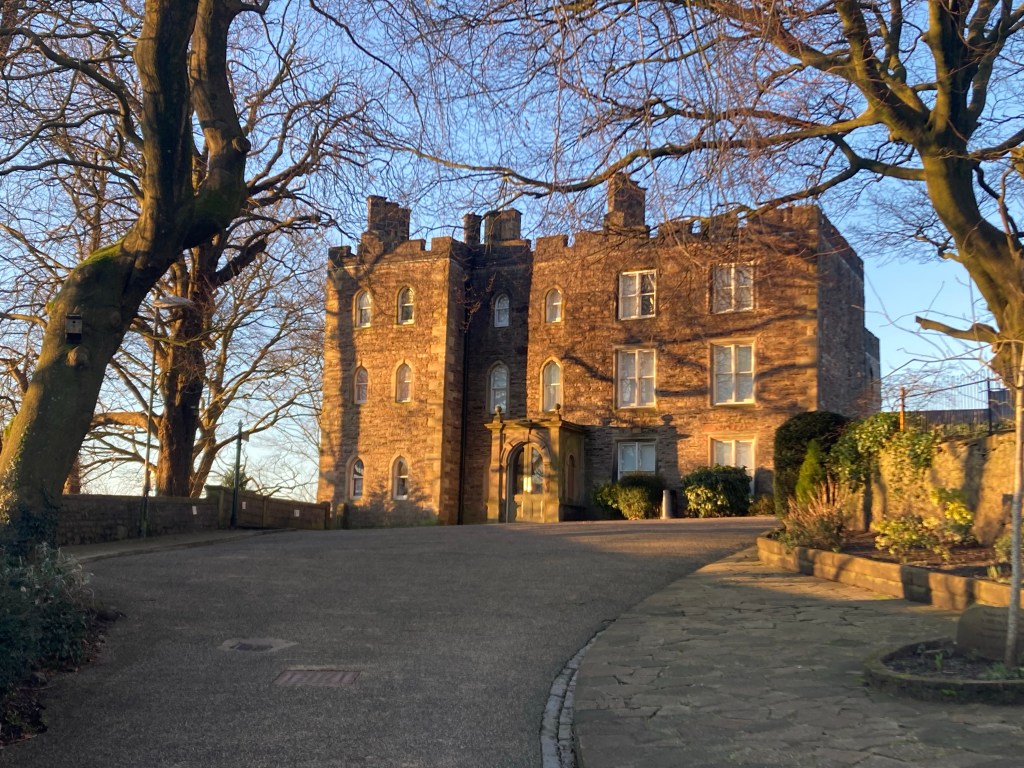
It later passed through the Montagu family (via marriage) and remained in private hands for nearly two centuries. Stewards of the Honour of Clitheroe resided at the site from the late 17th century onward; the present museum occupies the 18th-century Steward’s House.
The castle continued as an administrative centre for the Blackburn Hundred until a new town hall was built in Clitheroe in 1822.
The Modern Era
In November 1920 the castle and its grounds (about 17 acres) were purchased by public subscription from Lord Montagu of Beaulieu for £9,500. The site was turned into a public park and war memorial dedicated to the 260 local men who died in the First World War. It remains a popular public space with panoramic views over the Ribble Valley.
A excellent and well-run museum in the former Steward’s House, operated by Lancashire County Council, interprets the castle’s history and displays archaeological finds. The keep itself has undergone various conservation work, including restoration in the early 21st century and is currently under wraps (literally) until sometime this month (September as of writing) when the main part of a £2.3 million renovation will be completed.
Clitheroe Castle’s modest scale belies its long role as a regional stronghold, administrative hub, and occasional prison, its elevated limestone crag and compact Norman keep continue to dominate the skyline of the market town below, reassuring residents and welcoming wanderers back home as it has done for the past 900 years.
“The Norman shall tread on the Saxon’s heel,
and the stranger shall rule o’er England’s weal;
Through castle and hall, by night or by day,
The stranger shall thrive for ever and aye;
But in Clyderow, above the rest,
the stranger shall thrive best”
(Adapted from Traditions of Lancashire by John Roby, in which ‘Clyderow’ was originally ‘Rached’, or Rochdale, ‘weal’ translates as ‘wealth’)
Thank-you for reading. If you enjoyed this piece and would like to support further articles on the wildlife and history of the Northwest, you can buy me a coffee here.
Alex Burton-Hargreaves
(September 2026)

