The Debate between Environmentalists, Policymakers, Sheep Farmers and what it means for the Future of our Upland Flock
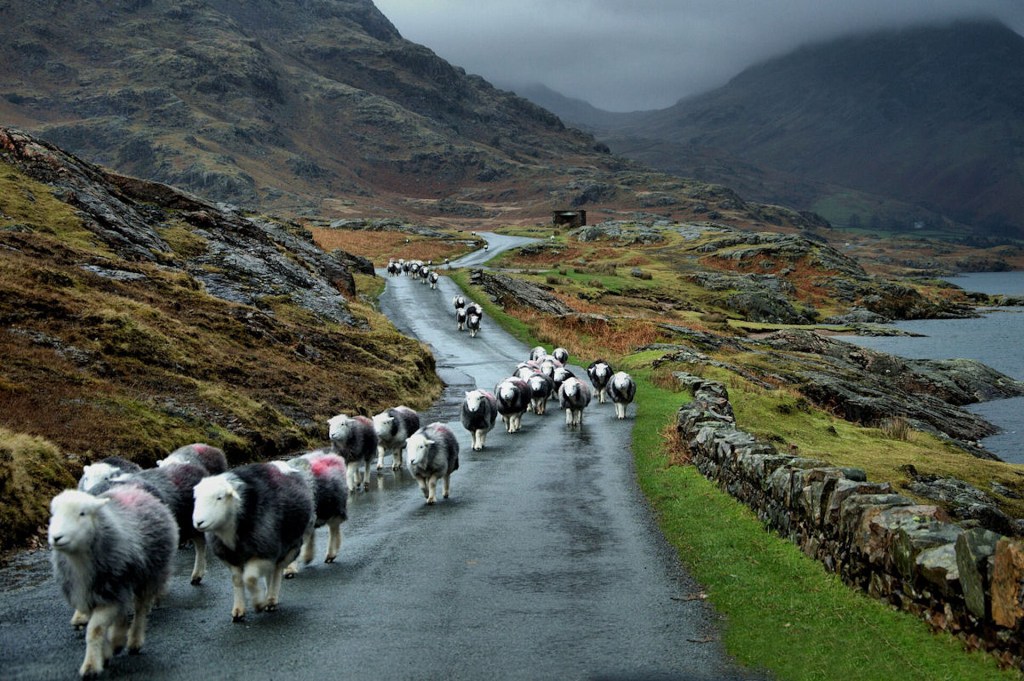
(Chris Himsworth)
ovinophobia noun
/ˌəʊvɪnəˈfəʊbiə/ (oh-vin-uh-FOH-bee-uh)
1. An irrational or intense fear of sheep.
In the early 2010s, a series of sharp critiques of British upland sheep farming emerged from environmental circles and gradually hardened into a sustained campaign. What began as polemical writing about ecological damage evolved into calls for the removal of sheep from the hills. This was framed as essential for nature recovery, flood prevention and rewilding, among other things.
The main protagonists of this anti-sheep movement were the journalist and author George Monbiot and financier-environmentalist Ben Goldsmith, both from London. The ideas gained traction in policy discussions, intersected with post-Brexit subsidy reforms, and provoked strong opposition from many farmers, including most recently the Lake District shepherd and author James Rebanks.
Here I chart the history of this movement, following its evolution into a tale of cultural clashes, competing visions, political access, business networks, and common-or-garden commercial interest.
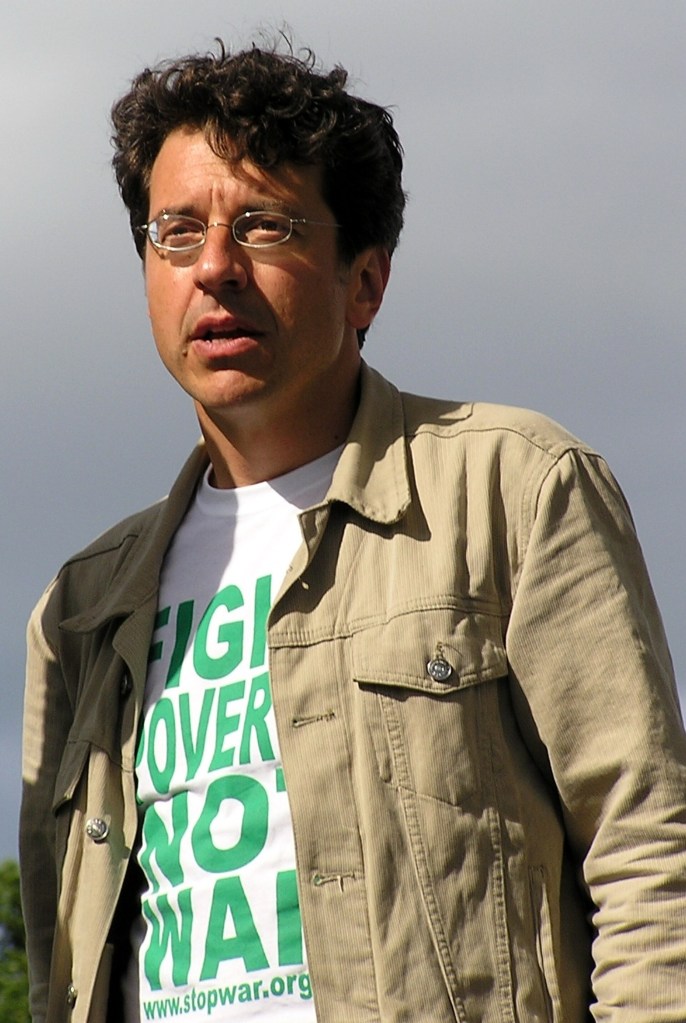
Introducing George Monbiot
George Monbiot, born in Kensington and brought up in Oxfordshire, is a prominent journalist, author, and environmental activist known for investigative columns in The Guardian and his advocacy for rewilding and radical political change.
A long-time disliker of the sheep he crystallised his case for their removal in his 2013 book Feral: Searching for Enchantment on the Frontiers of Rewilding. In a widely discussed Spectator piece titled Sheepwrecked he rather colourfully described sheep as a “white plague” and “woolly maggots” that had “shagged” Britain’s uplands, compacting soil, preventing tree regeneration, and “creating ecological deserts far more damaging than development”.
He argued that taxpayer subsidies under the Common Agricultural Policy (CAP) propped up an uneconomic system occupying millions of hectares of marginal land for minimal food output relative to the environmental cost. Without subsidies, he pointed out, much hill farming would cease, opening the door to rewilding, restoring processes and missing species such as beavers, lynx, or wolves.
Monbiot helped found Rewilding Britain, a registered charity with a current income of £2million and assets worth over £1million, in 2015. The organisation received early support from foundations including the Lund Trust, the Esmée Fairbairn Foundation, the Garfield Weston Foundation, and others. Monbiot remained a prominent advocate, repeatedly returning to his theme that upland sheep farming represented one of the highest ratios of environmental destruction to production of any land use. His later work, including Regenesis (2022), broadened the critique to livestock farming as a whole while maintaining the focus on the sheep’s impact on Britain’s hills.
Critics dismissed the language as inflammatory and the analysis as overly simplistic, noting that sheep numbers had fluctuated with policy (rising under headage payments, then falling) and that many uplands were never the dense forest that he imagined them to be.
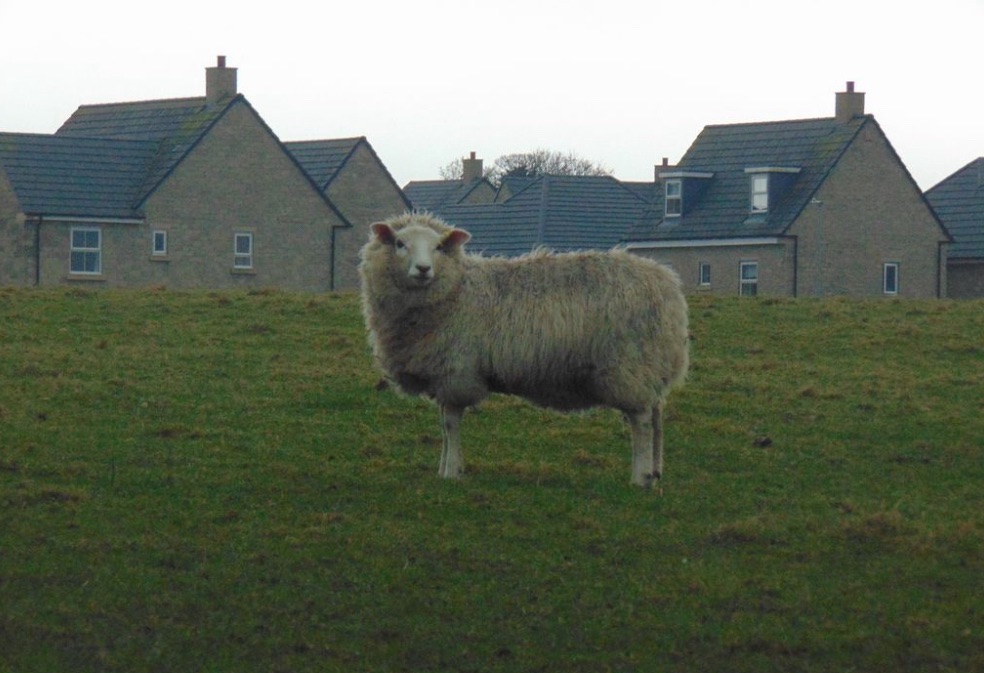
(JK the Unwise)
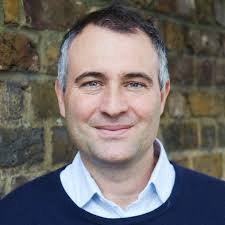
Introducing Ben Goldsmith
Ben Goldsmith, son of the late financier Sir James Goldsmith and brother of Conservative peer Zac Goldsmith, is another high-profile sheep-critic. A long-time environmental investor and philanthropist, he co-founded the Conservative Environment Network and served as a non-executive board member at Defra (2018–2022) under successive Conservative governments. He has rewilded parts of his own Somerset farm and repeatedly argued that our upland flock form the principal obstacle to nature recovery in marginal landscapes and national parks (seeming to ignore the fact that some of our most famous national parks owe their very existence to the sheep).
In 2023 he stated publicly that “the sheep have got to go”, contending that shepherds should not receive public subsidies (which they don’t now) and that native cattle, pigs, and ponies would better support ecological mosaics. He has linked sheep to various things including soil compaction, flooding, loss of birdsong, and animal welfare.
In a September 2026 Spectator article titled ‘James Rebanks and the trouble with sheep farming’ he returned to welfare statistics, citing lameness prevalence and lamb losses across the whole sheep industry (not just for upland farms), and the limitations of modern “ranching-style” management, while acknowledging that individual farmers were not primarily at fault and praising aspects of nature-friendly practice on farms such as Rebanks’.
Goldsmith’s influence extended beyond commentary. He has long operated in green finance: co-founding WHEB (focused on resource efficiency and clean technology), launching the listed investment trust Menhaden (targeting energy efficiency, renewables, and sustainable transport), and later co-founding Nattergal, a nature-restoration company that acquires marginal farmland, rewilds it, and generates revenue from carbon credits, biodiversity credits, and related natural-capital markets.
Nattergal has attracted institutional interest and sold credits (one reported deal involved the engineering firm Arup). Goldsmith has described these markets as a way to fund large-scale restoration while offering farmers alternative income streams, arguing that a pure reliance on sheep farming is economically unrealistic. He has also donated to both the Green Party and the Conservatives, and in 2026 advised Reform UK on nature policy before a rural backlash led the party to distance itself.
These commercial networks sit alongside broader rewilding funding from trusts, major donors, and growing corporate interest in carbon offsetting. Critics argue that carbon and biodiversity markets create incentives to take land out of food production, potentially concentrating ownership or favouring investors over working farmers. Supporters counter that marginal land already delivers little food security and that diversified nature-based income can sustain rural economies.
(Ben Goldsmith)
Politics and Policies
The anti-sheep campaign became relevant to policy-makers after Brexit. The shift from CAP basic payments toward Environmental Land Management (ELM) schemes, paying for nature recovery, water quality, and carbon sequestration (all now deemed to be ‘public goods’), created space for reduced stocking or land-use change. Goldsmith and others were influential in Conservative-era discussions around landscape recovery and Monbiot’s arguments fed into wider debates on subsidy reform.
Cross-party connections appear: Goldsmith’s early Green Party donations, later Conservative alignment, and brief engagement with Reform illustrate clever political positioning around ‘nature’ as a issue of patriotism or resilience. Animal-welfare and land-sparing ideas also resonated with some urban environmental opinions. Yet successive governments faced the practical difficulty of balancing food production, rural livelihoods, and biodiversity targets on the 70%+ of our isles that are farmed.
(Thomas Kidd)
Opposition
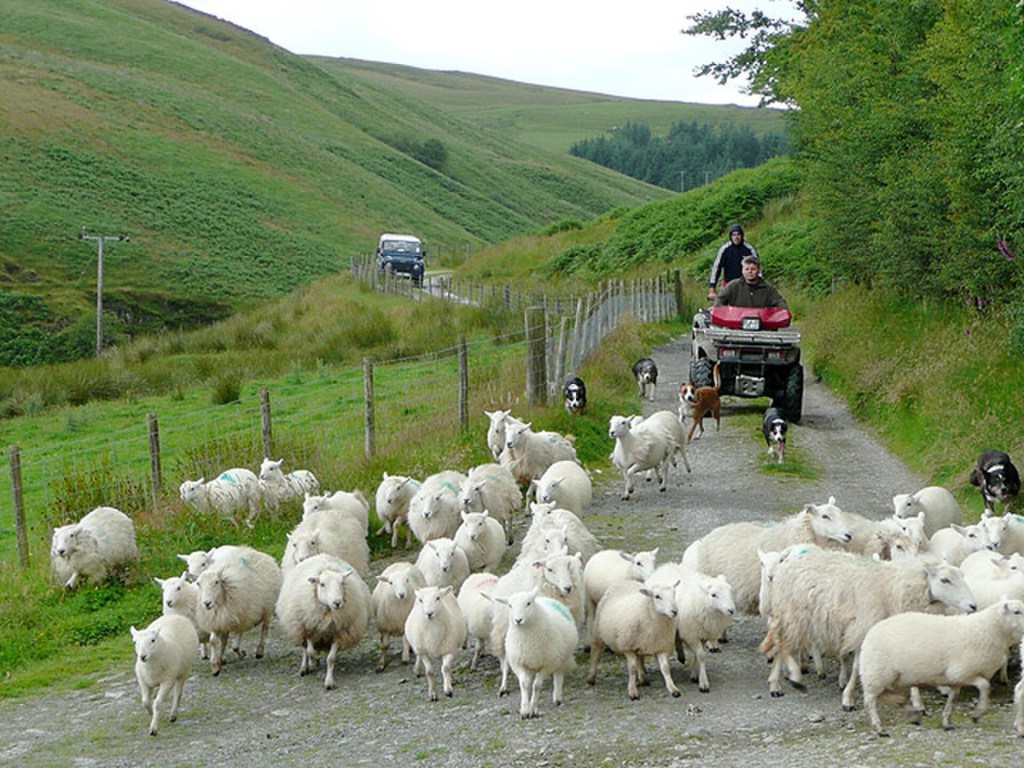
Farming organisations, including the National Sheep Association (NSA) and National Farmers Union (NFU), have consistently rejected the framing of sheep as the root problem.
They argue that appropriate grazing maintains valued open habitats, that under-grazing can lead to scrub and wildfire risk, that welfare challenges are being addressed through better management (lameness rates have fallen with the Five Point Plan), and that upland systems utilise land unsuitable for arable crops. They view the blanket “sheep must go” rhetoric as urban misunderstanding that ignores cultural, economic, and practical realities, and warn that rapid destocking without viable alternatives risks emptying communities.
James Rebanks, whose books The Shepherd’s Life and English Pastoral (also published as Pastoral Song) chronicle Lake District farming and the shift toward more nature-friendly methods, has been a prominent counter-voice. He has restored meadows, planted tens of thousands of trees, introduced cattle alongside his Herdwick sheep, and advocated mixed farming that produces food while recovering wildlife.
He has criticised the weaponisation of rewilding when it implies farmers should simply vacate land, and has publicly challenged Goldsmith’s claims on welfare statistics, supervision of hefted flocks, and the applicability of generalised data to hill systems. In recent exchanges he has accused Goldsmith of bad-faith arguments and selective use of evidence, while continuing to argue that thriving farm businesses are necessary to cash-flow nature recovery. Rebanks has also previously clashed with Monbiot over the Lake District’s World Heritage status and the legitimacy of traditional pastoral landscapes.
Other farmers and rural voices describe the anti-sheep narrative as a top-down imposition that ignores the knowledge of those who manage the land daily, the role of sheep farming in sustaining remote communities, and the risk that nature markets primarily benefit capital rather than working families.
Conclusion
The anti-sheep critique has evolved from literary polemic into a many-headed hydra of ecology, policy, rewilding, and natural-capital markets. Its proponents cherry-pick from studies showing declines in upland biodiversity, the low productivity of some hill land, and opportunities for alternative income. In response opponents select their own statistics, point out instances of cultural erasure, practical constraints, and potential consequences for rural economies and our fragile food systems.
As of 2026 the debate continues, if anything it has become more vociferous. Sheep numbers have continued a longer-term decline, private nature markets are expanding, and high-profile exchanges, such as Goldsmith’s recent Spectator piece and Rebanks’ responses to it, keep the arguments in the public eye.
Whether the outcome is large-scale destocking, more sophisticated mixed grazing and nature-friendly farming, or a hybrid of both will depend on the balance of political will, market incentives, and the ability of working farmers to shape the terms
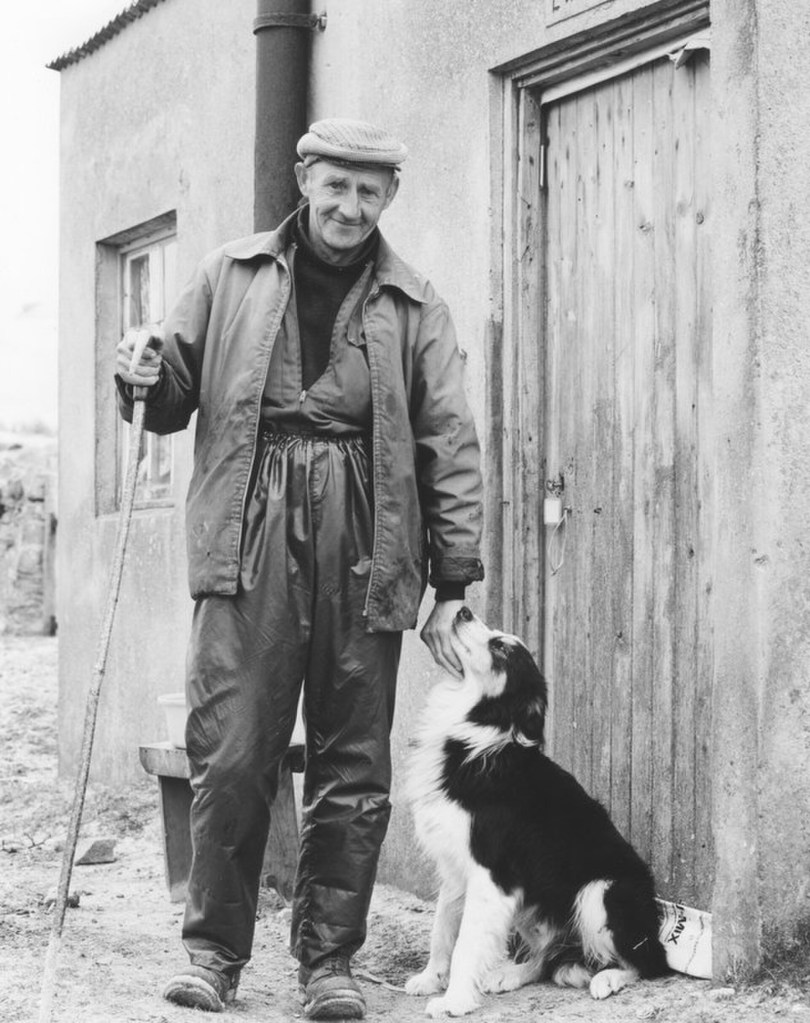
What is certain is the flocks that have shaped and created the culture, language, landscape, and very nature of our country over thousands of years will survive this brief storm in some form or other, and will continue to graze the hills far into the future, and there will always be a need for a shepherd to watch over them.
(Dennis Colhoun)
The Shepherd
How sweet is the Shepherd’s sweet lot!
From the morn to the evening he strays;
He shall follow his sheep all the day,
and his tongue shall be filled with praise.
For he hears the lambs’ innocent call,
and he hears the ewes’ tender reply;
He is watchful while they are in peace,
for they know when their Shepherd is nigh.
(William Blake, from Songs of Innocence)
Further Reading:
- Yain Tain Tethera, the ancient way of counting sheep.
- Some of the breeds of Hill Sheep that can be found in the Northwest, a study of just a few of the breeds of hill sheep found in Northwest England.
- The Sheep and its role in shaping Britain’s Landscape and History, Part Three An incombleat history of sheep.
- Baa, Ram, Ewe! A non-exhaustive list of sheep terminology.
- The Hills are Alive with the sound of Bleating!For a little look at Lambing
- Sheep Scanning The scientific process of scanning ewes for lambs.
- Land Use in England: A Finite Resource Under Growing Pressure
An Analysis of England’s Landscape and its Future in a Time of Rapid Change.
(Special thanks to Zorica of Ascendance Fashion for alerting me to the existence of the term ‘Ovinophobia’!)
Thank-you for reading. If you enjoyed this piece and would like to support further articles on the wildlife and history of the Northwest, you can buy me a coffee here.
Alex Burton-Hargreaves
(September 2026)


Here on Lundy we have both domestic sheep and Soay Feral stock. We seem to be moving to less of the former and moving towards the soay to supply our food.
LikeLiked by 2 people
Viking sheep! Their wool can be hand-plucked can’t it?
LikeLike
I just wait till they rub up against a stone !
LikeLiked by 1 person
It’s meant to be quite fine stuff isn’t it?
LikeLike
Yes it’s hard to spin
LikeLiked by 1 person