Clavaria zollingeri (Violet Coral) in Northwest England: Habitat Requirements and Conservation Status
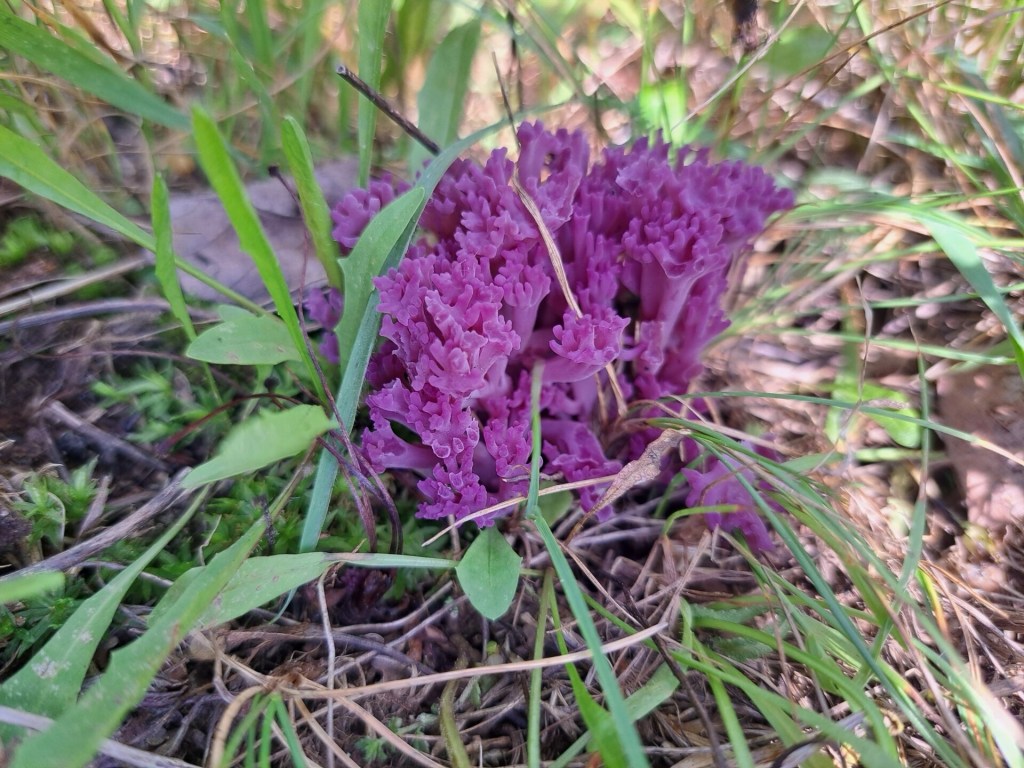
Violet antlers rise
from the short moss-green pasture
Coral of the sward
Clavaria zollingeri, commonly known as the Violet Coral, is a distinctive clavarioid* fungus characterised by its dichotomously branching, purple-to-violet fruiting bodies.
These structures typically measure 3 to 10cm in height and up to 8cm in width, with individual stems 4 to 7mm in diameter at the base. The vivid colouration fades with age to pale lilac and eventually a dull brownish-grey. Fruiting occurs primarily between July and November and the species is saprobic, deriving nutrients from the decomposition of organic matter in the soil.
In the British Isles, C. zollingeri is scarce and strongly associated with high-quality semi-natural grasslands. Within Northwest England, documented occurrences include Gaits Barrows National Nature Reserve in Lancashire, where the species has been recorded with relative frequency, alongside with several locations in Cumbria.
These sites represent some of the region’s remaining examples of traditional pastoral habitats capable of supporting this and other CHEGD fungus.
*Please see glossary for explanation of terms
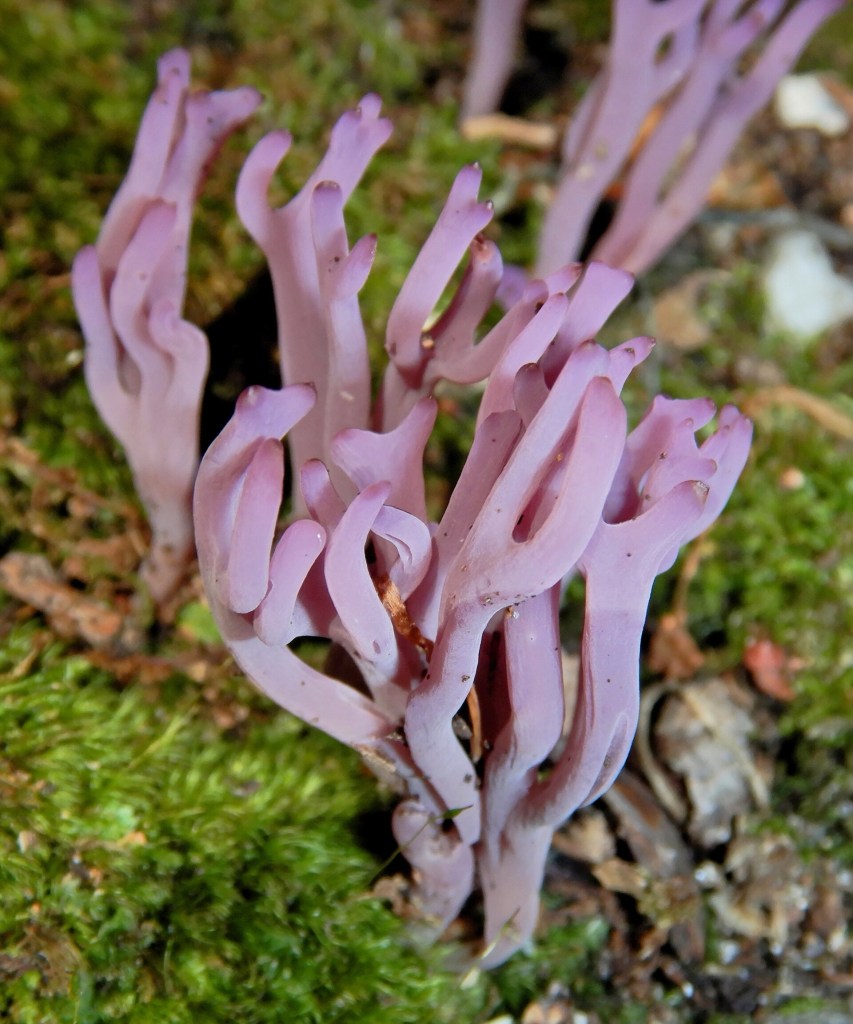
(Dawn Nelson)
Habitat Preferences
C. zollingeri is a characteristic member of the CHEGD fungal assemblage (Clavariaceae, Hygrocybes, Entolomataceae, Geoglossacaea and Dermoloma). These taxa are restricted to nutrient-poor, often mildly acidic grasslands that have remained largely unimproved for decades or sometimes centuries.
Preferred conditions include a short, moss-rich sward maintained by light grazing or traditional cutting regimes. Typical habitats include old sheep- or cattle-grazed pastures, churchyards, parkland and certain mossy grassland clearings.
The fungus usually occurs as solitary individuals or in small groups and serves as a reliable indicator of mycologically rich, ancient grassland systems.
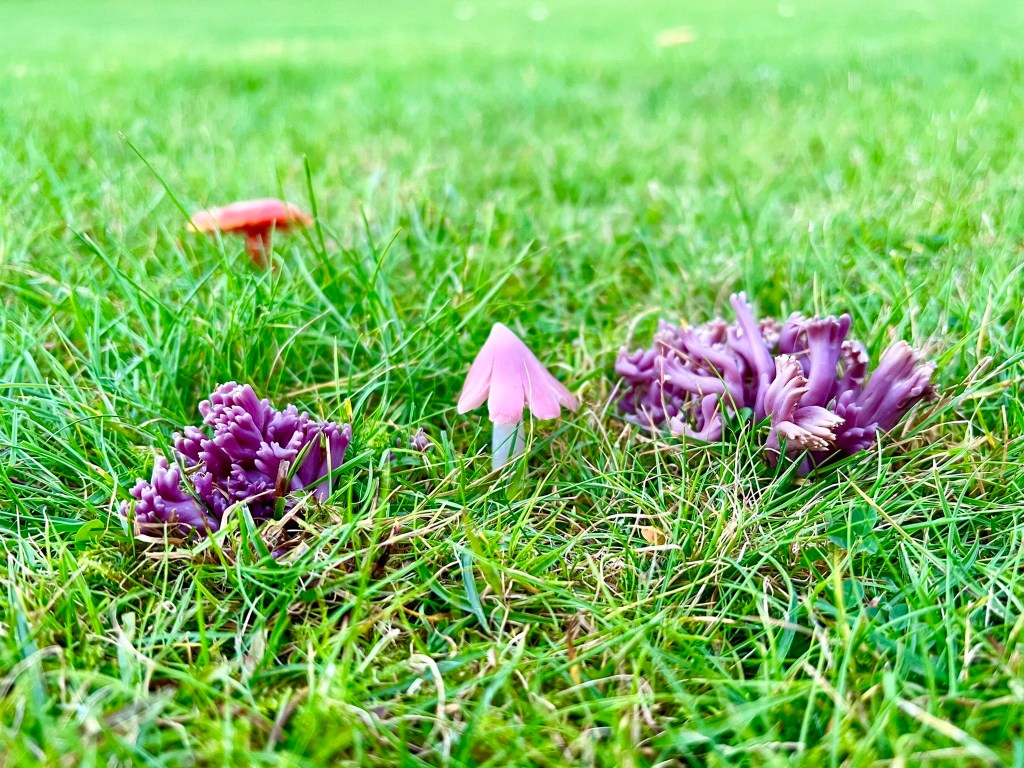
(Photo by Rebecca Wheeler)
Conservation Status and Threats
The species is classified as Vulnerable on the IUCN Red List (2019 assessment), this designation reflects an estimated population decline of 30 to 50% over a 50-year period, driven by the widespread loss and degradation of semi-natural grasslands across western Europe. Habitat losses for the broader CHEGD fungal community have been estimated at approximately 90% over the past 75 years.
Principal threats in Northwest England and elsewhere include agricultural intensification (application of fertilisers and slurry, reseeding and ploughing), atmospheric nitrogen deposition, land-use change (development, inappropriate tree planting and abandonment), and changes to traditional grazing practices.
Because of its narrow ecological requirements, the disappearance of suitable grassland rapidly eliminates local populations of C. zollingeri and associated rare fungi.
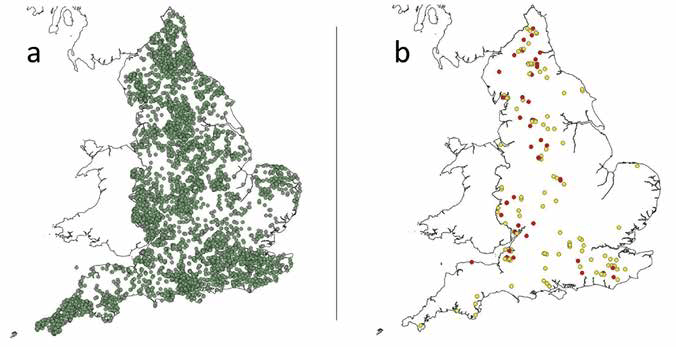
(The England Grassland Fungi Database)
Conservation Measures
Effective conservation of CHEGD species like C. zollingeri centres on the maintenance of existing habitat quality.
Essential management practices comprise:
- Continuation of extensive grazing (preferably by sheep or light cattle) or traditional hay-meadow systems
- Strict avoidance of inorganic fertilisers, herbicides and soil disturbance
- Protection of key sites through statutory designation (e.g; Sites of Special Scientific Interest) and positive conservation management, as exemplified at Gait Barrows.
Citizen-science initiatives, including Plantlife’s Waxcap Watch and systematic recording by local mycological groups, have improved knowledge of the species’ distribution and demonstrated the conservation value of overlooked sites such as older lawns and churchyards. Accurate recording of any observations, supported by photographic evidence and precise locality data submitted to local environmental records centres, remains an important contribution to monitoring and site protection.
The continued presence of Clavaria zollingeri in Northwest England is dependent upon the retention and appropriate management of its specialised grassland habitats. These remaining sites represent significant reservoirs of fungal diversity of both national and international conservation importance and as such their value should never be underestimated.
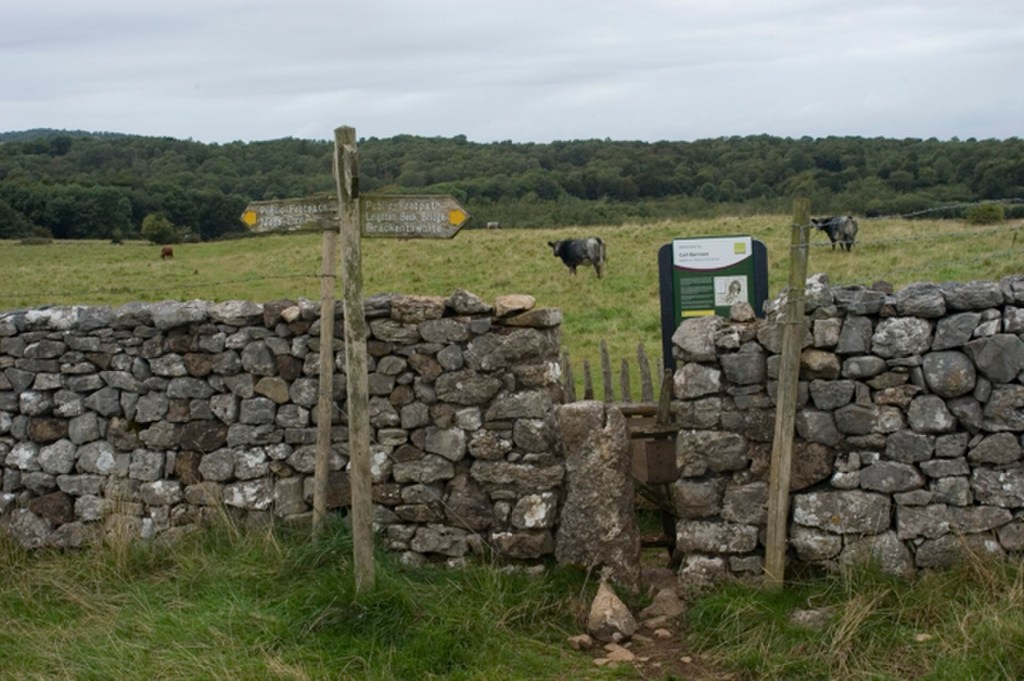
(Tom Richardson)
Glossary of Terms
- Basidiocarp / Fruiting body
The visible, spore-producing structure of a fungus (in this case the coral-like growth of Clavaria zollingeri).
- CHEGD
An informal but widely used acronym for a group of grassland fungi that share similar ecological requirements:
• C – Clavariaceae (fairy clubs, including Clavaria)
• H – Hygrocybes (waxcaps)
• E – Entolomataceae (pinkgills)
• G – Geoglossaceae (earthtongues)
• D – Dermoloma (crazed caps)
- Clavarioid / Club fungus
From the Latin Clavarious meaning ‘club-shaped’ used to denote fungi that produce upright, club- or coral-shaped fruiting bodies rather than the familiar cap-and-stem form.
- Dichotomous branching
A branching pattern in which each stem divides repeatedly into two roughly equal branches (characteristic of the violet coral).
- Indicator species
A species whose presence reliably signals particular environmental conditions. in this case, high-quality, long-unimproved grassland.
- IUCN Red List
The International Union for Conservation of Nature’s global inventory of the conservation status of species. Clavaria zollingeri is assessed as Vulnerable.
- Moss-rich sward
A short grassland turf that contains a high proportion of mosses, typical of nutrient-poor, traditionally managed sites.
- Nutrient-poor / Unimproved grassland
Grassland that has not been treated with artificial fertilisers, slurry or herbicides and has not been ploughed or reseeded for many decades. These conditions favour specialised fungi such as the violet coral.
- Saprobic / Saprobe (or Saprotroph)
An organism that obtains nutrients by breaking down dead organic matter in the soil or litter (the ecological strategy of Clavaria zollingeri).
- Semi-natural grassland
Grassland that has been shaped by long-term traditional human management (grazing or cutting) but retains a high diversity of native species and has not been intensively improved.
- Vulnerable (IUCN category)
A species facing a high risk of extinction in the wild in the medium-term future, based on observed or projected population decline and/or habitat loss.
Therefore am I still
a lover of the meadows and the woods,
and mountains; and of all that we behold
from this green earth…
(From Lines Composed a Few Miles above Tintern Abbey, William Wordsworth, 1798)
Thank-you for reading. If you enjoyed this piece and would like to support further articles on the wildlife and history of the Northwest, you can buy me a coffee here.
Alex Burton-Hargreaves
(October 2026)

