Biology, Ecology, and Identification of Coprinellus micaceus, the Glistening Inkcap
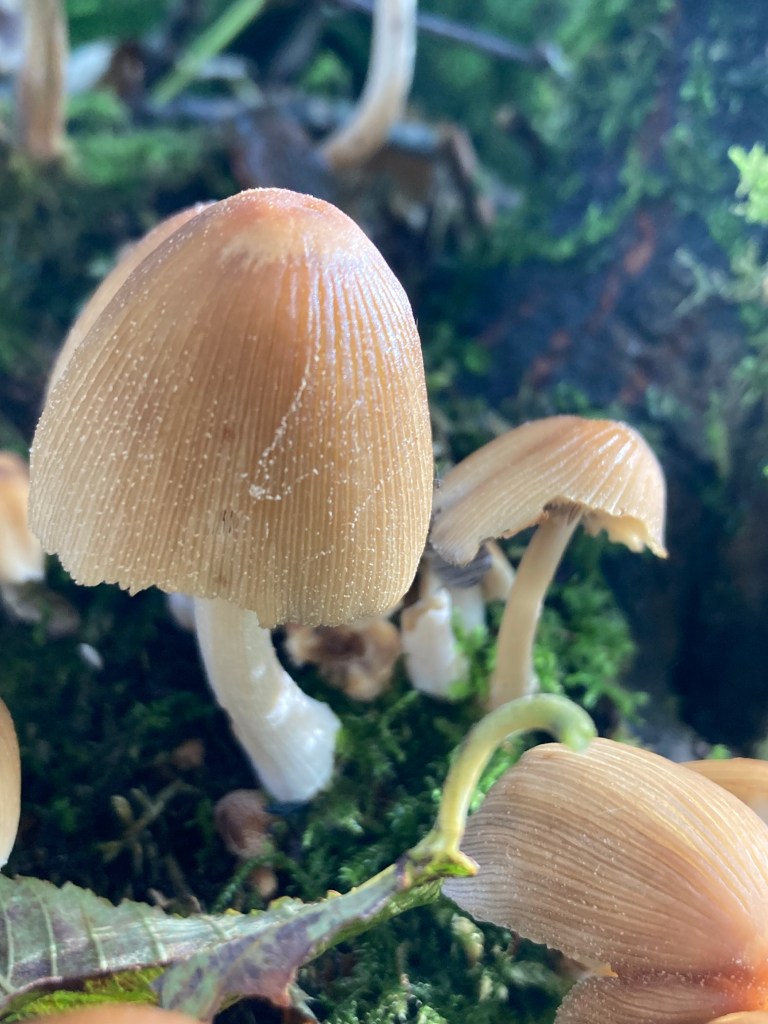
Glistening Inkcaps (Coprinellus micaceus) are one of the most common and easily recognised Inkcap mushrooms in the British Isles and are widespread and frequently encountered wherever suitable dead wood is present.
Identification
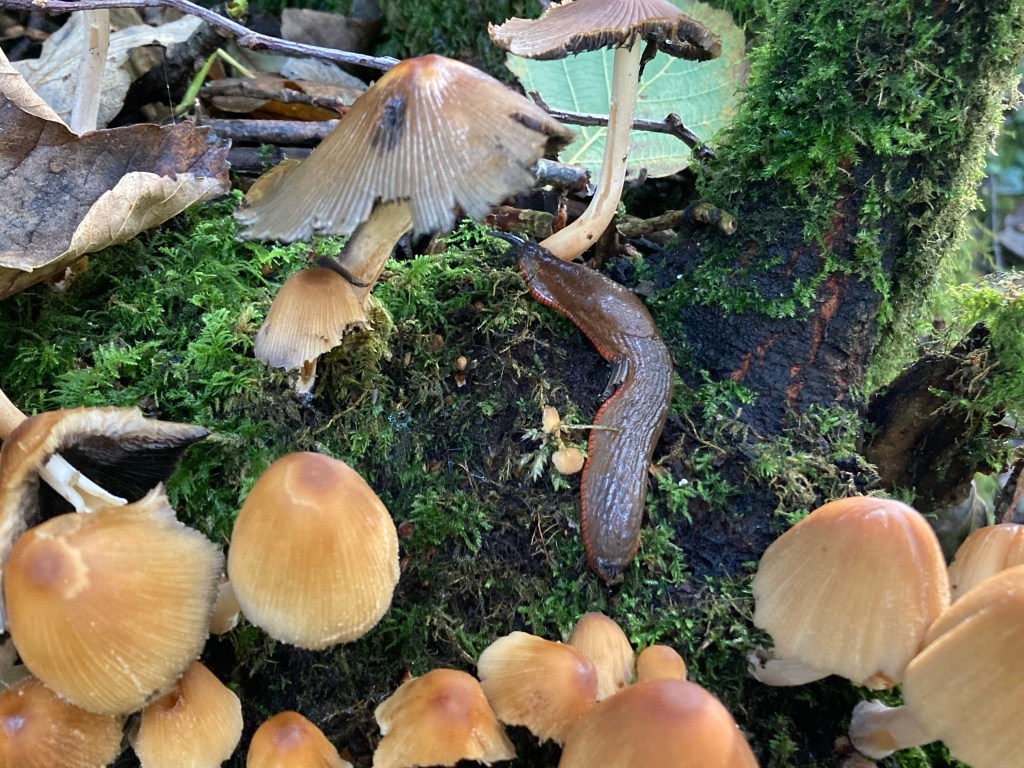
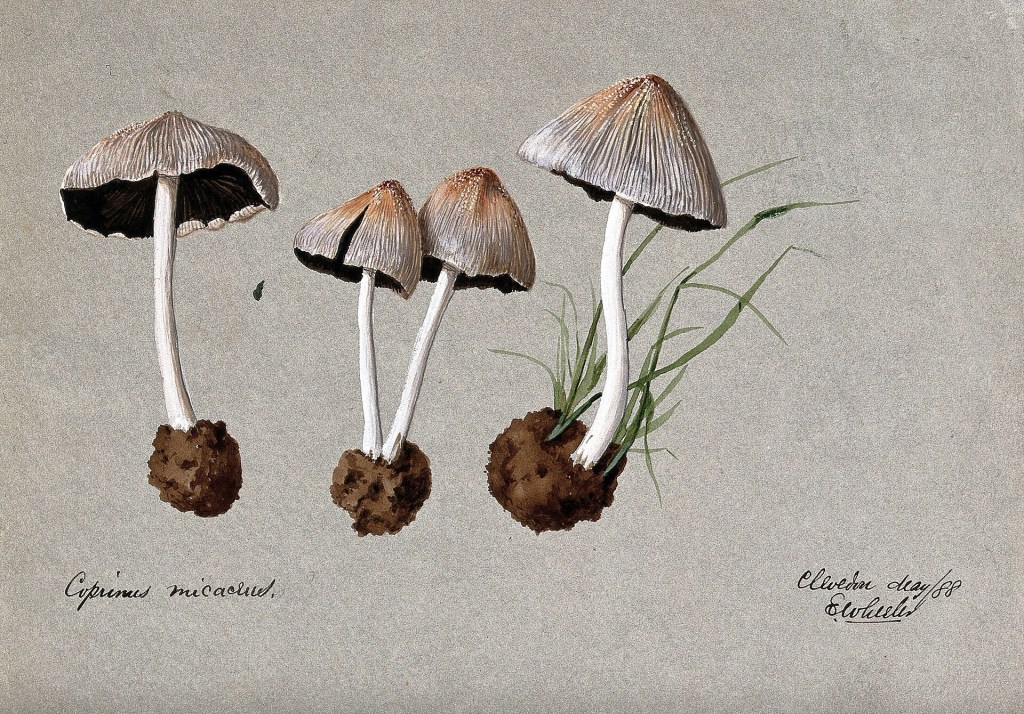
Their young fruit bodies appear in dense clusters, rarely solitary, with caps start egg- or oval-shaped, typically 1 to 4 cm tall and similar in diameter when expanded. They are ochre, honey-brown or tawny with a darker centre and fresh caps are covered in tiny, glistening white granules (the remains of the universal veil) that sparkle like mica or sugar crystals, hence the common and scientific names (micaceus refers to mica). These granules often wash off in rain.
The caps expand to become bell-shaped with radial grooves or striations, and may turn greyer with age before the margin becomes ragged.
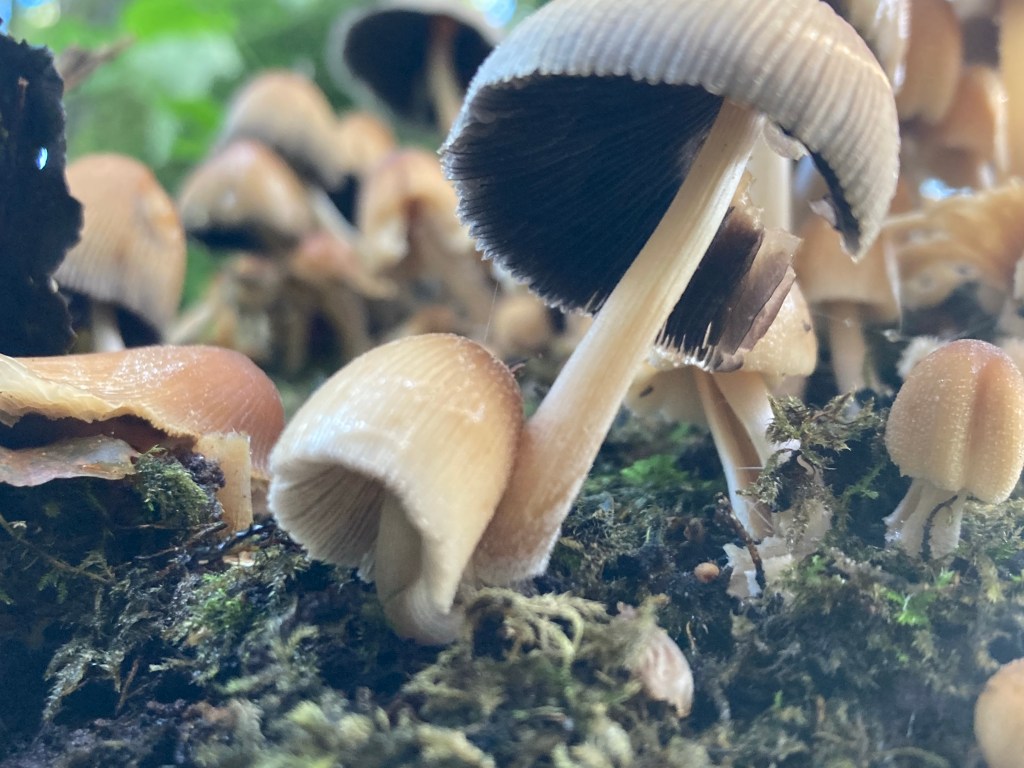
Gills begin white, turn brown then black, and, like the Common, Shaggy and other Inkcaps, partially deliquesce (self-digest) into a dark, inky fluid. Stems are slender, white, brittle and hollow, usually 4 to 10 cm tall and 2 to 6 mm thick. The spore print is black, and odour and taste are mild and not particularly distinctive.
It is often confused with the Fairy Inkcap (Coprinellus disseminatus), which grows in larger groups but lacks the mica-like granules and is greyer, or other small Inkcaps. Microscopic features, such as mitriform spores and the presence of caulocystidia (specialised projecting cells) on the stem, help confirm identity in borderline cases.
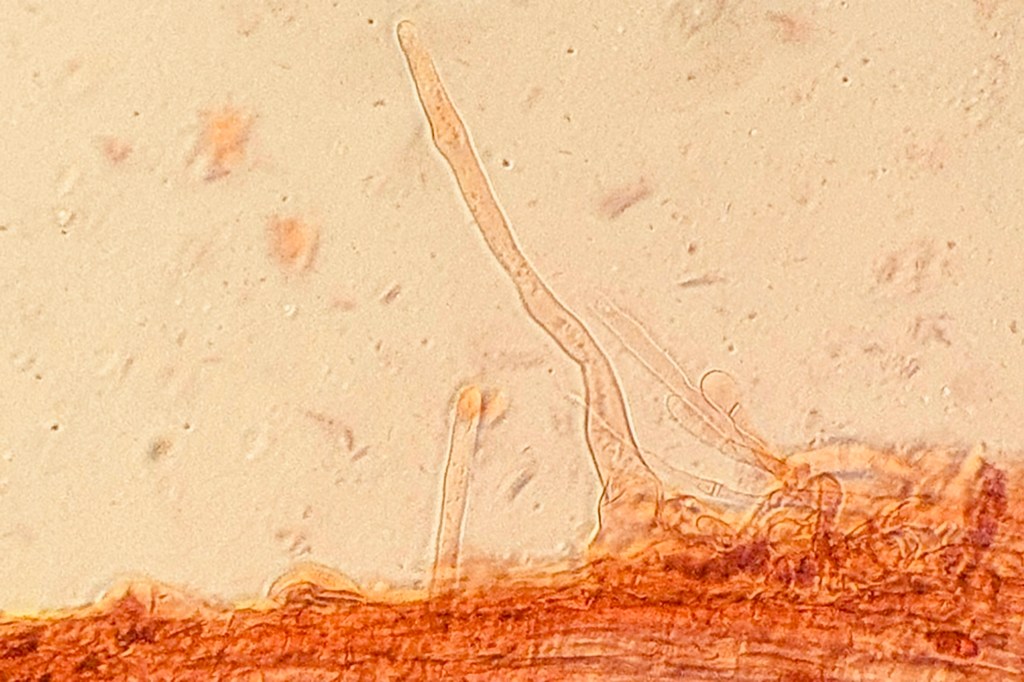
Kaulos (καυλός) is a Greek word meaning ‘stem’ or ‘stalk’, and cystidia detives from the Greek word kystis (κύστις), which means ‘bladder’, ‘pouch’, or ‘sac’
Habitat & Ecology
C. micaceus is a saprobic fungus that decomposes dead or dying broadleaf wood. It grows on or around stumps, logs, buried roots and woody debris, often appearing to rise directly from soil or lawns when the wood is underground. It prefers temperate conditions and is common in woodlands, parks, gardens, roadside verges, urban areas and even on wooden structures. It is rarely found on conifers.
Fruiting occurs from spring through to late autumn or early winter (roughly May to November or later in mild years), often in successive flushes after rain at the same location. Clusters can be abundant, with successive crops from a single stump producing substantial quantities over a season.
Finding and Recording
Those seeking out Glistening Inkcaps should look for dense tufts of small brownish caps with a sparkly coating on or beside broadleaf stumps and buried wood in parks, woodland edges, gardens and nature reserves after rain, especially from late spring onwards. Local fungus groups and recording schemes (e.g; those contributing to the NBN Atlas or county naturalist societies) welcome observations, which help map its ongoing presence across the country.
Although regarded as edible when young by some foragers (before significant deliquescence) it has little culinary value due to its thin flesh and rapid deterioration. Also the mycelium can bioaccumulate heavy metals (such as cadmium and lead) from polluted soil or roadside environments, so specimens from contaminated sites, or sites with an unknown history, should never be eaten. Some related inkcaps contain compounds that react badly with alcohol in the body’s system, so caution is advised.
Always be certain of identification, many fungi look similar and some are toxic, if in doubt simply admire, take photos, and leave it alone to do its essential job of recycling the earth’s nutrients and bringing life to the winter woods.
And plants, at whose names the verse feels loath,
Filled the place with a monstrous undergrowth,
prickly, and pulpous, and brying, and blue,
luminous, toxic, and ghastly of hue.
And agarics, and fungi, with mildew and mould
started like mist from the wet ground cold;
Pale, fleshy, as if the dead from their tombs
had arisem here and there into monstrous blooms.
From The Sensitive Plant, by Percy Bysshe Shelley, 1820
Thank-you for reading. If you enjoyed this piece and would like to support further articles on the wildlife and history of the Northwest, you can buy me a coffee here.
Alex Burton-Hargreaves
(October 2026)

