From Humble Beginnings in a Lancashire Town to International Architectural Powerhouse, the History and Evolution of BDP, the Building Design Partnership
Part One: Foundations
“I felt I had turned to look down from the mountain, realising how far we had climbed”
(George Grenfell-Baines)
Born in Preston
The Building Design Partnership, known simply as BDP, is one of Britain’s most significant design practices, and its long history is closely interwoven with that of my family’s.
Today it operates as an international firm of architects, engineers, urban designers, landscape architects, interior designers and related specialists, with its headquarters in Manchester and studios across Britain and overseas.
Since 2016 it has been owned by the Japanese engineering company Nippon Koei, and its work now spans healthcare, education, transport, commercial, civic and cultural projects. However it continues to emphasise collaborative, integrated design, a principle that was radical when the firm was founded and remains central to its identity.
That founding story begins not in a major metropolitan centre but in the city of Preston, Lancashire, with a group of young architects of modest background who believed that the technical and social complexity of modern building demanded a new kind of professional organisation.
A New Kind of Practice
Sir George Grenfell-Baines (1908-2003), known throughout his career as “GG”, was born in Preston, the son of a railway clerk. After leaving school at fourteen he worked as a draughtsman, studied part-time, and eventually qualified at Manchester University’s School of Architecture, where he adopted the name Grenfell (his mother’s maiden name). In 1937 he began a practice in a room of his parents’ house in Ashton, Preston, before moving into shared premises at 12 Guildhall Street with the established local architect George Henry Broadbent.
By 1939 Harry Walters had joined them and the three operated as independent one-man firms that shared premises, staff, experience and income according to a mutual assessment of contribution, an early experiment in what GG later called the “Three Rs” of co-operation: Responsibility, Recognition and Reward. In 1941 this arrangement was formalised as the Grenfell Baines Group.
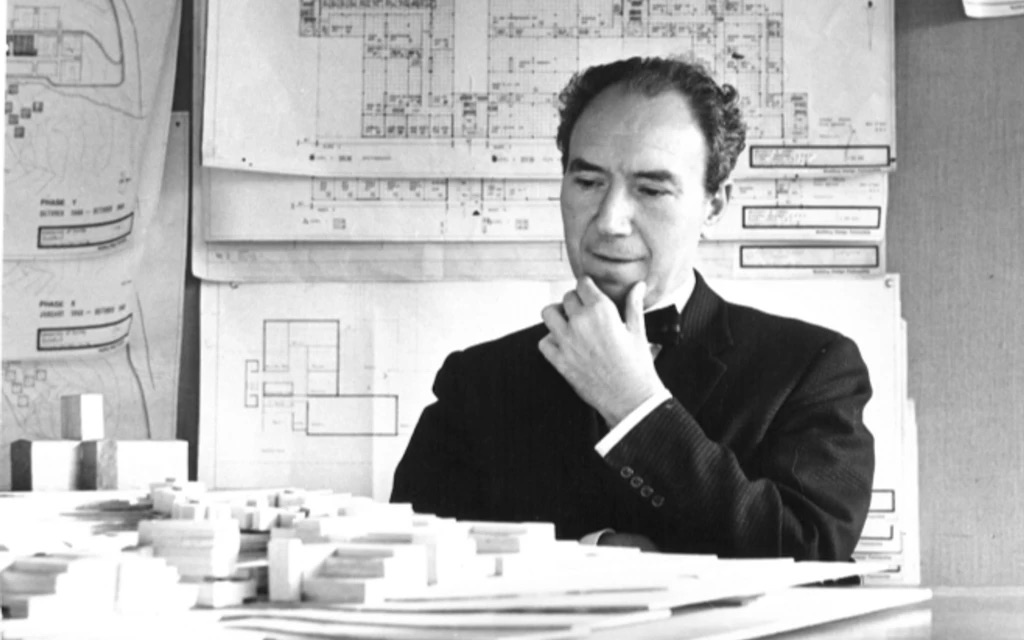
After the war is when my grandfather Thomas Gorton Hargreaves enters the scene, and the practice was renamed Grenfell Baines & Hargreaves as he became the named partner alongside Grenfell-Baines. The firm continued to be based in Preston while expanding its range of work through the post-war boom in housing, education, commercial and public buildings. My grandfather also taught architecture in Preston (at the institution that later became the University of Central Lancashire). The partnership represented a further step in GG’s long-running experiments with shared working and multi-skilled teams.
By the late 1950s Grenfell-Baines had become convinced that a fully integrated organisation, one in which architects, quantity surveyors, engineers and other specialists worked as equals under a single professional roof, was both necessary and achievable. In May 1960 the name ‘Design Partnership’ was registered. On the 5th April 1961, at the practice’s staff retreat at Bryn Mor on Anglesey, the architectural and town-planning practice of Grenfell Baines & Hargreaves merged with the quantity-surveying practice of Arnold E. Towler to form the new organisation. It quickly became known as Building Design Partnership (BDP).
The founding partners included Sir George Grenfell-Baines, John Wilkinson, Arnold Towler and Bill White. The change of name was deliberate: an impersonal title was chosen to signal the shift from individual or dual-named practices to a continuing team organisation in which no single profession or personality would dominate. GG’s own view was characteristically pragmatic: one should only change from a position of strength.
The new firm’s stated aim was to offer clients a single channel of responsibility for the complete design of buildings and the physical environment while preserving the professional status of every discipline involved.
Preston Offices
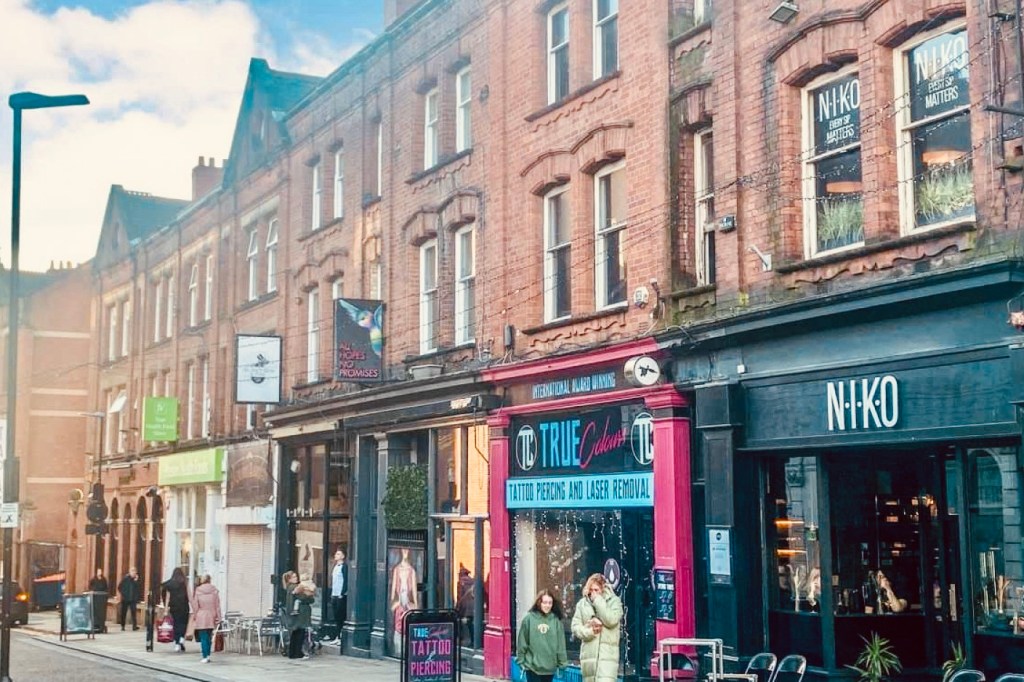
Preston remained the spiritual and operational heart of the practice for more than three decades. The earliest base was the room in GG’s parents’ house, followed by the Guildhall Street premises that the Group and then Grenfell Baines & Hargreaves progressively expanded. These offices, in the centre of the town, witnessed the transition from a small collaborative experiment to the multi-professional firm of the 1960s.
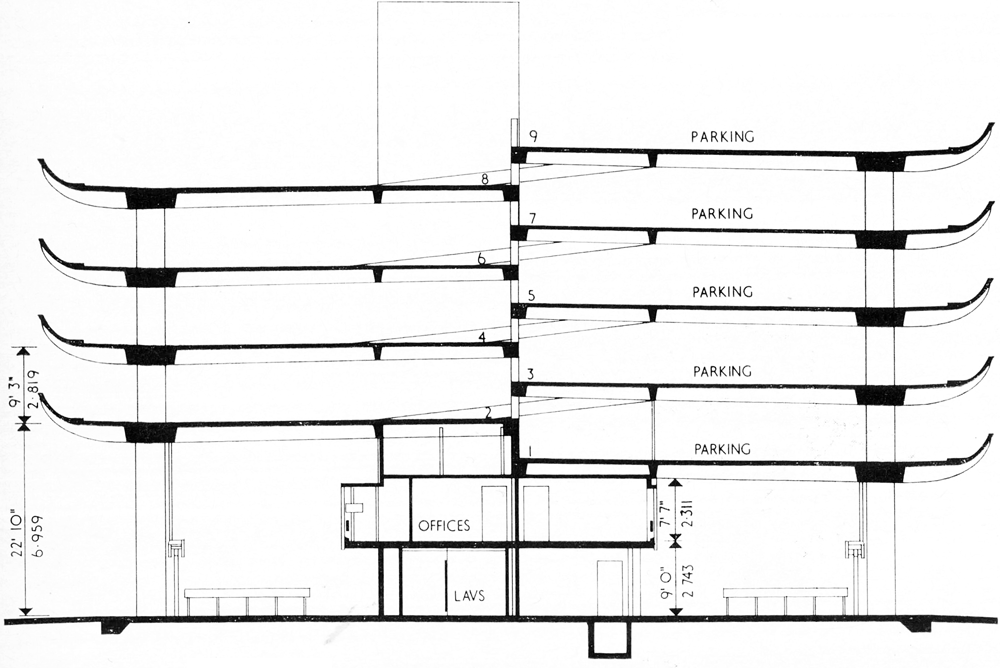
In 1968 the Preston studio moved to the Vernon Building on Vernon Street (off Moor Lane). A former furniture store and bowling alley complex, it was redesigned by the practice itself according to the German Bürolandschaft (office-landscape) principles of open-plan working. The intention was practical as well as symbolic: to create a workplace in which architects, engineers, surveyors and other specialists could work side by side, reinforcing the multidisciplinary culture that BDP was building. The building also contained dining, recreation and gallery spaces used for music, events and internal gatherings, an expression of the “spirit” that Bill White later documented in the firm’s 1987 anniversary book The Spirit of BDP.
The Preston office, which I vaguely remember from childhood Christmas parties where we played hide-and-seek under the tables while our parents nibbled on voul-au-vents and talked about boring grown-up stuff, continued until 1994, when it was closed and its operations amalgamated with the Manchester studio. By then Manchester had become the dominant northern base, and it remains BDP’s headquarters today at 11 Ducie Street in the Piccadilly Basin.
The Vernon Building later passed into the ownership of the University of Central Lancashire; the university’s architecture school now carries Grenfell-Baines’s name, a lasting local reminder of the practice’s origins.
My Grandfather’s part in the BDP story
My grandad Tom occupied a distinctive place in the pre-BDP years. As the partner whose name stood alongside Grenfell-Baines he was part of the firm during its important post-war expansion and during the period when the ideas that led to BDP were being refined. His concurrent role as a lecturer in architecture in Preston also linked the practice to the local education of the next generation of designers.
When the firm was reconstituted as Building Design Partnership in 1961, the personal names were deliberately set aside. His subsequent independent career included the design of the Jamea Masjid (Preston’s mosque) on Clarendon Street, completed in 1984, a notable local commission that reflected the town’s changing post-war communities and of which I’ll write more about in the future.
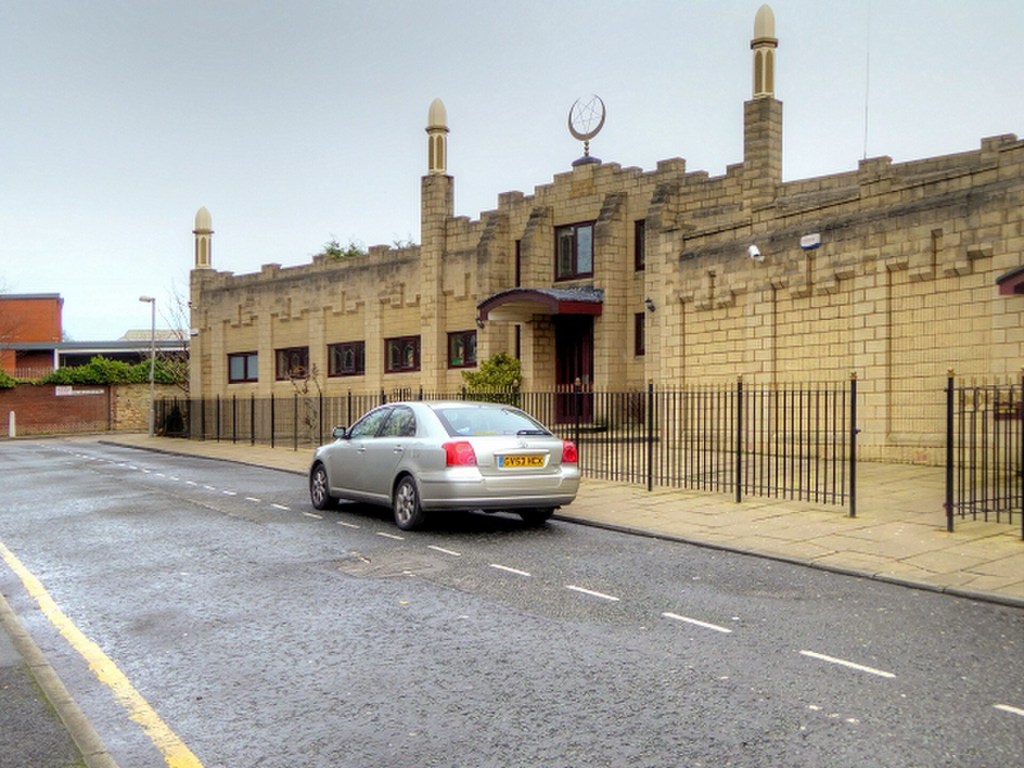
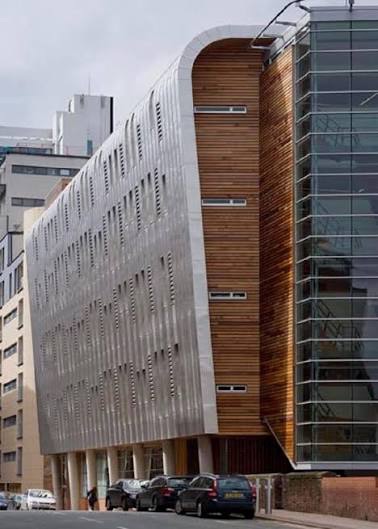
(Image by David Dixon)
In Part Two
In part two of this series I’ll look at a handful of the projects BDP has been involved with since its birth, including Preston bus station, the Coronation St outdoor set, the University of Surrey, and Liverpool One, and some of the projects that my father Matthew worked on during his time with BDP, such as the Ealing Broadway Centre, Bridgewater Shopping Centre, Sellafield, and the regeneration of Carlisle City Centre.
In future parts I plan to trace the growth of the international practice, tell Sir George’s fascinating story in greater detail, and look at the firm’s more recent history.
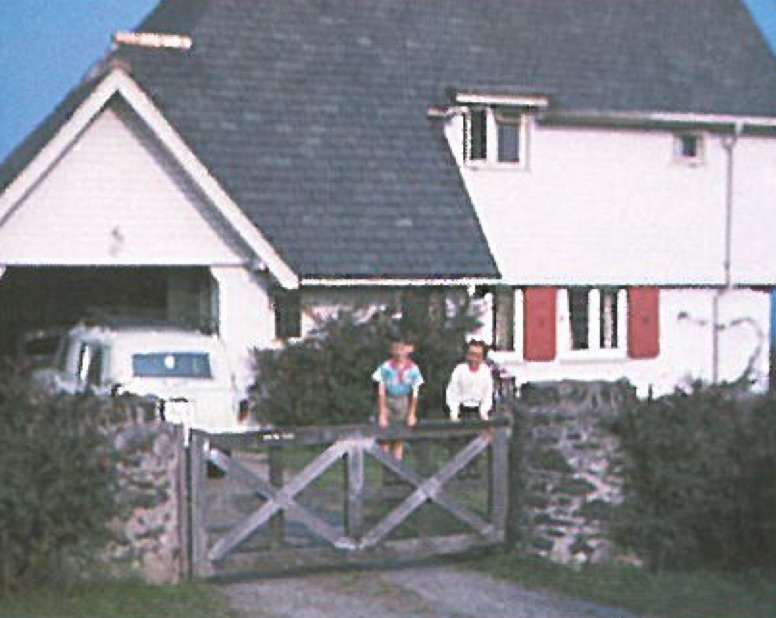
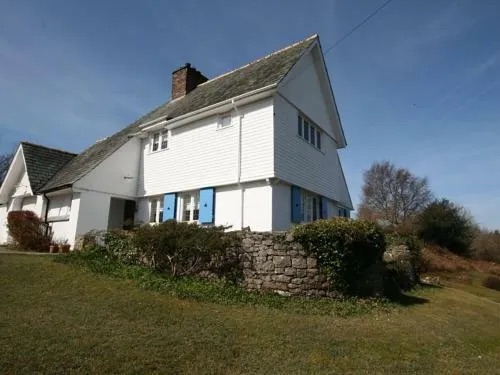
“Handsome buildings that perform poorly are no more good to society than are good looking unreliable husbands or beautiful wayward wives to home and family. Ask the children” (GG, 1987)
Sources
Sources drawn upon include Bill White’s The Spirit of BDP (1987), contemporary obituaries and biographical accounts of Sir George Grenfell-Baines, 1961 – The Making of BDP and local and practice records relating to the Preston offices and the pre-1961 partnership.
A Special thank-you to Russell Eggar, Associate, PR and External Affairs at BDP, for his assistance with enquiries.
Thank-you for reading. If you enjoyed this piece and would like to support further articles on the wildlife and history of the Northwest, you can buy me a coffee here.
Alex Burton-Hargreaves
(October 2026)

