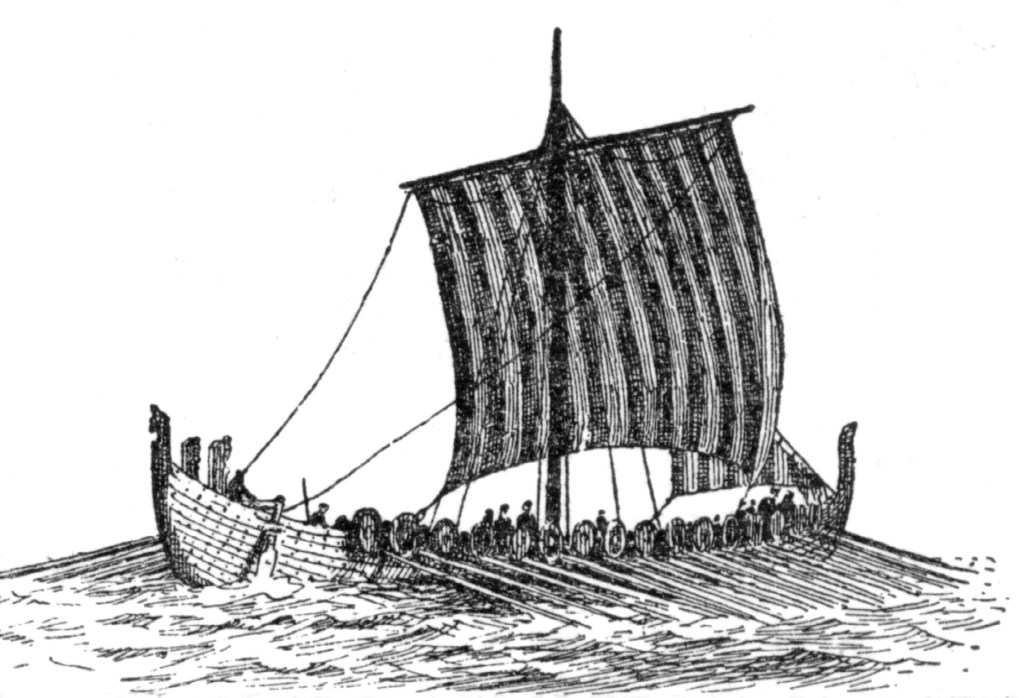
In Lancashire’s west where the salt winds roar,
the Vikings left names on the sand and the shore.
Formby the farmland that Forni did claim,
Ainsdale the valley that carries Einulf’s name.
Birkdale the birch-valley, green in the sunlight,
Meols marks the sandbanks that gleam in the night.
Orm raised his kirk where the people still pray,
Skelmersdale still echoes with Skjaldmarr’s old ways.
Lathom’s the barns where the harvest was stored,
Crosby’s bright cross was a sign of the Lord.
Kirkby’s the village that gathered as one,
Thingwall the field where the law-work was done.
Scarisbrick’s slope holds a hollow and gap,
Roby the boundary marked clear on the map.
West Derby kept deer in its woodland domain,
Toxteth a jetty where Toki’s ship came.
Goosnargh and Grimsargh were shielings on high,
Where cattle grazed grass under wide summer skies.
Wray is a nook, just a quiet retreat,
Norbreck the north slope that rises to meet.
Garstang’s spear-post did stand in the tall,
Whispering war-songs that answered the call.
From Mersey to Lune, through moss and through sand,
The Norse left their voices all over this land.
So walk these old places and listen with care—
The Vikings still speak if you stop, do you dare?
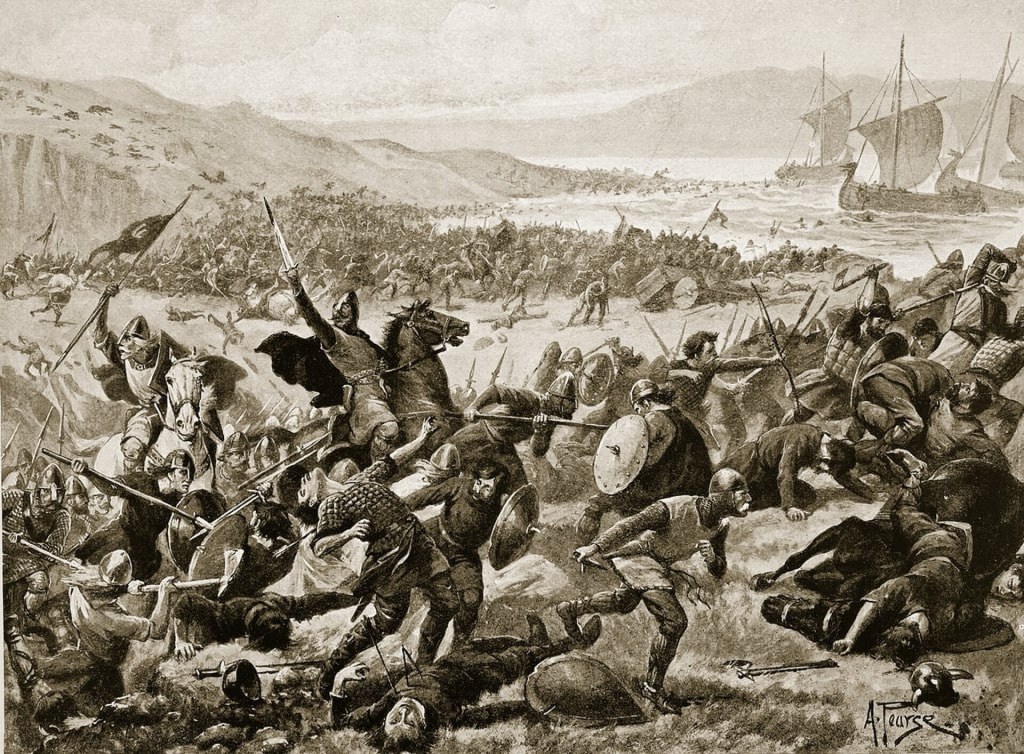
The great battle of Brunanburh in 937, as pictured by Alfred Pearse for Hutchinsons Story of the British Nation, 1922.
The precise location of this decisive battle, between Æthelstan, King of England, and Olaf Guthfrithson’s allied forces is unknown but is widely thought to be Bromborough on the Wirral Peninsula
The Many Viking Names of Lancashire
Viking (primarily Old Norse / Scandinavian) place names are very common in Lancashire, especially along the coast from the Mersey northwards through the West Derby hundred, Amounderness (the Fylde), Lonsdale, and into Furness. This linguistic legacy was bequeathed to us by 10th-century Norse settlement (often via Ireland, the Isle of Man, and the Irish Sea), with some Danish influence more inland and to the southeast.
There is no single definitive exhaustive list of every name (Ekwall’s classic The Place-Names of Lancashire and later studies document hundreds of major settlements plus many minor field, topographical, and lost names). Below is a selection of the clearer and better-attested major examples, with their usual Old Norse (or hybrid) origins and their English meanings.
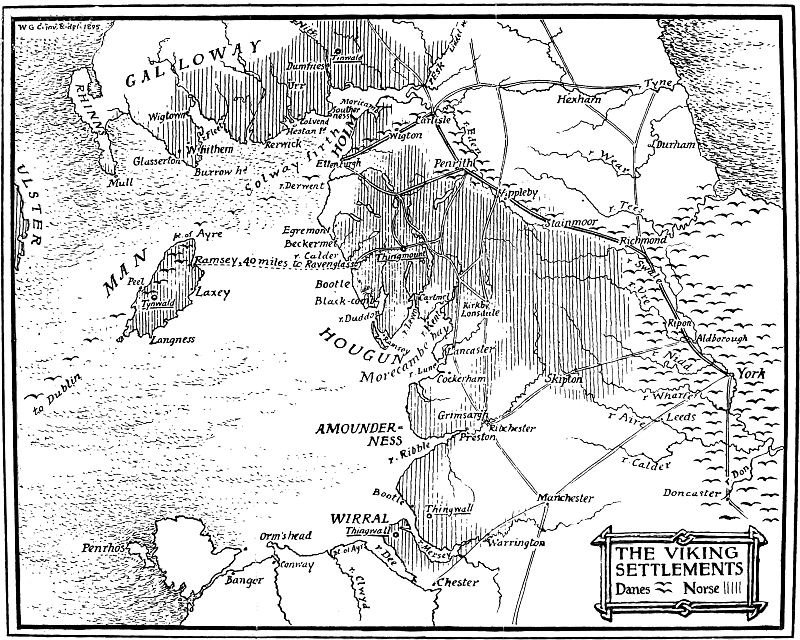
The Danes in Lancashire
and Yorkshire
by S.W. Partington, 1909
West Lancashire
- Formby: Fornabýr or Forni + býr “old farm/settlement” or “Forni’s farm”
- Ainsdale: Einulfsdalr “Einulf’s valley”
- Birkdale: Birkidalr “Birch-tree / birch-copse valley”
- Meols: Melr “Sandbanks / sandhills”
- Altcar: River Alt + kjarr “marsh (brushwood marsh) by the Alt”
- Ormskirk: Ormr + kirkja “Orm’s church”
- Skelmersdale: Skjaldmarr + dalr “Skjaldmarr’s valley”
- Lathom: Hlaðum (plural of hlaða) “At the barns / storehouses”
- Scarisbrick: Skarð + brekka “gap / hollow slope” or “pass slope”
- Burscough: Old English burh + skógr (hybrid) “fortification wood”
- Hesketh: Hesta-skeið “horse racecourse / track”
- Becconsall: Bekán (Gaelic-influenced) + haugr “Bekan’s mound”
- Crosby: Krossabýr “village / farm of the cross”
- Kirkby: Kirkjubýr “church village / farm”
- Roby: personal name or rá + býr, often linked to a personal name or “boundary farm”
- Derby: related to djúr / animal enclosure + býr so “deer / animal settlement”
- Kirkdale: Kirkja + dalr “church valley”
- Toxteth Toki + stǫð “Toki’s landing-place”
- Croxteth: Krokr (or krókr) + stǫð “Krokr’s / river-bend landing-place”
- Thingwall: Þingvǫllr “assembly / parliament field”
- Aigburth: Eiki + berg “oak hill”
- Litherland: Hlíðarland “sloping land / hillside land”
- Sefton: sef + Old English tūn (hybrid) “rush farmstead”
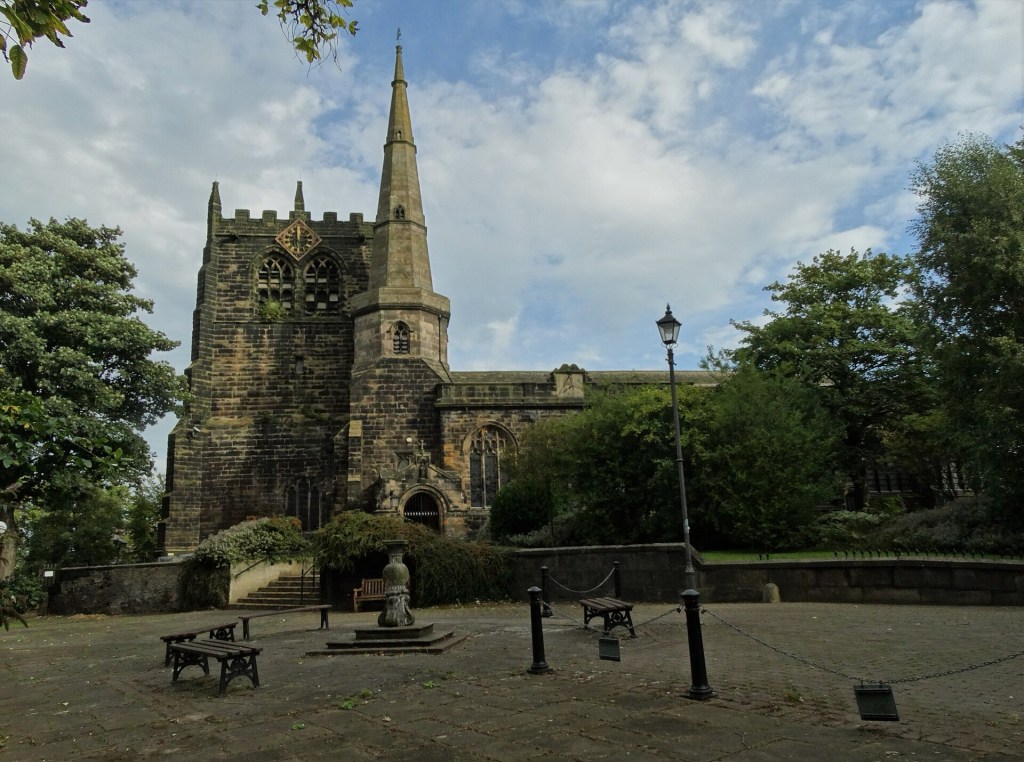
(Neil Theasby)
Amounderness / Fylde
- Goosnargh: Gaelic Gusán + ǽrgi / erg “Gusán’s shieling / hill-pasture”
- Grimsargh: Grímr + ǽrgi “Grím’s shieling”
- Kellamergh: personal name + “ǽrgi’s shieling”
- Wrea / Wray: Vrá “nook / corner”
- Norbreck: Norðbrekka “north slope”
- Warbreck: related to brekka (beacon or similar) “beacon / lookout slope”
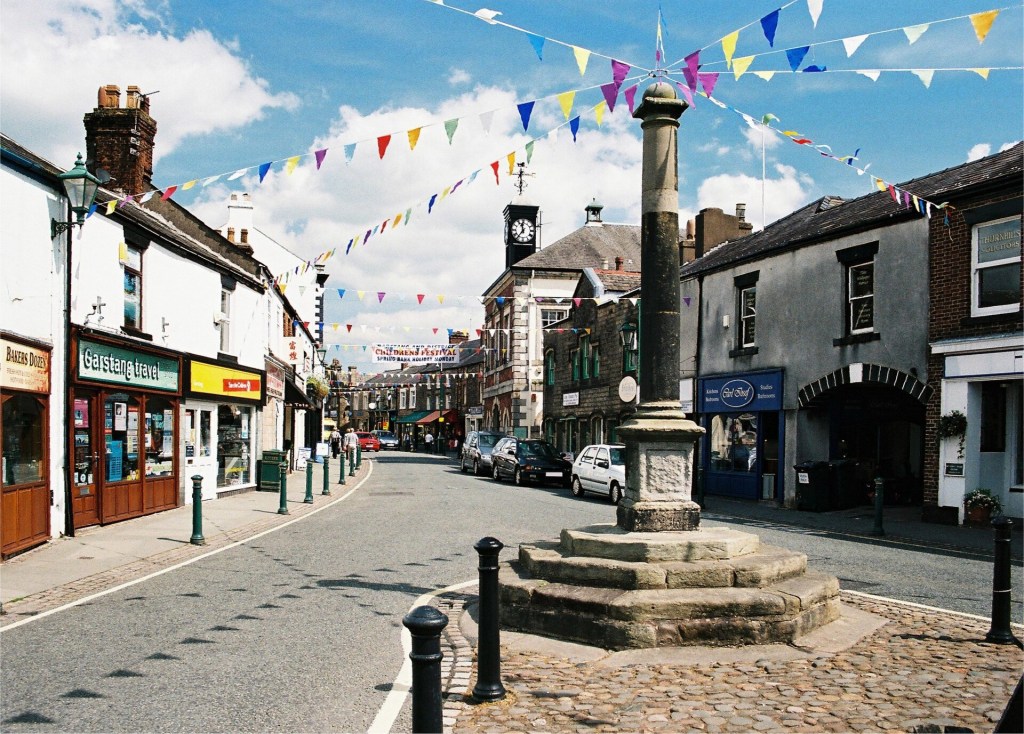
- Garstang: Geirr + stǫng “spear-post”, a meeting place where men would stand their spears against a post
- Ribby: related to hryggr + býr or similar ridge / rib farm (interpretations vary)
- Westby: Vest-býr “west farm / settlement”
- Claughton: Klakkr + Old English tūn (hybrid) “hillock / rock farm”
Lonsdale, Furness and other northern areas (historically Lancashire)
- Arkholme: Ergum (dative of erg) “at the shielings / hill-pastures”
- Hornby: Horn + býr or personal name “horn-shaped farm” or personal-name farm
- Hawkshead: related to Haukr + hǫfuð / head “hawk’s headland / high place” (forms vary)
- Ulverston: Ulfarr + OE tūn (hybrid) “Ulfarr’s farm / enclosure”
- Torver: linked to torf (turf) turf-related
- Cartmel: possibly kart + melr or similar, often linked to sandbank / cart elements
- Kirkby Ireleth Kirkja-býr + Irish-related element “Church village” + Irish connection
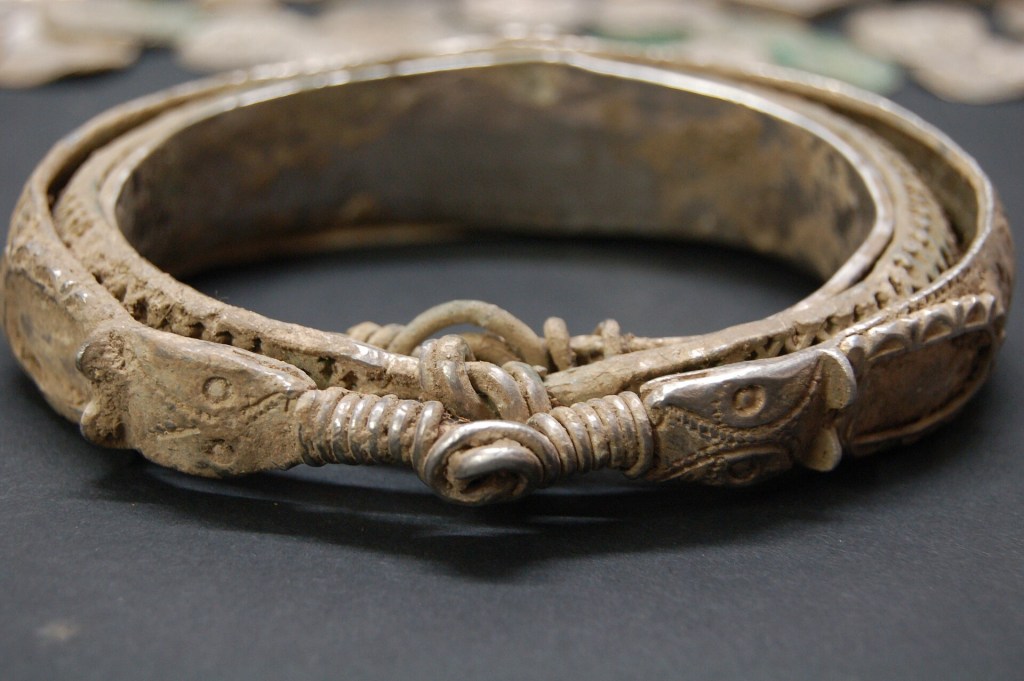
(Ian Richardson)
Common Old Norse elements found across Lancashire place-names
- -by / -býr: farm, village, settlement
- -dale / dalr: valley
- -thwaite / þveit: clearing (especially in wooded or upland areas)
- -beck / bekkr: stream
- -gill / gil: ravine or mountain stream
- -scale / skáli: temporary hut / shieling
- -breck / brekka: slope / hillside
- -holm / holmr: island or dry ground in marsh
- -meols / melr: sandbank / sandhill
- -kirk / kirkja: church
- -argh / -erg / ǽrgi: shieling / summer pasture (Norse borrowing of a Gaelic word, reflecting Irish Sea connections)
- -wray / vrá: nook or corner
- -stath / stǫð: landing-place
- -scar / sker or skarð: rock, skerry, or gap/pass
Many names are purely Norse; others are hybrids (Norse + Old English) as the cultures often intermingled. The densest clusters are in low-lying coastal and mossy areas, giving us the impression that they were less densely settled by the Anglo-Saxons.
Thank-you for reading. If you enjoyed this piece and would like to support further articles on the wildlife and history of the Northwest, you can buy me a coffee here.
Alex Burton-Hargreaves
(September 2026)


I’ve shared it to the Preston History FB group, Alex
LikeLiked by 1 person
Thank-you Peter, to be honest I never really had much of a poetic inclination and I don’t know if it’s any good, I just thought it was time for something light-hearted!
LikeLiked by 1 person
Very interesting. As a Prestonian always interested in vikings and place names. My husband is Swedish and I have a good knowledge of Swedish and have noticed so many similarities in the language of the north west and Swedish.
LikeLiked by 1 person
Thank-you, yes there’s a lot of similarities, many different cultures influenced the area, from the celts through the romans to the norse, mainly because the farmland is so good!
LikeLike