For the Fallen, by Laurence Binyon, Including a Brief Biography of the Author
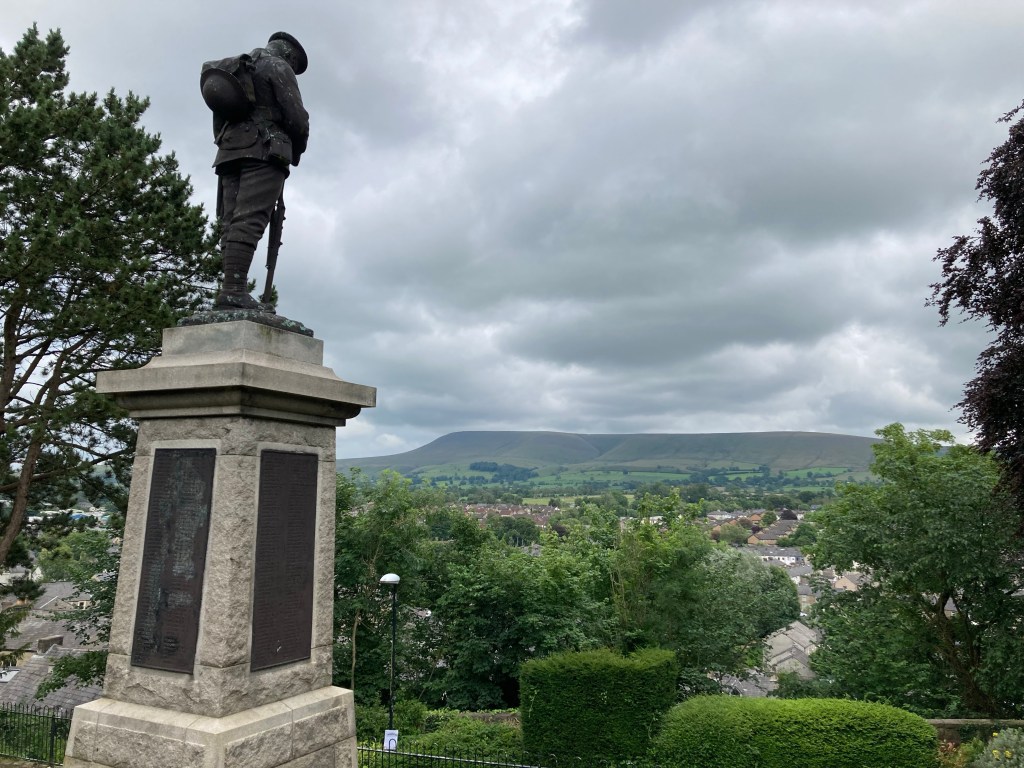
For the Fallen
With proud thanksgiving, a mother for her children,
England mourns for her dead across the sea.
Flesh of her flesh they were, spirit of her spirit,
fallen in the cause of the free.
Solemn the drums thrill; Death august and royal
sings sorrow up into immortal spheres,
there is music in the midst of desolation
and a glory that shines upon our tears.
They went with songs to the battle, they were young,
straight of limb, true of eye, steady and aglow.
They were staunch to the end against odds uncounted;
They fell with their faces to the foe.
They shall grow not old, as we that are left grow old:
Age shall not weary them, nor the years condemn.
At the going down of the sun and in the morning
we will remember them.
They mingle not with their laughing comrades again;
They sit no more at familiar tables of home;
They have no lot in our labour of the day-time;
They sleep beyond England’s foam.
But where our desires are and our hopes profound,
felt as a well-spring that is hidden from sight,
to the innermost heart of their own land they are known
as the stars are known to the Night;
As the stars that shall be bright when we are dust,
moving in marches upon the heavenly plain;
As the stars that are starry in the time of our darkness,
to the end, to the end, they remain.
(The fourth stanza is the one most often recited as the ‘Ode of Remembrance’, note the precise wording “They shall grow not old”, which is often misremembered as “They shall not grow old”.)
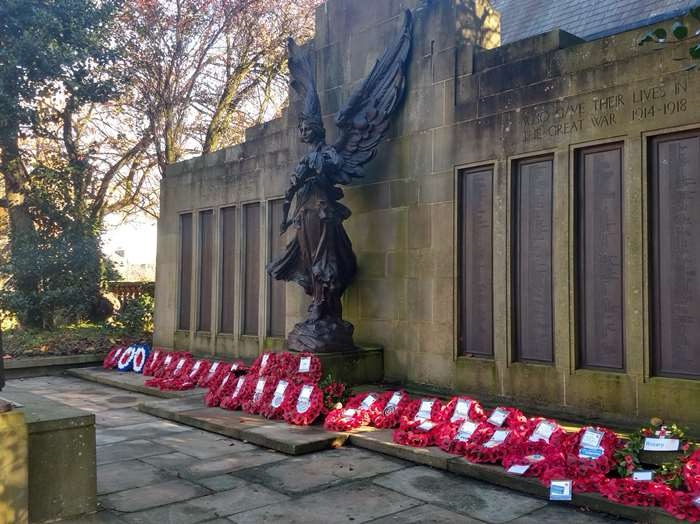
Lancaster City Council
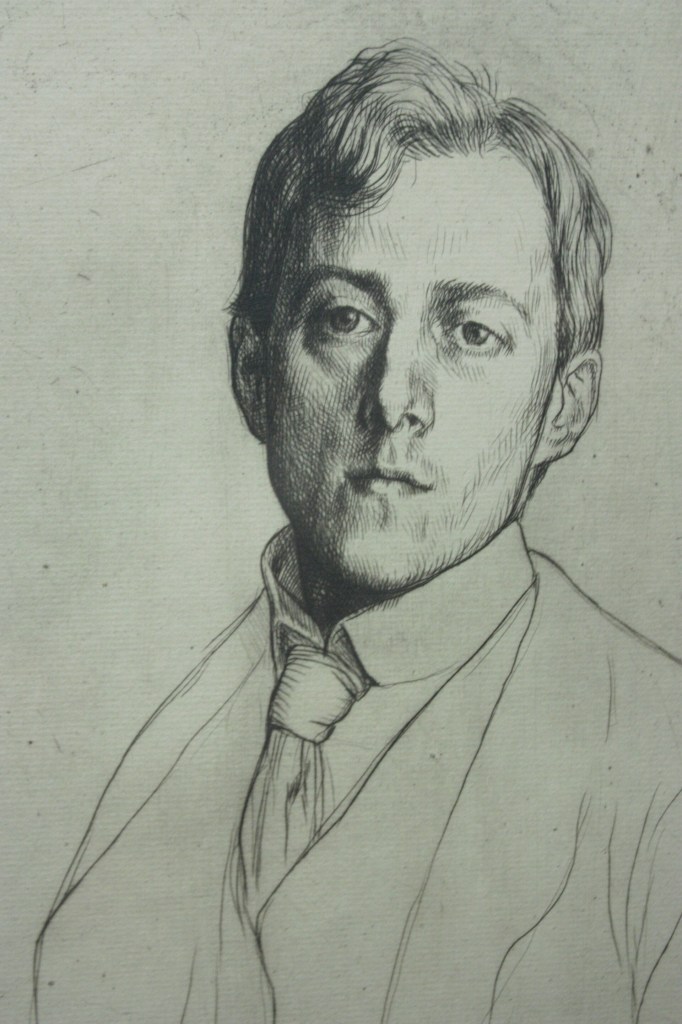
A Short biography of Laurence Binyon
Robert Laurence Binyon (10th August 1869 – 10th March 1943) was an English poet, dramatist, and art historian/scholar. Born in Lancaster to Frederick Binyon, a Church of England clergyman, and Mary Dockray, he was educated at St Paul’s School, London, and Trinity College, Oxford, where he won the Newdigate Prize for poetry (for ‘Persephone’).
He joined the British Museum in 1893, being placed at the Department of Printed Books, later Prints and Drawings, becoming a leading expert on Oriental (especially Far Eastern) art and prints; he wrote major works such as Painting in the Far East (1908) and The Flight of the Dragon (1911). He married Cicely Margaret Powell in 1904 and they had three daughters (including the artist and scholar Nicolete Gray).
Too old to enlist in 1914, he volunteered as a hospital orderly in France (1915–16), caring for wounded French soldiers (including after Verdun), and wrote about the experience in For Dauntless France. After the war he continued at the Museum until retirement in 1933, served as Norton Professor of Poetry at Harvard (1933–34), and produced a highly regarded terza rima translation of Dante’s Divine Comedy (completed just before his death). He was made a Companion of Honour. He died in Reading after an operation.
Background and History of the Poem
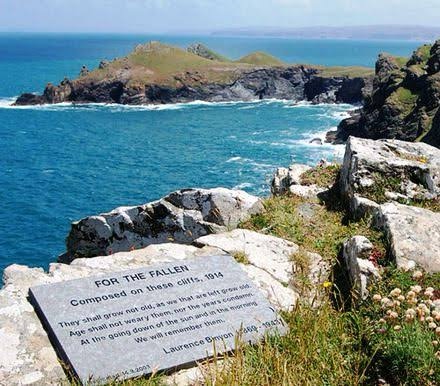
Binyon wrote ‘For the Fallen’ in mid-to-late September 1914 (the war had begun on the 4th of August), while sitting on the cliffs of north Cornwall between Pentire Point and The Rumps (near Polzeath; a commemorative plaque marks the spot). He was moved by the heavy early casualties of the British Expeditionary Force, especially the retreat from the Battle of Mons and the fighting around the Marne. He later recalled that the famous fourth stanza came to him first and set the rhythm for the rest.
It was published in The Times on 21st of September 1914 (and later collected in The Winnowing Fan: Poems on the Great War). Written early in the war, before the full scale of trench warfare and attrition became clear, it has a solemn, ceremonial, patriotic tone of proud mourning and remembrance rather than the bitterness or graphic realism of later trench poets.
The poem quickly became a national expression of grief. Its fourth stanza (sometimes with the third) was adopted after the war as the Ode of Remembrance and is still recited at Remembrance Sunday/Day services in Great Britain, Canada, and elsewhere in the Commonwealth, and at Anzac Day services in Australia and New Zealand (often followed by ‘We will remember them’ and, in Australia, ‘Lest we forget’). Lines from the poem appear on countless war memorials and Commonwealth War Graves Commission headstones, and Sir Edward Elgar set three of Binyon’s war poems (including this one) in his choral work The Spirit of England (1916–17).
The poem remains one of the most enduring and widely known works of First World War literature.
Alex Burton-Hargreaves
November 11th 2026

